If you are planning to donate a hand pump in Pakistan, the first question that comes to mind is simple. How much does it actually cost?
The problem is that most platforms do not give clear answers. Some mention general ranges, others skip details completely, and many do not explain what you are actually paying for. This creates confusion, especially for donors who want to make a meaningful and informed decision.
- Why Water Charity Is One of the Best Sadaqah in Muharram
- This Muharram, Help Villages Still Struggling for Pure Water
- Donate a Hand Pump in Memory of Loved Ones This Muharram
- This Muharram, Donate Water and Earn Lasting Sadaqah Jariyah
- Why Community Water Projects Matter More Than Temporary Aid
- How Sustainable Water Infrastructure Helps Rural Pakistan
Hand Pump Donation Cost in Pakistan (2026)
The cost of a hand pump in Pakistan is not fixed. It depends on several practical factors such as water depth, installation complexity, and whether the system includes additional features like solar support.
Instead of guessing, it is better to look at a structured cost model that clearly explains each level of contribution.
| Project Type | Contribution | Suitable For |
|---|---|---|
| Family Hand Pump Share (1/10) | PKR 5,000 | Entry-level sadaqah |
| Half Family Hand Pump | PKR 25,000 | Mid-level contribution |
| Complete Family Hand Pump | PKR 50,000 | Full household support |
| Community Hand Pump Share | PKR 10,000 | Shared community impact |
| Complete Community Pump | PKR 100,000 | Large-scale impact |
| Hybrid Pump (Hand + Solar) | PKR 130,000 | Advanced long-term solution |
| Wazu Khana Projects | PKR 150K – 450K | Mosque/community use |
Lower cost does not mean low value. Even a shared contribution creates continuous benefit. However, higher-level donations increase reach, usage, and long-term impact.
What You Are Actually Paying For?
Many donors assume they are just paying for a hand pump. In reality, the cost includes multiple components that ensure the project works properly and lasts for years.
These include:
- Bore drilling based on water depth
- Installation and labor
- Pump equipment and materials
- Transportation to remote areas
- In some cases, a solar system setup
These factors explain why prices vary across different project types. A deeper bore or remote location can increase cost, while solar integration adds long-term efficiency but requires a higher initial investment.
Types of Water Hand Pumps:
Choosing the right type of hand pump is just as important as understanding the cost. Each option is designed for a different level of impact, depending on how many people you want to benefit.
Family Hand Pump (Best for Personal Impact)
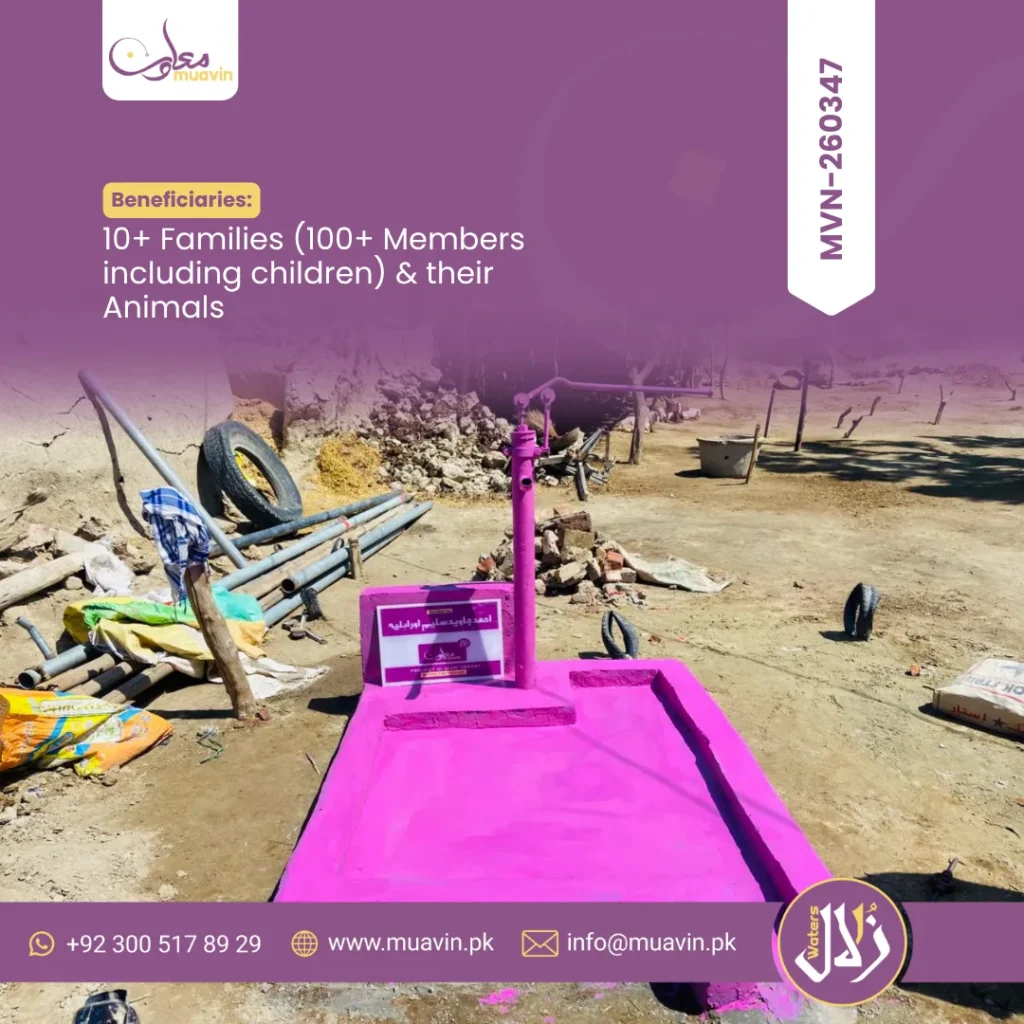
A family hand pump is designed to serve a single household. It is one of the most common forms of Sadaqah Jariyah because it directly improves the daily lives of a specific family.
It is suitable for donors who want a focused and personal contribution.
Community Hand Pump (Best for Wider Impact)
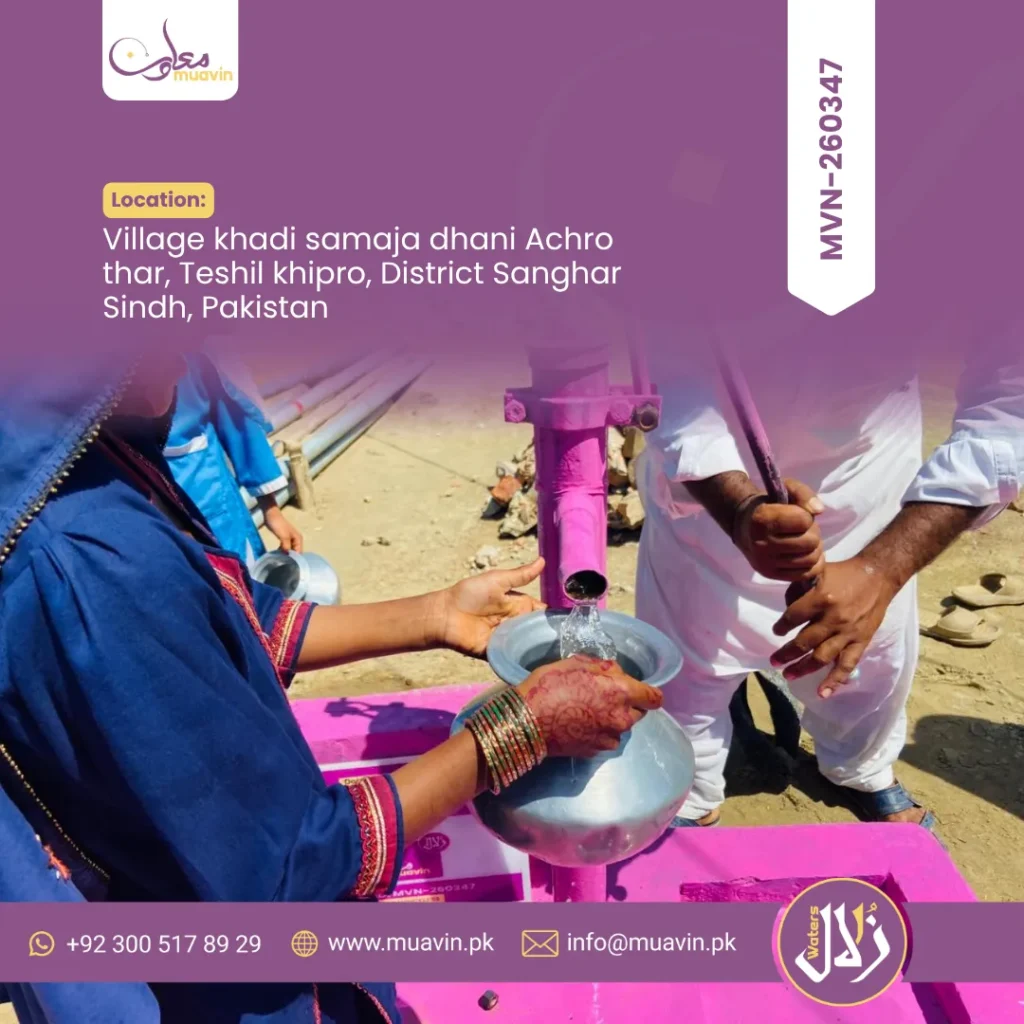
A community hand pump is installed in a shared location and used by multiple families. This increases daily usage and significantly expands the overall benefit.
It is ideal for donors who want to maximize impact with a single project.
How to Choose the Right Option
If you are unsure which option to select, a simple approach can help:
- Choose a family pump if your focus is personal sadaqah
- Choose a community pump if your goal is a broader impact
- Choose a hybrid system if long-term reliability matters most
- Choose a Wazu Khana if you want continuous daily usage in a communal space
Each option serves a different purpose, but all of them contribute to ongoing benefit when used properly.
It is suitable for donors who want a focused and personal contribution.
What Affects the Cost of Hand Pumps in Pakistan?
Once you understand the base prices, the next step is to know why those prices vary. This is important because two hand pumps may not cost the same, even if they look similar on paper. The cost of a water pump project is directly linked to ground conditions, location, and the type of system installed. Without understanding these factors, it becomes difficult to judge whether a price is reasonable.
Key Factors That Influence Cost:
1. Bore Depth and Water Level
Water is not available at the same depth everywhere. In some areas, it may be accessible at a shallow level, while in others, drilling has to go much deeper.
- Deeper drilling requires more labor and equipment
- Higher depth increases time and fuel cost
- Difficult terrain can further increase complexity
This is one of the biggest cost drivers in hand pump projects.
2. Location and Accessibility
Urban areas are easier to work in, but most water projects are installed in rural or remote locations.
- Transportation of materials increases cost.
- Remote access may require additional labor.
- Some areas lack proper infrastructure.
These factors can significantly impact overall project pricing.
3. Type of Hand Pump
Not all pumps are the same. The system you choose directly affects the total cost.
- Family hand pump
- Community hand pump
4. Material Quality and Durability
The lifespan of a pump depends on the quality of materials used.
- Stronger pipes and fittings last longer.
- Durable systems reduce maintenance needs.
- Low-quality materials may fail early.
A slightly higher cost often ensures long-term reliability.
The Biggest Problem in Charity Donations
Understanding cost is important, but it is not the only concern. One of the biggest issues in charitable giving today is a lack of transparency.
Many donors face the same uncertainty after donating.
- They do not receive updates
- They do not see the final result
- They are unsure if the project was completed
- They have no connection with the beneficiary
This creates hesitation. People want to give, but they also want clarity. A donation should not end with payment. It should continue as a visible and meaningful process.
What Makes a Charity Trustworthy in 2026?
In recent years, donor expectations have changed. People no longer rely only on trust. They look for proof, tracking, and accountability.
A trustworthy charity typically provides:
- Clear project details before donation
- A structured process for execution
- Regular updates during progress
- Visual proof, such as images or videos
- Confirmation when the project is completed
These elements transform charity from a one-time action into a reliable experience.
Transparent Charity Model: A Better Approach
This is where structured and transparent systems become important. Instead of leaving donors uncertain, they allow them to follow the entire journey.
Muavin Welfare Foundation follows a transparent charity model designed to address these exact concerns.
Through their system, donors can:
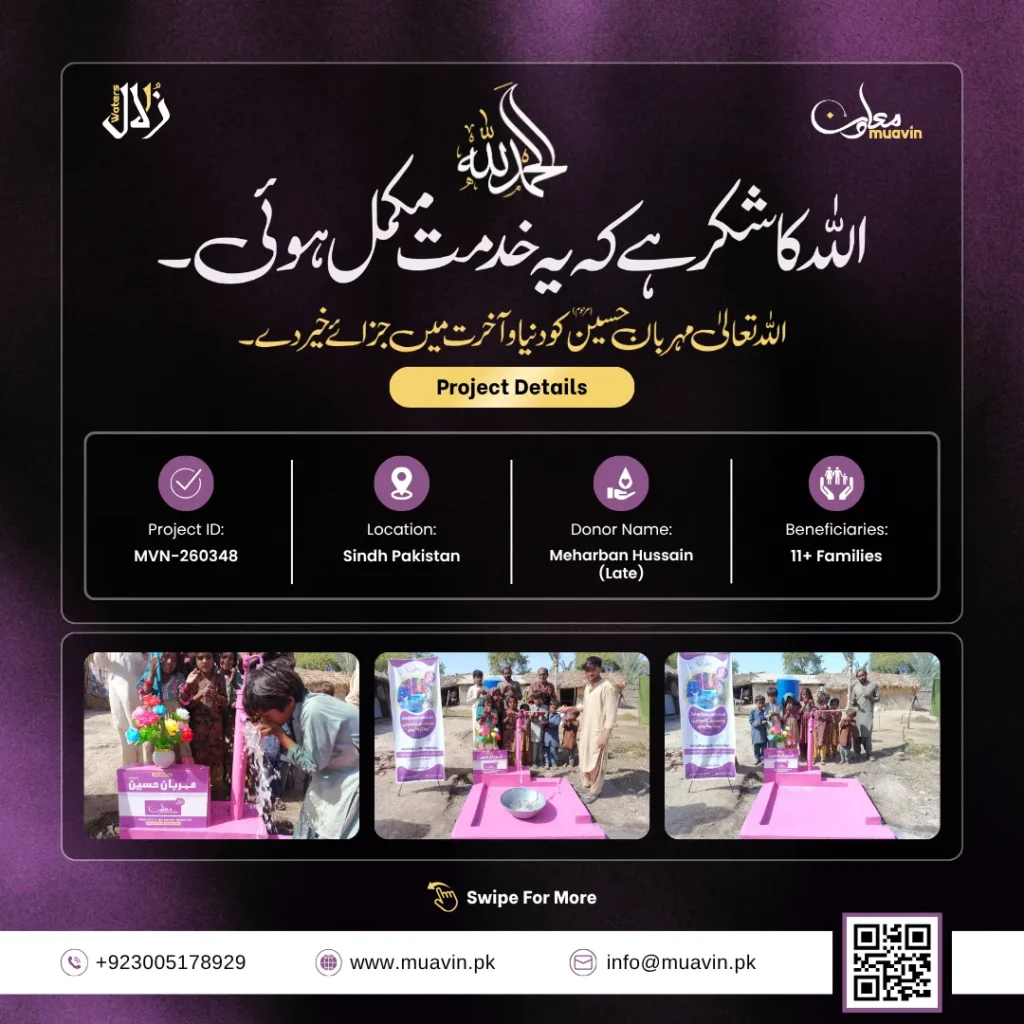
- Track their donation from start to completion
- Receive updates with images and videos
- View beneficiary location and details
- Stay connected to the project progress
- See the outcome clearly
View Transparent Charity Model
This approach changes how people experience charity. Instead of guessing, they can verify. Instead of uncertainty, they get clarity.
Why Transparency Matters for Hand Pump Donations
Water projects are long-term initiatives. A hand pump is not just installed and forgotten. It continues to serve people daily for years.
Because of this, donors want to ensure:
- The pump was installed in the right location
- It is functional and is being used
- It is benefiting real families
A transparent system answers all these questions. It also builds confidence for future donations, because the donor has already seen the impact of their contribution.
Zulaal Water Project: Turning Cost Into Real Impact
After understanding cost and transparency, the next step is to see how these elements come together in a real project. That is where the Zulaal Water Project becomes relevant.
In many parts of Pakistan, especially in rural areas, access to clean water remains limited. Families often rely on distant or unsafe sources, which affects daily life, health, and productivity. A properly installed hand pump changes that completely by providing a reliable water source within reach.
The Zulaal Water Project by Muavin Welfare Foundation is designed around this exact need. It focuses on installing water solutions that are not only functional but also sustainable and traceable through a structured system.
How Water Projects Create Continuous Impact
A hand pump is not a one-time benefit. It becomes part of daily life for the people who use it.
Water is needed multiple times every day for:
- Drinking
- Cooking
- Cleaning
- Personal hygiene
- Daily household tasks
Because of this repeated usage, a single installation can serve individuals and families for many years. This makes water projects one of the most practical forms of long-term charity.
The impact is not only about convenience. It also improves:
- Health by reducing contaminated water usage
- Time efficiency by eliminating long-distance water collection
- Overall quality of life for families
Choose Your Donation Level (Based on Impact)
At this stage, the decision is not just about price. It is about how much impact you want to create. Rather than viewing it as a pricing list, it is better to see it as different levels of contribution.
Entry Level
This option allows you to participate in a water project without a large financial commitment.
- Family hand pump share (1/10): PKR 5,000
- Community pump share: PKR 10,000
Best for:
- First-time donors
- Small but meaningful contributions
Mid-Level for Strong Contribution
This level increases your involvement and creates more direct impact.
- Half family pump: PKR 25,000
- Full family pump: PKR 50,000
Best for:
- Donors looking for a dedicated project
- Balanced cost and impact
High Impact for Maximum Reach
This level focuses on large-scale benefit and long-term solutions.
- Full community pump: PKR 100,000
Best for:
- Maximum community reach
- Continuous daily usage
- Long-term infrastructure
How to Decide the Right Option?
Choosing the right option depends on your intention, budget, and desired level of impact. A simple way to decide:
- Choose an entry-level share if you want to start quickly
- Choose the family pump if you prefer a focused contribution
- Choose the community pump if your goal is a wider benefit
- Choose hybrid or Wazu Khana if you want a long-term infrastructure impact
There is no single “best” option. The right choice is the one that aligns with your capacity and intention.
Why Structured Giving Matters
What makes a project like Zulaal more effective is not just the installation of a pump, but the system behind it. A structured approach ensures:
- The project is planned properly
- The installation is completed correctly
- The donor receives updates
- The impact is visible and verifiable
This is what transforms a donation into a reliable and meaningful contribution.
How to Donate a Hand Pump in Pakistan (Step-by-Step)
At this point, you already understand the cost, the available options, and how impact scales with your contribution. The next step is simple: completing the donation in a clear and structured way.
A well-organized process removes confusion and ensures that your contribution moves smoothly from selection to execution.
Simple Donation Process
- Choose your project type: Decide whether you want a family pump, a community pump, a hybrid system, or a Wazu Khana based on your impact goal.
- Select your contribution level: Pick a share, half sponsorship, or full project depending on your budget.
- Please complete your donation online using a secure, direct platform to finalize your contribution.
- Track your project progress: Follow updates, images, and development stages through the system.
- View completion and impact: See the final result and confirm that your donation has been successfully implemented.
Why a Structured Process Matters
Many people are willing to donate, but hesitation often comes from uncertainty about what happens next. A structured process solves this by giving clarity at every stage.
Instead of a one-time payment, the donation becomes a visible journey. With a system like Muavin Welfare Foundation, donors are not left guessing. They can follow the project from start to finish and understand exactly how their contribution is used.
What You Receive as a Donor
A proper charity model does not end at donation. It continues with updates, proof, and confirmation. In a transparent system, donors typically receive:
- Project progress updates
- Visual proof through images and videos
- Location details of the installation
- Confirmation once the project is completed
- In many cases, name attribution for dedication
These elements build confidence and make the entire experience more meaningful.
Why Donate a Hand Pump in Pakistan Now
Water scarcity remains a serious challenge in many parts of Pakistan. In rural areas, access to clean, nearby water sources remains limited, directly affecting daily life. Delaying a donation means delaying access to something essential. A single hand pump can change families’ daily routines by providing a reliable source of water close to home.
From a practical perspective:
- Water is used multiple times every day
- One installation serves people for years
- The impact continues long after the donation
This makes it one of the most effective ways to create long-term benefit through a single action.
Conclusion:
Donating a hand pump in Pakistan is not just about cost. It is about choosing the right option, understanding the impact, and ensuring that your contribution is properly implemented.
FAQs: Donate Hand Pump in Pakistan (Cost, Options & Process)
How much does it cost to donate a hand pump in Pakistan?
The cost depends on the type of project and level of contribution. A shared family hand pump typically starts from PKR 5,000, while a full family pump costs around PKR 50,000. Larger projects, such as community pumps, can cost up to PKR 100,000, and hybrid or Wazu Khana systems can range from PKR 130,000 to 450,000, depending on scale and features.
What is included in the cost of a hand pump donation?
The total cost covers more than just the pump itself. It usually includes:
- Bore drilling based on water depth
- Pump equipment and materials
- Installation and labor
- Transportation to the project location
This ensures the system is fully functional and sustainable.
What is the difference between a family and a community hand pump?
A family hand pump is installed for a single household and is ideal for focused impact. A community hand pump is placed in a shared location and used by multiple families, making it a better option for wider reach and higher daily usage.
How long does a hand pump last?
A properly installed hand pump can typically last 10 to 20 years, depending on usage, water conditions, and maintenance. This long lifespan makes it a strong option for long-term impact and continuous benefit.
How many people benefit from one hand pump?
A single hand pump can usually serve 20 to 50 individuals, depending on the location and community size. Community pumps may serve even more people due to shared access.
Why do hand pump costs vary in Pakistan?
The cost changes based on several factors:
- Depth of water bore
- Location and accessibility
- Type of pump system (manual or solar)
- Quality of materials used
These factors directly affect installation complexity and long-term performance.
How can I make sure my donation is used properly?
You should choose a charity that provides transparency and tracking. For example, Muavin Welfare Foundation offers a system where donors can follow their project through updates, images, and completion reports.
View Transparent Charity System
How do I donate a hand pump in Pakistan online?
You can donate by selecting your preferred project and completing the payment through a trusted platform. The process usually includes choosing a project, confirming your amount, and receiving updates afterward.