
Why Trust Matters Before You Donate
Donating money is one of the simplest ways to help others. People give for many reasons, including charitable giving, community support, and religious intentions such as sadaqah. But one important question is often ignored.
How do you know your donation actually reached someone in need?
In many cases, donors give with good intentions but never receive updates, proof, or confirmation. This creates uncertainty and reduces trust over time. A donation should not feel like a risk. It should feel like a meaningful contribution with visible impact.
This is why understanding how to find trusted charities is important. A trusted charity is not just one that collects donations. It shows clear results, maintains transparency, and builds confidence with every contribution.
- Why Water Charity Is One of the Best Sadaqah in Muharram
- This Muharram, Help Villages Still Struggling for Pure Water
- Donate a Hand Pump in Memory of Loved Ones This Muharram
- This Muharram, Donate Water and Earn Lasting Sadaqah Jariyah
- Why Community Water Projects Matter More Than Temporary Aid
- How Sustainable Water Infrastructure Helps Rural Pakistan
Why Trust Matters in Charity Donations
Trust is the foundation of any donation. Without trust, even the most generous act can feel uncertain.
In Pakistan, charity is deeply rooted in culture and faith. Millions of people donate every year for causes like food distribution, healthcare, and water projects. However, as the number of organizations grows, so does the challenge of identifying which ones are truly reliable.
A trusted charity provides more than just a donation option. It offers clarity, accountability, and a clear understanding of how funds are used.
Key reasons why trust is essential
- Donors want to know where their money goes
- Transparency builds long-term relationships
- Verified impact increases confidence
- Proper communication creates satisfaction
When these elements are missing, donors often feel disconnected from the outcome. Over time, this leads to hesitation in future donations.
Hidden Problems in Charity Donations
Many people assume that all charities operate with the same level of honesty and efficiency. In reality, this is not always the case.
There are several common issues that donors face when contributing to unverified or poorly managed organizations.
Common challenges donors experience
- No updates after donation
- Lack of project details
- No visual proof, such as images or videos
- Unclear use of funds
- No way to track progress
These problems create a gap between intention and impact. A person may donate with the hope of helping someone, but without confirmation, the experience feels incomplete.
A Simple Scenario Most Donors Relate To
You find a campaign online and decide to donate. The cause looks genuine, and the message is emotional. You make the payment and feel satisfied for a moment.
Days have passed, and there is still no update. No confirmation. No proof of completion.
At that point, the donation becomes uncertain. You start wondering whether your contribution made a difference.
This is exactly the situation a trusted charity avoids. It replaces doubt with clarity and replaces silence with updates.
How to Identify a Trusted Charity (Step-by-Step Framework)
Choosing a reliable charity should not depend on guesswork. A structured approach helps you evaluate organizations objectively and avoid common risks. This section gives you a practical framework you can use before making any financial donation.
Step 1: Check Transparency
A trusted charity clearly explains how donations are used. It should provide detailed information about projects, locations, and expected outcomes.
Look for:
- Clear description of each project
- Breakdown of how funds are allocated
- Open communication about progress
If a charity only asks for money without explaining where it goes, that is a red flag.
Step 2: Verify Project Details
A genuine organization always shares specific information about its work. This includes what the project is, who it helps, and how it will be completed.
Important indicators:
- Project location (city or region)
- Type of work being done
- Estimated timeline
- Number of beneficiaries
The more specific the details, the higher the credibility.
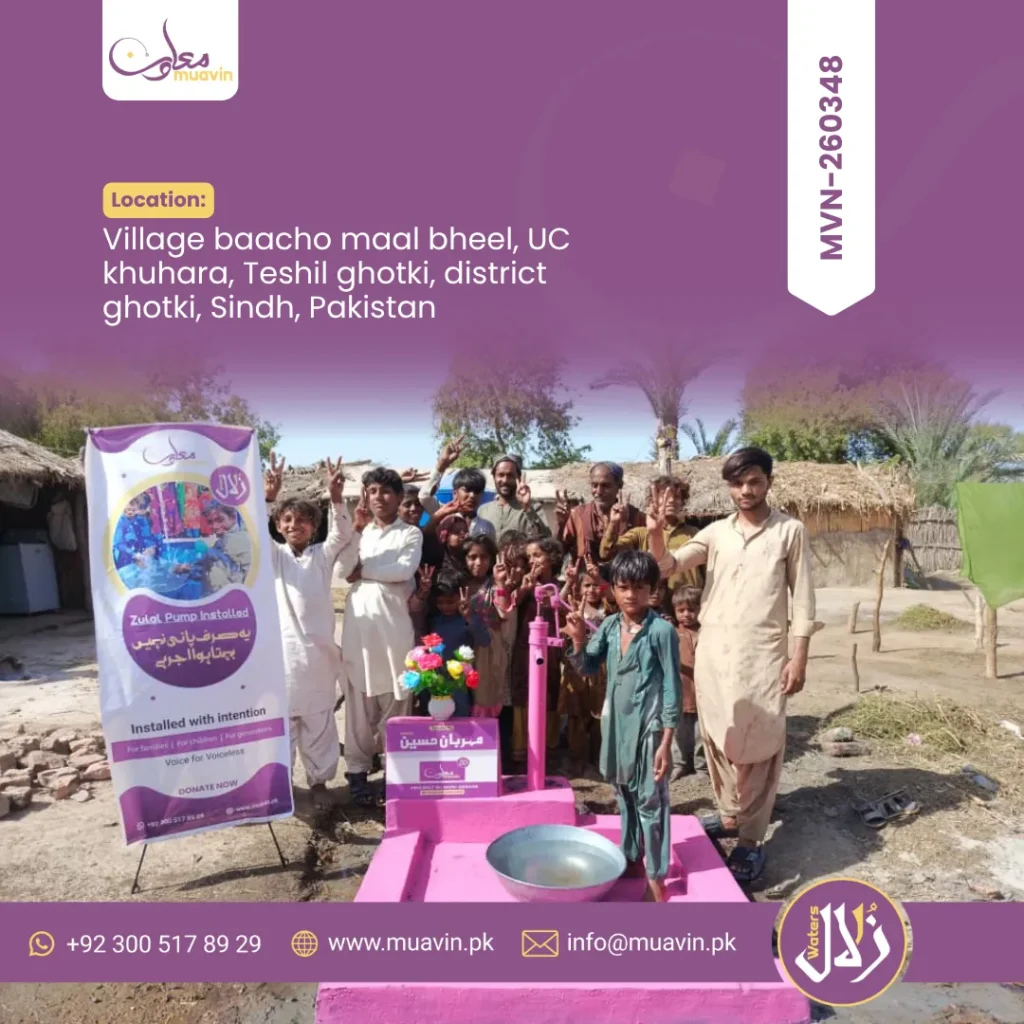
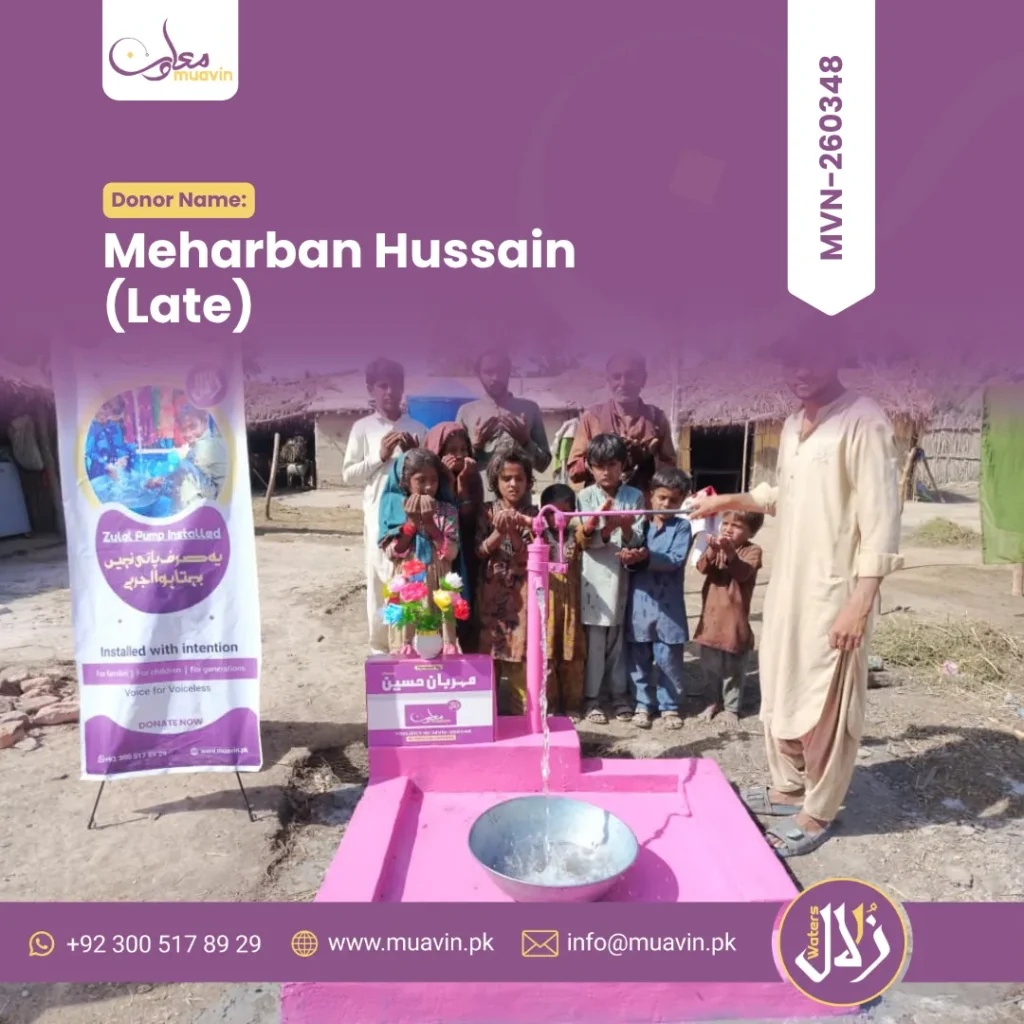
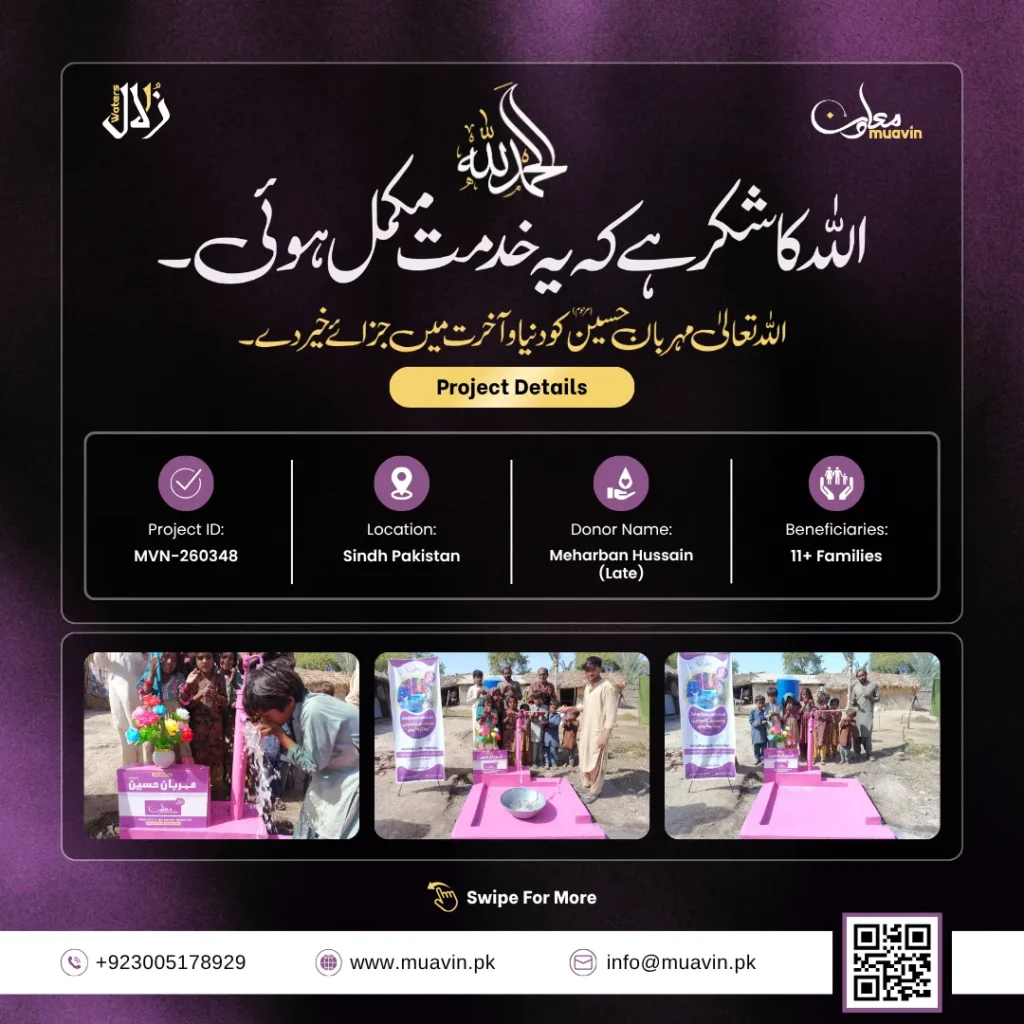
Step 3: Look for Proof of Work
Proof is one of the strongest indicators of a trusted charity. Reliable organizations provide visual evidence of completed or ongoing projects.
This may include:
- Photos of installations or activities
- Videos showing progress
- Before and after results
Without proof, it becomes difficult to confirm whether the work actually happened.
Step 4: Check for Donation Tracking
Modern donors expect more than just a receipt. They want to follow the journey of their contribution.
A strong charity system should offer:
- Donation tracking or updates
- Notifications during project progress
- Confirmation after completion
Organizations that allow tracking create confidence and long-term trust.
Step 5: Evaluate Impact Type
Not all charity projects create the same level of impact. Some provide short-term relief, while others deliver long-term benefits.
For example:
- Food distribution helps immediately, but ends quickly
- Water projects or infrastructure provide continuous benefits
Trusted charities focus on projects that create lasting impact.
Step 6: Review Credibility and History
An organization’s background plays a major role in its reliability. While newer charities can also be effective, established ones usually have a track record.
Check for:
- Years of operation
- Public presence or reputation
- Consistency in projects
This helps you understand whether the organization is stable and dependable.
Step 7: Confirm Communication and Support
A trusted charity maintains communication with its donors. It should be easy to ask questions and receive clear answers.
Look for:
- Responsive contact options
- Active social or online presence
- Regular updates or reports
Good communication shows that the organization values its donors.
Comparison of Trusted Charities in Pakistan
Understanding different organizations side by side helps you make a better decision. Instead of choosing based on popularity, you can compare them based on measurable factors.
Key Comparison Criteria
| Factor | What It Means |
|---|---|
| Transparency | Ability to track donation and see progress |
| Impact | Short-term vs long-term benefit |
| Cost Efficiency | Value received for donation amount |
| Proof | Availability of images, videos, or updates |
| Donor Experience | Ease of donation and communication |
Major Organizations to Consider
- Muavin Welfare Foundation
- Quba Foundation
- Alkhidmat Foundation
- Green Trust
- Paani Project
| Organization | Transparency | Impact Type | Strength |
|---|---|---|---|
| Muavin Welfare Foundation | High | Water & welfare | Established presence |
| Quba Foundation | Moderate | Water projects | Affordable options |
| Alkhidmat Foundation | High | Large-scale projects | Strong network |
| Green Trust | Moderate | Water wells | International reach |
| Paani Project | Moderate | Water pumps | Focused mission |
What This Comparison Shows
Each organization has its strengths, but the main difference comes down to how clearly they show their work and how much visibility they provide to donors.
A charity that combines transparency, strong impact, and a clear system for tracking donations stands out more than others.
What Modern Donors Expect from Charities
The way people donate has changed. Earlier, charity was mostly based on trust and reputation. Today, donors expect more clarity, control, and visibility before making financial contributions.
A trusted charity is no longer defined only by its name. It is defined by how well it communicates, how clearly it shows impact, and how easily a donor can stay connected to their contribution.
What donors look for today
- Clear information before donating
- Transparency during the project
- Proof after completion
- Easy communication and updates
- A sense of connection with beneficiaries
When these elements are present, the donation experience becomes complete. It is not just about giving money. It is about seeing the difference that money creates.
The Shift from Traditional Charity to Transparent Systems
Traditional charity models were simple. A donor gave money, and the organization handled the rest. While this approach worked in the past, it left a major gap in visibility. Today, there is a shift toward structured and transparent charity systems.
| Aspect | Traditional Charity | Transparent Charity |
|---|---|---|
| Visibility | Limited | High |
| Updates | Rare | Regular |
| Proof | Not always available | Clearly provided |
| Donor control | Low | Improved |
| Trust level | Based on reputation | Based on evidence |
This shift is important because it reduces uncertainty. Instead of relying solely on trust, donors can now verify how their contributions are used.
What Is a Transparent Charity Model
A transparent charity model is a system where every stage of the donation process is visible to the donor.
- Donation confirmation
- Project progress updates
- Visual proof, such as images or videos
- Information about beneficiaries
- Completion report
This approach creates confidence and removes doubt. It allows donors to see the full journey of their contribution.
Where a Structured Model Makes a Difference
A structured charity system improves the experience in several ways.
Key advantages
- Builds trust through visibility
- Strengthens donor satisfaction
- Encourages repeat donations
- Creates accountability within the organization
These benefits are especially important for people who donate regularly or contribute in the name of family members.
A Practical Example of Transparent Giving
Some organizations are now building systems that allow donors to track their donations step by step. One example is the Muavin Welfare Foundation, which focuses on structured, transparent giving.
Instead of treating charity as a one-time transaction, the system is designed to show the entire process from donation to completion.
Key features of this approach
- A transparency portal for tracking progress
- Updates at different stages of the project
- Images and videos showing real work
- Location details of beneficiaries
- Option to dedicate projects in the name of loved ones
Explore how this system works in detail through the Transparent Charity Model page.
Why Transparency Matters More for Financial Donations
Financial donations require a higher level of trust compared to other forms of charity. Unlike physical contributions, money cannot be seen once it is transferred.
A transparent system ensures that:
- Donations are used for the intended purpose
- Projects are completed as promised
- Donors feel confident and satisfied
When transparency is missing, even genuine organizations may struggle to build long-term trust.
Introducing Water-Based Charity Projects
Among different types of charity, water projects stand out because they provide both immediate and long-term benefits.
In many parts of Pakistan, access to clean water is still a challenge. This makes water-based charity one of the most impactful options for donors.
Projects like hand pumps and water systems:
- Serve multiple families
- Provide daily benefit
- Continue working for years
One such initiative is the Zulaal Water Project, which focuses on providing clean water through structured donation models.
Why Water Projects Fit the Trusted Charity Model
Water projects naturally align with the idea of transparency and long-term impact.
Key reasons:
- Easy to verify through physical installation
- Visible results that can be documented
- Continuous usage by communities
- Strong connection between donor and impact
Because of these factors, water-based charity is often considered a reliable and effective option.
Choose Your Level of Impact
Once you have identified a trusted charity and understand how transparency works, the next step is to choose a project that matches your intention and budget.
Instead of thinking only in terms of cost, it is more useful to think in terms of impact. A structured donation system allows you to select how much change you want to create.
Family Hand Pump Options
These projects are designed to support individual households or small groups. They are ideal for donors who want to create a focused and personal impact.
| Option | Contribution | Impact Level |
|---|---|---|
| Water hand pump share (1 of 10) | PKR 5,000 | Entry-level contribution |
| Half family hand pump | PKR 25,000 | Moderate impact |
| Complete family hand pump | PKR 50,000 | Full household support |
Community Hand Pump Options
These projects are designed to benefit multiple families and create a wider impact. They are suitable for donors who want their contribution to reach a larger group of people.
| Option | Contribution | Impact Level |
|---|---|---|
| Community pump share (1 of 10) | PKR 10,000 | Shared contribution |
| Half community pump | PKR 50,000 | Mid-level community impact |
| Complete community pump | PKR 100,000 | Full community support |
Hybrid and Advanced Water Solutions
For donors who want to invest in larger-scale or more advanced solutions, additional project options are available.
These include:
- Hybrid water pump (hand pump with solar system)
- Wazu khana (ablution facility) with solar setup
- Multi-tap water systems for larger communities
| Project Type | Estimated Cost Range |
|---|---|
| Hybrid water pump | Around PKR 140,000 |
| Wazu khana (basic) | Around PKR 150,000 |
| Wazu khana (standard) | Around PKR 300,000 |
| Wazu khana (large scale) | Up to PKR 450,000 |
These projects are more suitable for donors looking for long-term infrastructure impact.
Additional Welfare Projects
If you want to explore beyond water-based charity, you can also consider supporting other structured projects, such as solar systems.
These projects support long-term development and community improvement.
How to Donate Safely (Step-by-Step)
Even after selecting a project, it is important to follow a safe donation process. This ensures your contribution is used correctly and you stay informed throughout.
Safe donation process
- Select a verified charity organization
- Review project details carefully
- Check for transparency features
- Complete your donation through official channels
- Monitor updates and progress
Why Choosing the Right Charity Matters
Every donation represents trust, intention, and responsibility. The impact of your contribution depends on the organization you choose.
A well-chosen charity ensures that:
- Your money creates real value
- The project is completed properly
- You receive confirmation and updates
- The beneficiaries genuinely benefit
On the other hand, choosing the wrong charity can lead to uncertainty and lost impact.
Final Insight
A trusted charity is not defined by how popular it is. It is defined by how clearly it shows its work, how consistently it communicates, and how effectively it delivers results.
When you combine transparency, structured giving, and meaningful projects, your donation becomes more than just a financial contribution. It becomes a visible and lasting impact.
Conclusion
Finding a trusted charity for financial donations requires awareness, evaluation, and careful decision-making. By focusing on transparency, proof, and impact, you can ensure that your contribution reaches the right place.
Modern donation systems have made it easier than ever to give with confidence. The key is to choose organizations that prioritize accountability and provide clear visibility at every step.
If you are ready to donate, start with a verified platform, choose a project that aligns with your intention, and follow the process with confidence.
What is a trusted charity?
A trusted charity is an organization that clearly shows how donations are used, provides project updates, and offers evidence of impact. It focuses on transparency, accountability, and real results rather than just collecting funds.
How can I verify if a charity is genuine?
You can verify a charity by checking:
- Official website and project details
- Transparency in fund usage
- Proof, such as images or videos
- Communication channels and responsiveness
A reliable option is to choose platforms that offer structured tracking, such as the transparent charity model, where donors can follow their contributions step by step.
What are the warning signs of a fake or untrusted charity?
Common red flags include:
- No clear project details
- No updates after donation
- Lack of proof or documentation
- Pressure to donate quickly
- No official contact or verification
If any of these are present, it is better to avoid donating.
Why is transparency important in financial donations?
Transparency ensures that your money is used for the intended purpose. It builds trust and allows you to see the real impact of your donation through updates, reports, or visual proof.
What type of charity has the most impact?
Charities that provide long-term benefits usually have the highest impact. Examples include:
- Water projects
- Education support
- Healthcare infrastructure
Projects like the Zulaal Water Project are considered impactful because they benefit communities daily over a long period.
Is it better to donate to large organizations or smaller ones?
Both can be effective. Large organizations often have wider reach and established systems, while smaller ones may offer more direct and personalized impact. The key factor is transparency, not size.
How can I track my donation after giving?
You can track your donation by choosing charities that offer:
- Progress updates
- Visual proof
- Completion reports
Platforms with dedicated donor tracking systems allow you to stay informed throughout the project.
What is the safest way to donate money online?
To donate safely:
- Use official websites only
- Avoid third-party or unverified links
- Check for secure payment methods
- Confirm transparency features before donating
Start with a verified platform, such as a donation portal, to ensure a safe process.
Can I donate on behalf of someone else?
Yes, many charities allow you to donate in the name of your parents, family members, or loved ones. Some also provide nameplates or acknowledgments for such donations.
How do I choose the right donation amount?
The right amount depends on your budget and intention. Instead of focusing only on cost, consider the level of impact you want to create, whether it is a shared contribution or a full project.
What is the difference between short-term and long-term charity?
Short-term charity provides immediate help, such as food or emergency aid. Long-term charity creates lasting benefits, such as water systems or infrastructure. Long-term projects are often preferred for continuous impact.
How often should I donate to charity?
There is no fixed rule. Some people donate regularly, while others contribute during specific occasions. The important factor is consistency and choosing the right cause each time.