Water Challenges in Pakistan
Addressing water access in Pakistan requires understanding both the scale of need and the locally appropriate technical solutions. Projects range from simple hand pumps to community-level solar systems. Donor confidence hinges on transparent project design and reliable local delivery.
Scale and affected communities
Pakistan faces a complex mixture of water scarcity, contamination, and infrastructure gaps. Rural villages, peri-urban settlements, and pastoral communities experience differing challenges. Some lack safe groundwater, others contend with seasonal shortages, and many rely on unreliable public systems.
Affected populations often include low-income households, women and children who bear the burden of water collection, and communities in remote or politically sensitive regions where public investment is limited. The result is widespread health risks from waterborne disease, lost time and education, and constrained livelihoods.
Common local solutions
Local solutions are typically tailored to community size, water table depth, and social organization. Common interventions include:
- Family hand pumps: low-cost, manually operated wells serving single households or small compounds.
- Community hand pumps: larger installations serving clustered homes or village centers.
- Solar-powered pumps and distribution systems: using solar energy to lift and store water for broader community use, suitable where diesel or grid power is unreliable.
Each solution has trade-offs in cost, maintenance requirements, and scalability. Effective projects align technical choice with local capacity for operation and repair.
How a family pump serves 20–30
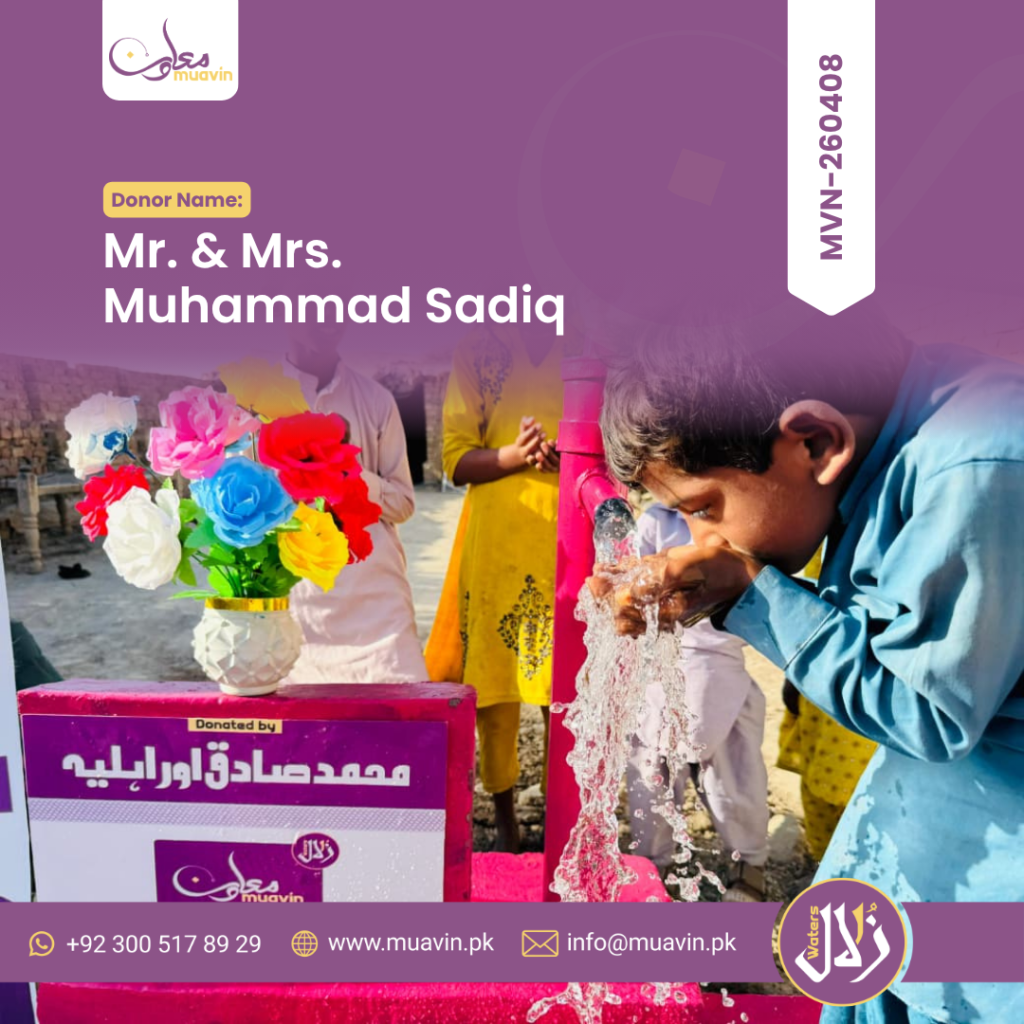
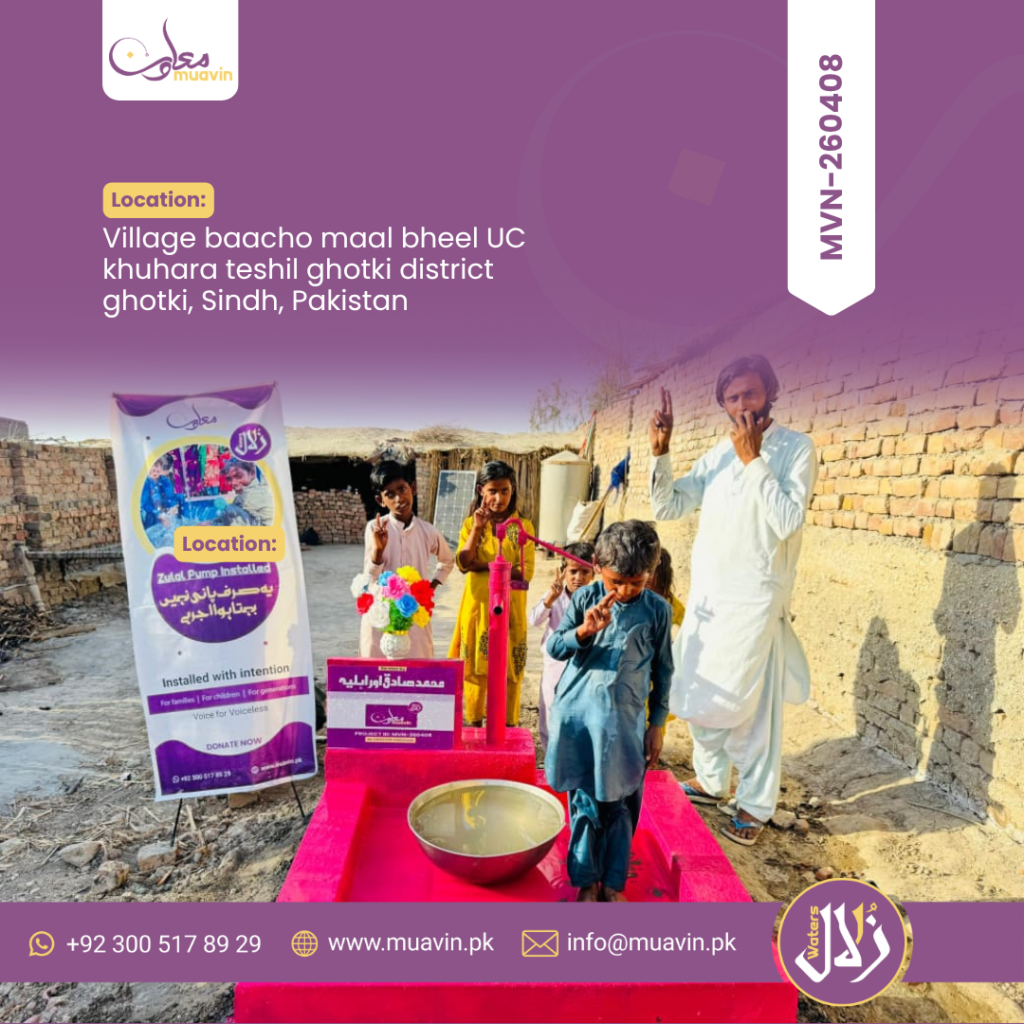
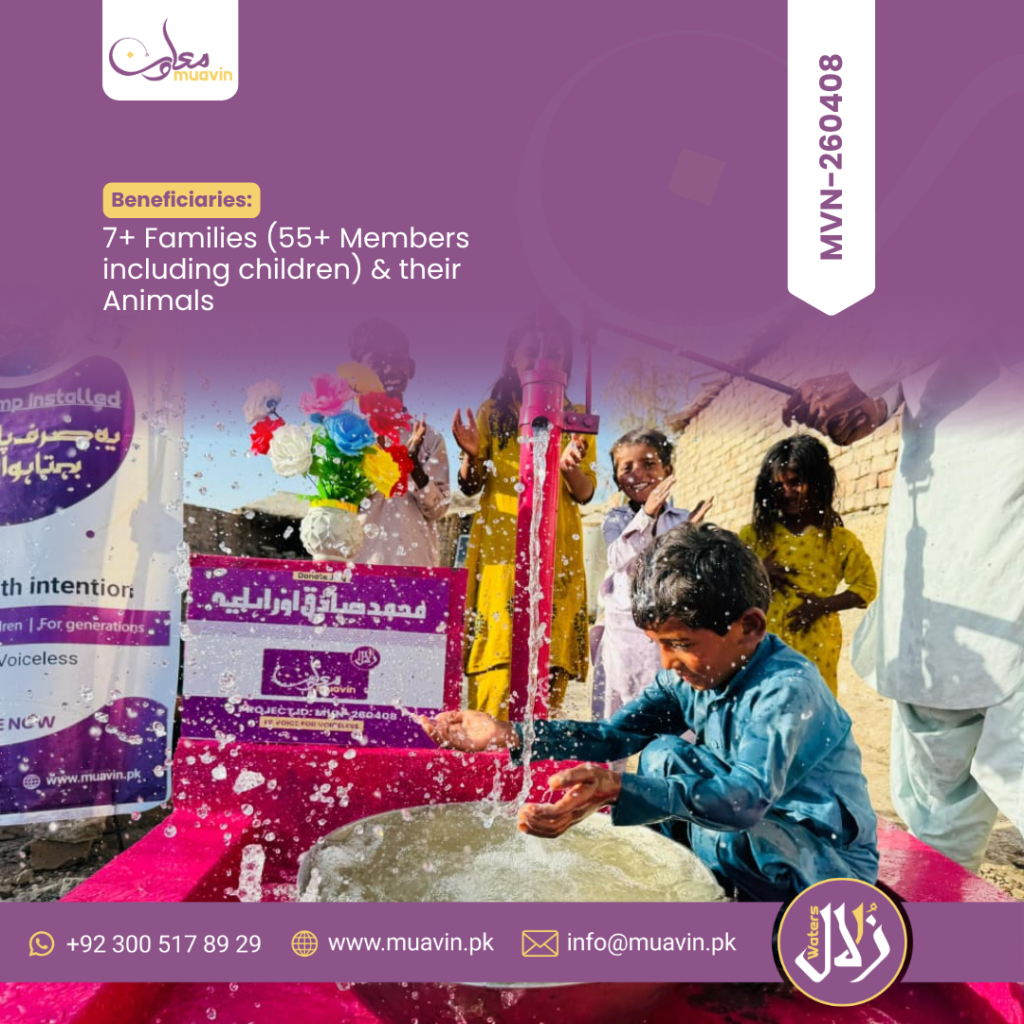
A family hand pump is typically installed on a shallow well or borehole and designed for manual operation. In many rural Pakistani contexts, a single pump at a household compound supplies water for 4–6 family members plus small livestock, and may be shared with extended family or immediate neighbors.
When shared among a cluster of homes, a family pump can meet the daily needs of 20–30 people by providing potable water for drinking, cooking, and basic hygiene. The actual service population depends on water yield, recharge rates, and usage patterns (for example, whether animals are watered from the same source). Planning for user load, seasonal variation, and maintenance helps a family pump remain safe and usable.
Common donor barriers
Overseas donors face several recurring barriers that affect confidence and follow-through:
- Trust: uncertainty about whether funds reach the intended projects, and whether local implementers have the capacity and integrity to deliver.
- Transparency: lack of clear reporting on expenditures, beneficiary lists, or evidence of completed works.
- Cross-border logistics: challenges with international payment methods, currency conversion, and banking restrictions.
- Legal and compliance concerns: differing regulations on foreign funding, tax-deductibility questions, and anti-money-laundering checks.
- Local context: limited understanding of community dynamics, land rights, and local governance, which can affect project sustainability.
Addressing these barriers requires platforms and partners that prioritize verification, clear fund flows, and ongoing, accessible reporting.
Secure Giving Terms
Before selecting how and where to give, donors benefit from clear definitions and a shared vocabulary. The concepts below describe what practical elements indicate secure, transparent giving in Pakistan.
Authority and conversion
“Authority” refers to credible, evidence-based information that helps a donor judge the reliability of a platform or program. Authoritative content draws on verifiable facts, documented processes, and clear governance practices that reduce uncertainty.
“Conversion” refers to the point at which a prospective donor moves from consideration to action. For charitable giving, conversion is driven by trust signals: clear project descriptions, transparent budgets, verifiable local partnerships, and measurable outcomes. Strong educational content equips readers with the knowledge and confidence needed to make informed giving decisions.
Core definitions
- Secure platform: A giving channel that applies robust verification and financial controls to protect donor funds and ensure they are used for stated purposes. Security includes identity verification, secure payment processing, and compliance with cross-border regulations.
- Full transparency: The practice of openly sharing project plans, budgets, fund flow information, partner identities, and regular reporting on implementation and outcomes. Full transparency allows donors to trace funds and verify results.
- Accountability: Mechanisms that hold implementers responsible for promised outcomes. This includes governance structures, independent auditing, beneficiary verification, grievance procedures, and corrective action processes.
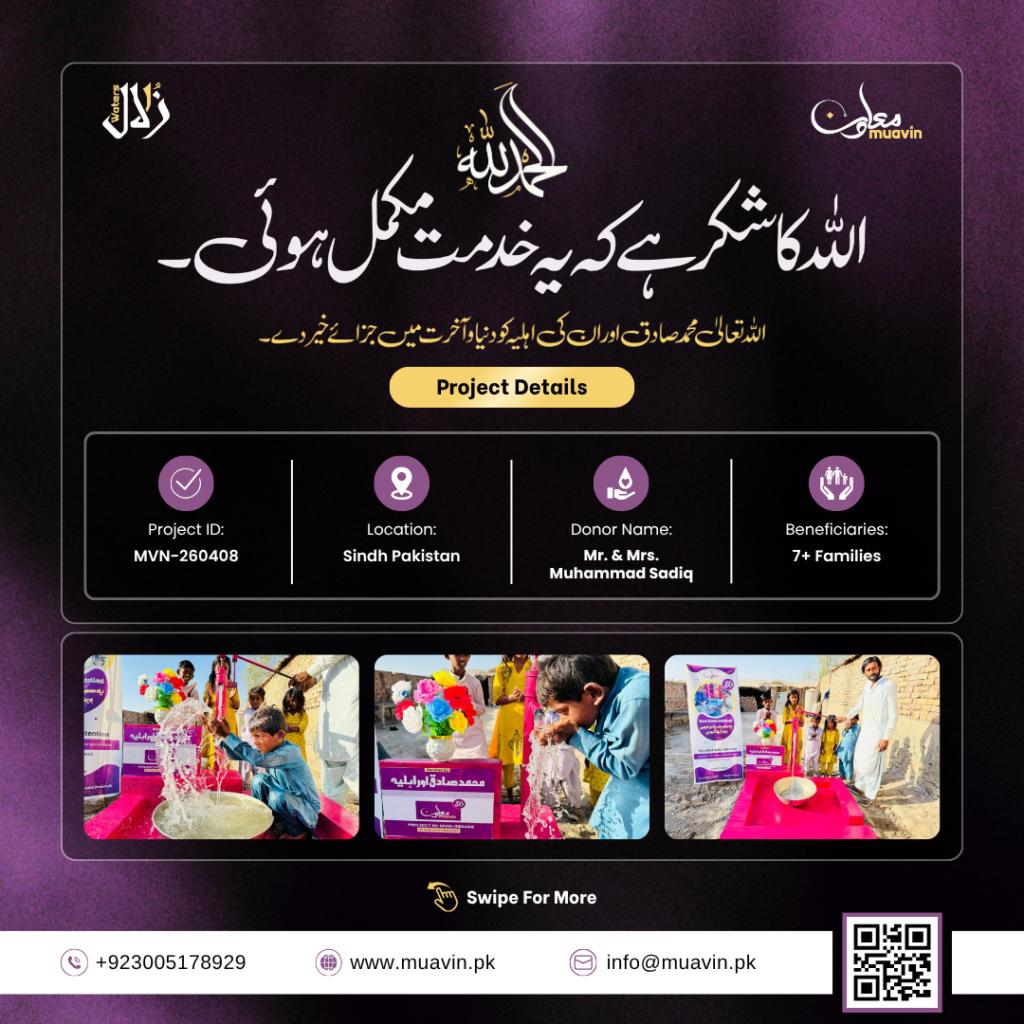
- Impact tracking: Systematic collection and reporting of data that demonstrate who benefited, how many people were reached, and what changes occurred. Impact tracking often uses tools like beneficiary lists, GPS-tagged photographs, water quality tests, and periodic monitoring reports.
These definitions form the baseline for evaluating platforms and projects.
Organization types
Several entity types commonly participate in international water projects:
- International NGOs: organizations based outside Pakistan that bring technical expertise, fundraising capacity, and international compliance systems. They may implement directly or fund local partners.
- Local NGOs and community-based organizations: Pakistan-based entities with local knowledge, access, and cultural understanding. They are crucial for long-term maintenance and community engagement.
- Social enterprises and local businesses: entities that deliver services or products (for example, solar pump suppliers and maintenance services) under sustainable business models. They can support scalability and spare parts supply chains.
- Intermediary platforms and fund managers: organizations or online platforms that facilitate donations from overseas donors, vet local partners, and manage fund transfers and reporting.
Understanding the roles and interplay of these actors helps donors evaluate whether a given platform or program is positioned to deliver secure, transparent outcomes in Pakistan.
How does Trusted Welfare Work?
Secure and trusted, forms to donate to Pdonating from abroad with full transparency operate by combining rigorous onboarding, controlled fund flows, robust monitoring, compliant payment processing, and strong data protection. Each component reduces risk and increases the likelihood that donated funds result in the intended water solutions.
Onboarding and partner vetting
Onboarding is the first control gate. Platforms typically require formal registration in a host jurisdiction and clear governance documents (board composition, mission, bylaws). Verification steps include identity checks for senior staff, proof of legal status, and tax or charity registration numbers where applicable.
Local partner vetting commonly follows a due diligence workflow:
- Desk review: Check legal status, previous project history, financial statements, and complaints or litigation records.
- Risk assessment: Evaluate political, security, and corruption risks in the operational area; score partners by capacity and transparency.
- Capacity check: Confirm technical skills (pump installation, solar systems), human resources, and logistical ability to maintain projects.
- Field validation: Either through in-person visits or trusted third-party verifiers, confirm the partner’s presence, past work, and community relationships.
- Agreement: Sign an MOU or partnership agreement specifying roles, reporting cadence, financial controls, and dispute resolution.
This structured approach creates layers of assurance. A verified platform that works with vetted local organizations reduces risk and increases accountability to overseas donors.
Fund flow and controls
Clear fund flow reflects donor intent and helps ensure money reaches projects. Best-practice flows separate platform operating funds from project funds and use donor-restricted accounts or escrow arrangements for earmarked contributions.
Typical financial controls include:
- Segregated accounts: Monies for each project held separately to prevent commingling.
- Conditional release: Funds disbursed in tranches linked to milestones (procurement, installation, verification).
- Dual-authorization: Payment approvals require at least two authorized parties, often one on the platform side and one local partner representative.
- Reconciliation and reporting: Regular bank reconciliations with project expenditure reports and receipts.
- Independent audits: Annual or project-level audits by qualified auditors, with summaries published for donors.
Segregated accounts and milestone payments reduce the incentive and opportunity for diversion of funds. Audits and reconciliations provide evidence that funds were used as intended and support donor confidence.
Monitoring and reporting
Transparent platforms build monitoring and evaluation (M&E) into project design. M&E is both a verification tool and a learning system.
Typical M&E workflow:
- Baseline assessment: Document pre-project conditions (source distance, waterborne disease rates, number of households).
- Indicator selection: Choose measurable outcomes (number of people served, uptime, purity, reliability).
- Activity monitoring: Collect data during implementation (installation photos, GPS coordinates, supplier invoices).
- Post-installation verification: Beneficiary lists, usage logs, and community sign-off forms.
- Periodic impact checks: Follow-up surveys at 3, 6, and 12 months to measure usage, maintenance needs, and health impacts.
Reporting tools often include timestamped photos, GPS-tagged site maps, and digital beneficiary registers. Third-party spot checks or remote sensing can corroborate reports. When platforms publish these data to donors, they translate technical M&E outputs into accessible evidence of progress and results.
Payments and compliance
Platforms accept a variety of international payment methods while managing currency risk and regulatory compliance. Common payment methods include bank transfers, credit/debit cards, internationally enabled e-wallets, and, in some cases, encashment transfers for on-the-ground disbursements.
Operational mechanics:
- Collection: Donors pay in their preferred currency; platforms record donor restrictions and intended projects.
- Conversion: Funds converted to local currency for procurement using transparent exchange rates; platforms disclose conversion costs.
- Disbursement: Local partners receive payments in PKR (Pakistani Rupee), where possible, to reduce foreign exchange risk to the implementing partner.
- Compliance: Platforms perform Know Your Customer (KYC) checks on donors when required, screen transactions against sanctions and terrorism financing lists, and maintain AML/CFT policies.
Platforms must navigate cross-border regulations from donor countries (reporting thresholds, charitable giving tax rules) and Pakistani regulations on foreign funding. Compliance workflows typically include automated screening, transaction monitoring, and periodic compliance audits. These measures reduce legal and reputational risks and help ensure funds move lawfully from overseas donors to projects in Pakistan.
Data protection and privacy
Protecting personal and project data is essential for trust. Platforms manage two categories of sensitive data: donor information and beneficiary data.
Core data protection practices:
- Data minimization: Collect only the information needed for compliance and reporting.
- Consent and transparency: Inform donors how their data will be used and offer opt-in/opt-out choices for public recognition.
- Technical safeguards: Use encryption for data in transit and at rest, secure servers, and access controls to limit who can view sensitive records.
- Anonymity options: Allow donors to give anonymously or restrict public acknowledgment of their gift.
- Beneficiary privacy: Store personal beneficiary details (names, medical info) securely and share only aggregated results publicly to obtain community consent for photos and identifiable information.
Platforms should align with international data protection norms (for example, GDPR-like practices for EU donors) and local Pakistani data laws. Strong data governance reduces the risks of identity theft, donor harassment, or misuse of beneficiary information while supporting transparent reporting.
Choosing Water Projects
Selecting the right water project requires matching community needs, technical feasibility, sustainability prospects, and cost-effectiveness. A clear decision framework helps donors and platforms steer funds toward solutions that are likely to deliver lasting impact.
When family pumps fit
Family hand pumps are typically appropriate when:
- Household-level need: A cluster of 20–30 people (one extended family or several nearby households) lacks immediate access to safe water.
- Shallow groundwater: Water tables are within the operational depth of hand pumps, and water quality is acceptable or easily treated.
- Low infrastructure requirement: The community lacks transportation or centralized infrastructure, making small-scale solutions practical.
- Local maintenance capacity: A household or nearby mechanic can be trained to handle simple repairs, and spare parts are accessible.
Assess readily available options by checking the distance to the nearest reliable water source and confirming whether a hand pump is technically feasible and locally maintainable.
Benefits of Transparent Donations
Transparent giving transforms a one-off gift into measurable change. When donors can see how money is allocated, who benefits, and how systems are maintained, projects deliver stronger outcomes and communities gain durable access to water.
Community benefits
Accessible clean water reduces reliance on distant or unsafe sources. In rural Pakistan, a family hand pump serving 20–30 people can cut daily walking time, free up hours for children to attend school, and reduce exposure to contaminated sources. These benefits can support better nutrition, hygiene, and small-scale enterprises (e.g., gardening, poultry, and livestock).and
Transparent programs also prioritize local priorities: siting pumps near households or grazing routes to support pastoralists, or installing multiple outlets in peri-urban settlements to serve dense populations. These placement choices improve usage equity, reduce conflict over resources, and support livelihood. Women can spend saved time on generating activities, and farmers can maintain animals more easily.
Measurable outcomes
Good programs set and report on clear indicators:
- Number of people and households served (with GPS-tagged locations).
- Daily water quantity delivered (liters per day) and functioning days per year.
- Time savings per household (minutes/hours saved fetching water).
- Changes in school attendance when water is made available near schools.
- Functionality rates after 1, 3, and 5 years, and the number of maintenance incidents resolved.
Transparent monitoring combines photos, beneficiary lists, GPS coordinates, and periodic surveys. These data points help donors track impact without relying on vague narratives.
Donor benefits
Donors benefit from clarity. When a program publishes budgets, fund flow details, and independent audits, donors may feel more confident to give again and to recommend others. Transparent reporting also allows donors to compare the cost per beneficiary of interventions (for example, a single-family pump versus a community solar-powered borehole) and to align giving with personal priorities such as health, education, or resilience.
For donors in the UK, USA, Canada, EU, or the Middle East, this transparency can also make it easier to reconcile charitable giving with home-country tax documentation, corporate giving policies, or workplace matching schemes, provided the platform supplies the necessary receipts and registration details.
Long-term impact
Long-term success depends on program structure, not only the initial assessment. Transparent projects embed sustainability measures: trained local technicians, dedicated maintenance funds, spare parts supply chains, and water committees that govern equitable use. When communities manage routine repairs and finances openly, pumps are more likely to remain functional, and trust can grow.
Scaled appropriately, these models can create regional resilience. Neighboring villages can share technicians, municipalities can adopt community-based maintenance frameworks, and social enterprises can source parts locally, creating jobs. A transparent approach makes these scaling decisions visible and evidence-based, increasing the likelihood that an intervention remains beneficial beyond the first year.
Comparing Platforms
Choosing where and how to give requires balancing trust, cost-effectiveness, and local relevance. Use a structured approach to evaluate platforms and project types before committing funds.
Evaluation checklist
Use this checklist to compare platforms:
- Legal status and registrations in both the donor country and Pakistan (charity numbers, NGO registrations).
- Clear governance: Board composition, conflict-of-interest policies, and published annual reports.
- Fund flow transparency: How donations are held, disbursed, and reconciled; presence of escrow or project-specific accounts.
- Public budgets and line-item reporting for projects.
- Third-party audits and up-to-date financial statements.
- Partner vetting: Documented criteria for local partner selection and background checks.
- Monitoring & Evaluation (M&E): Frequency of field visits, beneficiary verification, GPS-tagged deliverables, and independent verification where possible.
- Maintenance and sustainability plans: Spare parts, trained technicians, and local cost-sharing mechanisms.
- Channels for feedback and complaints from beneficiaries and donors
Conclusion
For overseas donors supporting water solutions in Pakistan, trust is built through visible controls and verifiable evidence. Strong platforms typically combine partner vetting, clear fund flows, independent financial oversight, and practical monitoring that documents delivery and functionality over time. Comparing governance, reporting quality, and sustainability plans helps donors distinguish programs designed for accountability and lasting service.
Frequently Asked Questions
How can secure and trusted platforms donate to Pakistan to ensure full transparency?
Platforms implement donor-facing reporting that includes project budgets, beneficiary lists, GPS-tagged photos, and regular activity updates.
- They vet local partners and publish verification records to confirm who implements work on the ground.
- Financial controls like escrow accounts and third-party audits are used to show exactly how funds are spent.
- These transparency features allow overseas donors to track impact and verify accountability.
What do “authority” and “conversion” mean in the context of charitable giving content?
“Authority” refers to credible, well-sourced information that builds donor trust and demonstrates expertise. Conversion” means the content prompts a donor action such as registering, giving, or sharing through clear calls-to-action and evidence of the act. Together, they help donors make informed choices about secure, trusted platforms to donating to Pakistan from abroad, with full transparency.
How can I verify a local partner or NGO working on water projects in Pakistan?
Check for official registration documents, board governance details, and contactable references from previous projects. Liability platforms publish partner vetting reports, capacity assessments, and third-party verification or audit r results k for photos, GPS coordinates, and beneficiary lists to cross-check claims about project delivery.
What are the usual fund-flow controls on transparent donation platforms?
Common controls include segregated donor accounts, escrow arrangements, multi-signature approvals, and periodic financial rereconciliations. Dependent audits and transaction-level reporting are provided to demonstrate proper use of funds. These mechanisms reduce diversion risk and improve donor confidence.
Can I donate from the UK/USA/Canada/EU/Middle East, and still get full transparency about my contribution?
Yes, reputable platforms tailor reporting and compliance to donors’ jurisdictions while providing unified impact dashboards, receipts, and evidence of implementation. They also adapt to payment methods and currencies, ensure transparency across borders, and provide ways to confirm the platform’s international compliance and reporting capabilities before donating.
What payment methods do secure platforms accept for donations to Pakistan?
Platforms commonly accept credit/debit cards, bank transfers, mobile wallets, and sometimes cryptocurrencies, depending on compliance and partner capacity. They disclose payment-processing partners, currency-conversion practices, and any associated transaction-handling procedures. Choose methods that offer traceability and compliance with your home country’s regulations.
How do platforms handle currency conversion and international transaction fees?
Transparent platforms disclose conversion rates, intermediary banking steps, and a breakdown of any fees taken for processing. Some platforms absorb fees or offer options to cover them as part of your donation to maximize on-the-ground funds. Clear fee disclosure helps donors understand how much of the funds reach project implementation in Pakistan.
Are cryptocurrency donations accepted, and how are they managed for Pakistan water projects?
Some platforms taccept crypto in ,Pakistan but only after regulatory and AML checks due to volatility and compliance concerns. Accepted crypto is typically converted to local currency via vetted exchanges and recorded in transaction ledgers for auditability. Platforms should explain the timing of conversions, custodial arrangements, and reporting for crypto donations.
How do platforms verify that a family hand pump serves 20–30 people as claimed?
Verification uses GPS-tagged installation photos, beneficiary rosters, local committee signatures, and sometimes independent spot checks. Monitoring visits and smartphone-based M&E tools capture water flow tests and community confirmation. Consistent reporting across these data points substantiates service population claims.
When is a family hand pump the right donation choice versus a community or solar system?
Familhand pump hand pump y ha a and pumps suit small households or nomadic pastoral communities needing localized access and low-cost maintenance. Community pumps or solar-powered systems are better when serving larger populations, institutions, or areas with declining groundwater or technical loads. Decision factors include population density, water table depth, usage patterns, and long-term sustainability plans.
How do platforms ensure sustainability and spare-part availability for hand pumps?
Sustainable models include training local pump mechanics, maintaining spare-part inventories, and forming village water committees with maintenance funds. Platforms often require partners to set up local supply chains and warranty or maintenance service agreements. Transparent reporting tracks maintenance events, spare-part usage, and committee financial records.
What monitoring, evaluation, and real-time reporting should donors expect?
Donors should see periodic progress reports, GPS-tagged photos, beneficiary testimonies, outcomes metrics, and completion documentation. Advanced platforms offer dashboards with update timestamps, financial burn rates, and M&E indicators like people served and functionality rates.
What are the red flags when evaluating platforms to donate to Pakistan from abroad?
Red flags include vague or infrequent reporting, no local partner verification, unclear fund flow, lack of GPS or photographic evidence, and no audit history. Also, be wary of platforms that resist providing legal registrations or refuse independent verification. Transparent platforms proactively publish governance, financials, and M&E evidence.
How do platforms protect donor privacy and personal data?
They implement data protection policies aligned with international standards, use secure payment gateways, and limit the sharing of personal data. Platforms should publish privacy notices explaining what data is collected, how it’s used, and retention periods. Donors can request anonymized reporting to protect beneficiary or donor identities where needed.
Can I designate my donation to a specific village, pump, or solar system?
Many platforms allow project-directed giving with clear notes on how restricted donations are managed and reported. Designated donations are often tracked separately and reported with project-level outcomes and receipts. Platforms will explain any restrictions or minimums required for designated gifts.
How long does it typically take from donation to pump installation and visible community impact?
Timelines vary: administrative processing, procurement, community mobilization, and seasonal factors affect scheduling. Simple family hand pump projects can be completed in weeks to a few months, while larger solar systems take longer due to surveys and permits. Platforms should provide estimated timelines upfront and update donors on any delays.
What happens if funds are delayed, or a project does not proceed as planned?
Transparent platforms maintain contingency and escrow procedures, and they communicate delays with documented reasons and revised timelines. Funds may be reallocated with donor consent or returned if the project cannot proceed, in accordance with published refund or reallocation policies. Regular updates and documented decisions are key signs of responsible handling.
How do platforms measure health and social impacts from water projects?
Impact measurement includes indicators such as the number of people served, reductions in waterborne illness rates, time saved in collecting water, and improvements in school attendance. Baseline and follow-up surveys, health facility records, and beneficiary interviews substantiate these metrics. Platforms should share the methodologies and raw data summaries used to support claims.
How do international compliance and anti-money laundering rules affect donations to Pakistan?
Platforms must follow AML/KYC procedures, reporting thresholds, and sanctions screening based on donor and recipient jurisdictions. This can require identity verification for donors and additional documentation for large transfers. Compliance ensures legal, traceable fund flows and protects both donors and beneficiaries.
How do international NGOs compare to local NGOs and crowdfunding for water projects in Pakistan?
International NGOs offer scale, compliance, and institutional experience; local NGOs bring contextual knowledge and faster community integration. Crowdfunding can mobilize funds quickly but varies in vetting, oversight, and long-term sustainability. Choose models that balance rigorous transparency, local ownership, and practical delivery capacity.
What if I want to support long-term resilience rather than one-off installations?
Look for programs with capacity building, trained maintenance teams, local committees, and financing for spare parts and repairs. Platforms that integrate WASH behavior change, water resource management, and livelihood components support long-term resilience. Verify multi-year plans and M&E frameworks before committing funds.
How do platforms track and report on maintenance history and equipment functionality?
Good platforms maintain maintenance logs with dates, actions taken, parts used, and signatures from local technicians or committees. They include functionality rates and downtime statistics in periodic reports to show system reliability over time. This data helps donors understand long-term service delivery and support needs.
Are there special region-specific considerations for donors in Europe, the Middle East, or North America?
Ye, donors should consider differing payment rails, regulatory compliance, currency controls, and tax treatment by region. Platforms often provide country-specific FAQs, payment guidance, and compliance documentation for major donor countries. Verify that the platform supports donors from your country and understands cross-border regulations.
How do platforms handle disputes or complaints from donors or beneficiaries?
Reputable platforms publish grievance mechanisms, escalation processes, and independent complaint review channels. They document resolutions and corrective actions and make summaries of complaints and outcomes available in transparency reports. An active grievance system is a sign of accountable governance.