
The Difference Between Emergency Relief and Long-Term Stability
Water shortages remain one of the most persistent infrastructure challenges affecting rural communities in Pakistan. While emergency aid plays a critical role during disasters and humanitarian crises, many regions continue facing recurring water instability long after short-term relief efforts end.
Across multiple districts, communities still depend on inconsistent water access systems, seasonal water availability, unsafe underground sources, or temporary distribution support that cannot provide long-term operational stability. This creates a cycle in which communities repeatedly return to the same water crisis rather than moving toward sustainable independence.
Pakistan is already considered one of the world’s most water-stressed countries, with growing pressure from population increase, groundwater depletion, climate variability, and weak rural infrastructure systems. In many villages, access to clean drinking water remains tied to unreliable supply methods rather than to permanent community infrastructure. These conditions affect not only water access itself, but also sanitation, public health, education continuity, and household stability.
Temporary water aid remains extremely important during emergencies. Water tanker distributions, short-term supply programs, and rapid humanitarian responses help communities survive immediate shortages during floods, droughts, displacement events, or infrastructure failures. Without emergency relief systems, many vulnerable communities would face even greater humanitarian risk.
However, emergency relief alone cannot solve long-term structural water access problems.
Communities experiencing recurring shortages need more than repeated temporary assistance. They need sustainable systems capable of creating daily operational continuity. This is where community water infrastructure becomes significantly more important than temporary aid models.
Sustainable water systems fundamentally change the nature of humanitarian support. Instead of addressing water access week by week, they create long-term functioInfrastructure infrastructure that communities can rely on consistently. Community hand pumps, solar-powered water systems, filtration infrastructure, and public water access systems create operational stability rather than repeated dependency.
This distinction matters because long-term water access is directly connected to:
- public health
- sanitation and hygiene
- educational continuity
- women and children’s safety
- household productivity
- rural community sustainability
A functioning water system does more than provide water. It changes how a community operates every day.
That is, infrastructure has become increasingly important within modern humanitarian systems thinking. Long-term water solutions help communities move away from recurring emergency cycles and toward infrastructure resilience that can support daily life for years.
Why Temporary Water Aid Often Fails Long-Term
Temporary water aid is one of the most visible forms of humanitarian response. During emergencies, it provides immediate relief to communities facing severe shortages, infrastructure collapse, contamination events, or disaster-related displacement.
In crises, short-term aid can be lifesaving.
Water tanker deliveries, emergency distributions, bottled water programs, and temporary storage systems help stabilize communities during periods of immediate disruption. These responses are operationally necessary during floods, droughts, heat emergencies, or infrastructure breakdowns.
The problem begins when temporary systems become the primary long-term solution. Many rural communities experience recurring shortages year after year because the underlying infrastructure challenges remain unresolved. Instead of building stable access systems, communities often continue to rely on repeated external distributions that only address short-term access gaps.
Water Tanker Dependency Creates Recurring Instability
Water tanker systems are designed for emergency response, not permanent infrastructure continuity. In rural regions, tanker-based access can create:
- inconsistent supply schedules
- rising transportation costs
- unequal distribution of access
- seasonal shortages
- dependency on external delivery systems
Communities relying on temporary transport systems often remain vulnerable to weather disruptions, fuel costs, road access problems, and logistical delays. During extreme climate conditions or infrastructure disruptions, tanker operations may also become difficult to maintain consistently.
This means water access remains unstable even after aid arrives. Instead of solving the infrastructure problem itself, reliance on tankers often postpones it until shortages return.
Short-Term Distribution Systems Infrastructure Infrastructure
Emergency water distributions are extremely important during humanitarian crises, but they are not designed to function as permanent community water systems.
Short-term distribution models usually focus on:
- immediate survival support
- rapid response
- temporary stabilization
- short operational timeframes
They rarely address:
- sustainable groundwater access
- long-term maintenance systems
- daily operational continuity
- infrastructure resilience
- community-level scalability
With infrastructure, communities frequently return to the same shortages after emergency programs conclude.
This creates a recurring humanitarian cycle:
- Water shortage emerges
- temporary aid arrives
- short-term stability improves
- aid ends
- shortages return again
Over time, repeated dependency becomes operationally unsustainable for both communities and aid systems.
Rural Infrastructure Gaps Remain the Core Problem
In many rural areas, the primary challenge is not temporary access. The deeper problem is the absence of a stable infrastructure capable of consistently meeting daily water needs.
Communities may face:
- limited underground water access points
- damaged or outdated pumping systems
- weak maintenance capacity
- lack of filtration infrastructure
- Unreliable electricity for water extraction,
- seasonal drying patterns
These are infrastructure problems rather than short-term supply problems. As climate pressure and groundwater stress increase, communities without sustainable systems become even more vulnerable to recurring instability.
This is particularly important in regions where access to water already requires long travel distances or manual transport. Without infrastructure, households may spend significant time and physical effort securing basic daily access to water.
Sustainable Infrastructure Creates Stability Instead of Dependency
The difference between temporary aid and infrastructure is not simply a matter of duration. It is operational continuity.
Temporary aid responds to shortages after they happen. Infrastructure helps reduce the likelihood of recurring shortages altogether. Sustainable community water systems provide:
- stable daily access
- predictable availability
- shared operational reliability
- long-term community usability
- infrastructure continuity
This shift changes how communities function.
Instead of repeatedly adapting to water instability, communities gain systems that support daily life more consistently over extended periods. That is why infrastructure-focused humanitarian development increasingly emphasizes:
- sustainability
- maintenance systems
- resilience planning
- scalable water access
- long-term operational support
These approaches create stronger long-term outcomes than temporary relief alone because they focus on solving structural access limitations rather than repeatedly managing their consequences.
Why Rural Communities Need Permanent Water Systems
Water access challenges in rural Pakistan are not evenly distributed. Some regions experience significantly deeper infrastructure limitations due to geography, groundwater conditions, climate pressure, and long-standing development gaps.
Areas such as Layyah, Ali Pur Muzaffargarh, and parts of Interior Sindh continue facing recurring water access difficulties that cannot be solved through temporary supply methods alone.
In many villages, underground water access may already be:
- difficult to reach
- seasonally unstable
- contaminated
- located far from residential areas
This creates daily operational challenges for households trying to secure reliable access to clean water.
Rural infrastructure gaps also increase the burden on women and children, who are often responsible for transporting water over long distances in areas without reliable local systems. Over time, this affects not only household functionality but also education continuity, physical health, productivity, and overall community sustainability.
These conditions highlight why permanent water systems remain essential for long-term rural stability, rather than relying solely on temporary humanitarian support.
Why Rural Communities Need Permanent Water Systems
In many rural regions, water scarcity is not caused by a single emergency event. It is the result of long-term infrastructure limitations that affect communities year-round.
This distinction is important because communities facing structural water access problems require permanent operational systems rather than repeated short-term interventions.
Across areas such as Layyah, Ali Pur Muzaffargarh, and Interior Sindh, water access challenges are often shaped by:
- groundwater depth variations
- seasonal drying conditions
- climate pressure
- limited infrastructure investment
- unreliable electricity access
- unsafe underground water sources
These conditions make stable water access significantly more difficult for rural households compared to urban environments with centralized utility systems.`


Groundwater Access Challenges in Rural Areas
Many villages rely heavily on underground water extraction systems because central infrastructure is either limited or entirely unavailable.
However, access to groundwater itself presents multiple operational difficulties.
In some regions:
- Water tables continue declining
- Extraction requires deeper pumping systems
- Shallow sources become unreliable during dry seasonsThe The
- contamination risk increases due to unsafe storage or environmental exposure
In infrastructure-constrained communities, residents may rely on temporary collection methods or distant access points that cannot consistently meet daily demand.
This creates long-term instability rather than sustainable access.
Groundwater dependency also means that infrastructure quality directly affects community functionality. A poorly maintained or temporary system may provide short-term access, but it cannot create the operational continuity required for long-term rural sustainability.
Climate Conditions Increase Water Stress
Climate variability has intensified existing water access problems across many rural districts in Pakistan.
Extended dry periods, heat intensity, and irregular rainfall patterns place additional pressure on already fragile local water systems. Communities that rely on infrastructure often become highly vulnerable during seasonal shortages because they have no stable operational backup.
This is where infrastructure becomes increasingly important.
Resilient water systems are designed to:
- support long-term functionality
- maintain operational continuity
- reduce recurring access interruptions
- improve infrastructure reliability during climate pressure
Communities without resilient systems frequently experience repeated instability, especially during periods of high seasonal demand or environmental stress.
Women and Children Carry the Largest Operational Burden
One of the most overlooked aspects of rural water scarcity is the physical and time burden created by unstable access systems.
In many villages, women and children remain primarily responsible for collecting and transporting water for household use. When rInfrastructure infrastructure does not exist, households may spend hours each day securing basic water access.
This affects multiple aspects of daily life:
- education continuity
- physical health
- household productivity
- personal safety
- time availability for other responsibilities
Long walking distances also increase the risk of contamination during transportation and storage, particularly when water must be collected from unsafe or exposed sources.
Sus Infrastructure significantly reduces these burdens by bringing stable water access closer to communities themselves.
This is one reason why infrastructure development has become closely connected with broader rural development planning.
Unsafe Water Usage Creates Public Health Risks
Infrastructure gaps also affect water quality.
When safe systems are unavailable, communities may rely on:
- untreated underground water
- exposed collection points
- contaminated surface sources
- poorly stored household water
Unsafe water access contributes directly to:
- waterborne diseases
- sanitation problems
- hygiene instability
- household health risks
This turns water scarcity into a larger public health issue rather than a simple access problem. Reliable water systems help reduce these risks by improving:
- safer extraction methods
- protected access points
- filtration capacity
- storage consistency
- daily hygiene reliability
As a result, sustainable water infrastructure contributes not only to water access itself, but also to wider community health stability.
Permanent Systems Create Community-Level Stability
Temporary solutions may help communities survive difficult periods, but permanent systems help communities function consistently.
This difference changes long-term outcomes significantly.
A stable community water system supports:
- predictable daily access
- reduced transportation burden
- operational continuity
- improved sanitation
- greater infrastructure resilience
Over time, these improvements strengthen overall community sustainability because households no longer need to adapt to unstable access conditions repeatedly.
This is why infrastructure-focused humanitarian models increasingly prioritize:
- scalable systems
- maintenance planning
- operational reliability
- long-term sustainability
- resilient water infrastructure
The goal is not only to provide water temporarily. The goal is to create systems that consistently support communities over many years.
How Community Water Systems Create Long-Term Impact
Community water systems are designed around operational continuity rather than temporary response. Instead of focusing on short-term distribution, they aim to create stable access structures that can serve communities daily for extended periods.
This infrastructure-focused approach changes how water access functions at the community level. Rather than depending on repeated external relief cycles, communities gain systems that support:
- consistent availability
- local accessibility
- shared operational use
- long-term sustainability
Different types of water systems contribute to this goal in different ways, depending on:
- geography
- groundwater conditions
- energy availability
- population density
- infrastructure requirements
Community Hand Pumps for Shared Water Access
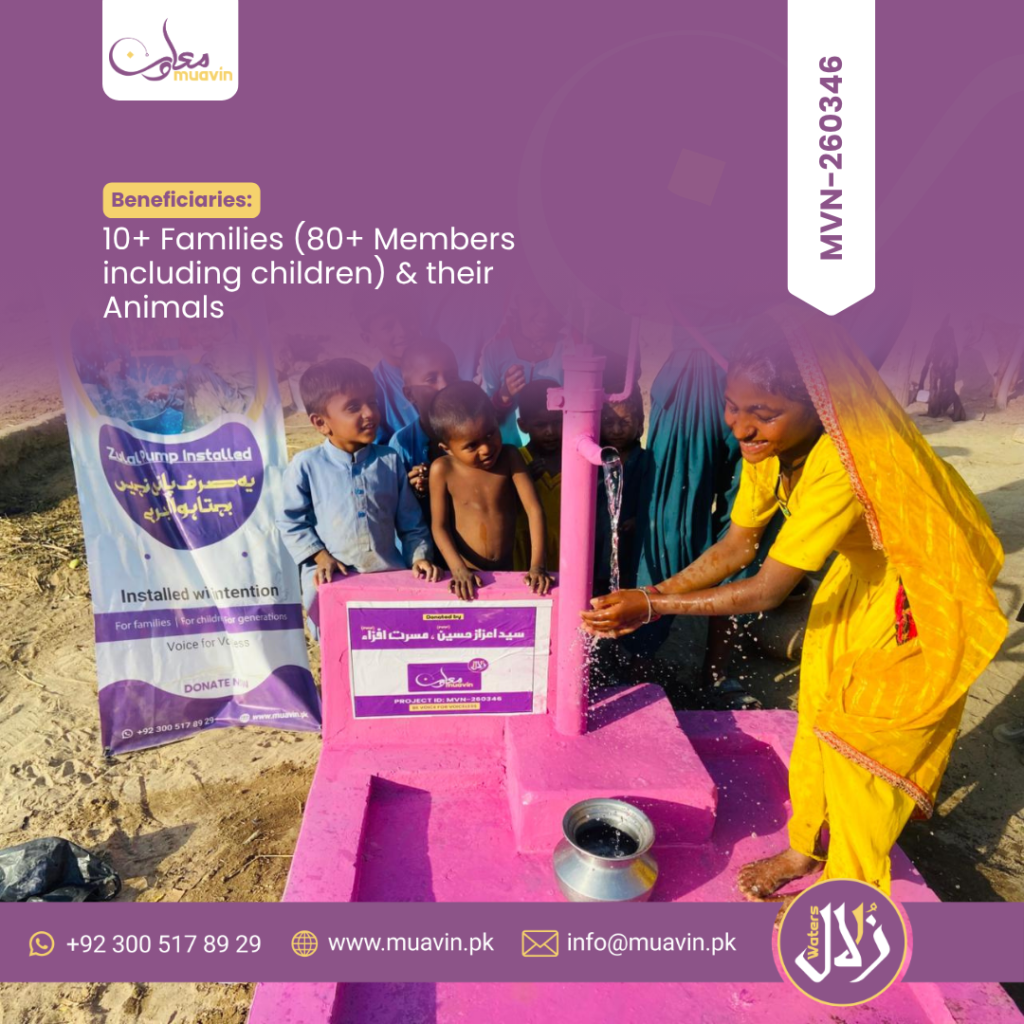
Community hand pumps remain one of the most practical forms of shared rural water infrastructure because they provide centralized access points that multiple families can use consistently each day.
In-village infrastructure and systems helped reduce the operational burden created by the lack of potable water access sources.
Key long-term advantages include:
- shared village-level access
- reduced travel distances
- consistent daily usability
- lower dependency on temporary supply systems
- improved local accessibility
Unlike temporary distribution methods, community hand pumps serve as permanent infrastructure integrated into daily village operations.
This creates greater continuity because communities can access water locally rather than waiting for periodic external delivery.
Community systems also improve infrastructure efficiency by serving multiple households simultaneously through a centralized access point.
Additional information about community-level water infrastructure systems can be explored through Community Hand Pump Projects.
Family Hand Pumps for Household Stability
In some rural environments, household-level systems provide a more stable operational solution for individual families with unreliable local access
Family hand pumps support:
- direct household access
- reduced transportation burden
- safer daily storage consistency
- improved routine water availability
Closer household access also helps reduce contamination risks associated with long-distance transportation and repeated exposure to external storage.
This improves daily operational stability because households can maintain more predictable access for:
- drinking
- cooking
- hygiene
- sanitation
Family-level systems also contribute to long-term Sadqa Jariya continuity by creating repeated daily benefits over extended periods rather than one-time relief distributions.
More details about household-focused infrastructure systems are available through Family Hand Pump Projects.
Solar Water Systems for Long-Term Sustainability
One of the most important developments in sustainable rural water infrastructure is the expansion of solar-powered water systems.
In many rural areas, unreliable electricity access creates major operational limitations for conventional pumping infrastructure. Energy instability can reduce the reliability of water extraction, increase maintenance pressure, and limit long-term system functionality.
Solar-powered infrastructure helps address these operational weaknesses through:
- renewable energy support
- Reduced electricity dependency
- improved operational efficiency
- greater sustainability
- lower long-term operating pressure
These systems are particularly valuable in areas requiring:
- deeper groundwater extraction
- continuous pumping support
- scalable community access systems
Because solar-powered systems rely less on unstable grid infrastructure, they often offer greater resilience in remote or underserved regions.
This also improves long-term sustainability because operational continuity becomes less vulnerable to electricity shortages or fuel dependency. Infrastructure-focused solar water systems can include:
- hybrid water extraction systems
- medium-scale solar pumping systems
- The infrastructure for larger communities
Examples of these infrastructure models can be explored through:
These systems represent a major shift toward sustainable infrastructure rather than short-term operational relief.
Filtration Systems and Safe Drinking Water Infrastructure
Water access alone is not always enough to improve long-term community health outcomes. In many rural areas, the larger problem is the quality and safety of available water sources.
Communities may technically have access to water while still relying on:
- contaminated underground sources
- exposed collection points
- unsafe storage systems
- untreated drinking water
This creates significant public health risks because unsafe water contributes directly to disease transmission, sanitation instability, and long-term household health challenges.
As a result, sustainable infrastructure increasingly focuses not only on water availability but also on water safety and treatment systems.
Unsafe Water Sources Remain a Major Public Health Concern
In many regions, underground water quality varies significantly depending on:
- environmental conditions
- soil composition
- contamination exposure
- infrastructure quality
- nearby sanitation systems
Without filtration or purification infrastructure, communities may consume water containing:
- bacterial contamination
- harmful microorganisms
- unsafe sediment levels
- chemical pollutants
Unsafe drinking water is closely connected to:
- waterborne diseases
- digestive illness
- sanitation instability
- hygiene challenges
- increased household health vulnerability
Children are often particularly vulnerable because repeated exposure to contaminated water can contribute to long-term health complications and reduced overall community well-being.
This is why clean drinking water systems have become a central part of sustainable public health infrastructure rather than simply a humanitarian distribution issue.
Filtration Infrastructure Creates Long-Term Health Protection
Filtration systems improve water reliability by helping communities access safer drinking water through controlled purification and treatment processes.
Unlike temporary bottled distributions or emergency water transport, filtration infrastructure functions continuously within the community itself.
This creates long-term operational advantages:
- safer drinking standards
- improved hygiene reliability
- reduced contamination exposure
- more stable household usage
- improved sanitation support
Sustainable filtration systems also reduce dependence on repeated emergency interventions by providing communities with access to locally maintained safe water infrastructure.
In infrastructure-focused humanitarian development, filtration systems are increasingly viewed as:
- preventive public health infrastructure
- sanitation support systems
- long-term community health investments
rather than temporary relief measures alone.
More information about infrastructure-based purification systems is available through Water Filtration Plant Projects.
How Water Systems Improve Health, Education, and Daily Life
Sustainable water infrastructure affects far more than water access itself. Once stable systems are established, the impact spreads across multiple areas of community life simultaneously.
This is one reason why modern humanitarian planning increasingly treats water infrastructure as a foundation for broader rural development rather than an isolated utility service.
Reliable water systems influence:
- public health
- sanitation
- household stability
- educational continuity
- community productivity
- long-term sustainability
These effects intensify over time because infrastructure systems continue to operate daily rather than serve as short-term interventions.
Water Infrastructure Improves Public Health Stability
Unsafe or unstable water access contributes directly to multiple public health challenges.
Communities facing unreliable systems often experience:
- poor sanitation consistency
- hygiene limitations
- increased contamination exposure
- unsafe storage practices
- recurring illness transIn
Structural infrastructure improves these conditions by creating more predictable access to safer water sources.
This strengthens:
- hygiene practices
- sanitation reliability
- household cleanliness
- disease prevention capacity
Long-term access to clean water also helps reduce pressure on vulnerable healthcare systems by lowering the risk of preventable water-related illnesses in communities.
As a result, water infrastructure functions as a preventative public health system rather than only a humanitarian support mechanism.
Hygiene and Sanitation Become More Sustainable
Water access and sanitation infrastructure are deeply connected.
Without reliable access to water, maintaining consistent hygiene standards becomes significantly more difficult for households and public spaces alike.
Communities with stable systems are better able to support:
- routine hygiene practices
- household sanitation
- safer food preparation
- personal cleanliness
- public utility maintenance
This improves overall environmental health while reducing the likelihood of contamination spreading in densely shared areas.
Sustainable sanitation systems, therefore, depend heavily on stable water infrastructure functioning consistently over time.
Educational Continuity Improves When Water Access Stabilizes
In many rural communities, unreliable water access indirectly affects school attendance through household burden and time-allocation pressures.
When families spend significant time securing daily water access:
- household productivity declines
- Children may lose educational time
- transportation burden increases
- Daily routines become less stable
This is particularly relevant for girls in regions where water collection responsibilities disproportionately affect women and children.
Stable local water systems reduce this operational burden by improving:
- accessibility
- time efficiency
- household consistency
- daily routine stability
As infrastructure reliability improves, families can allocate more time toward:
- education
- household management
- economic activity
- long-term community development
This demonstrates how infrastructure investment can influence social stability beyond immediate access to water alone.
Women and Children Benefit Most from Stable Systems
Women and children often experience the largest direct impact from improved community water infrastructure.
Reduced travel requirements mean:
- lower physical strain
- reduced safety risks
- improved daily efficiency
- more consistent household operations
Closer, safer water access also helps reduce the burden of carrying water long distances under difficult environmental conditions.
Over time, this improves:
- household stability
- daily productivity
- educational continuity
- community resilience
This is why sustainable water infrastructure is increasingly connected with broader discussions around:
- rural development
- social sustainability
- women’s well-being
- community resilience planning
rather than being viewed only as a humanitarian aid issue.
Sustainable Water Systems Strengthen Rural Development
Infrastructure stability changes how communities function operationally.
When water access becomes more reliable:
- Sanitation systems improve
- public health conditions strengthen
- household consistency increases
- Community productivity improves
- Operational stress decreases
This creates a compounding effect. Infrastructure helps support wider community sustainability over time.
As a result, sustainable water systems are now increasingly recognized as:
- development infrastructure
- resilience infrastructure
- public utility infrastructure
- long-term humanitarian investment
rather than temporary emergency response tools.
This distinction is central to modern systems-focused humanitarian thinking because it shifts the conversation from recurring relief toward long-term operational stability.
Why Transparency Matters in Sustainable Charity
Long-term infrastructure projects require a different level of accountability than short-term emergency distributions. When humanitarian systems are designed to operate for years, transparency becomes infrastructure itself rather than an optional administrative feature.
This is particularly important in sustainable water development because communities, donors, and organizations all depend on operational continuity. A project cannot be considered sustainable if there is no visibility into how it is implemented, monitored, or maintained over time.
As humanitarian systems become more infrastructure-focused, transparency increasingly functions as an operational trust mechanism rather than simply a reporting process.
Sustainable Infrastructure Requires Operational Accountability
Temporary aid systems often focus on rapid deployment and short-term stabilization. Infrastructure systems operate differently because they involve:
- long-term implementation
- maintenance planning
- community integration
- operational continuity
- measurable outcomes
These systems, therefore, require stronger visibility across the full project lifecycle.
Operational accountability includes:
- project verification
- progress visibility
- infrastructure tracking
- implementation documentation
- completion confirmation
Without these systems, long-term humanitarian projects become difficult to evaluate
FAQs: Community Water Systems & Sustainable Water Infrastructure
What are community water systems?
Community water systems are shared infrastructure solutions designed to provide long-term water access for villages, public spaces, or multiple households. These systems may include hand pumps, solar-powered pumping infrastructure, filtration plants, and public water access points that operate continuously instead of relying on temporary supply distribution.
Why is temporary water aid not enough for long-term stability?
Temporary water aid is essential during emergencies, but it usually addresses immediate shortages rather than underlying infrastructure problems. Once emergency distributions stop, communities without permanent systems often face recurring water access challenges again.
How do sustainable water systems help rural communities?
Sustainable water systems improve:
- daily water reliability
- sanitation consistency
- public health stability
- household functionality
- community resilience
They also reduce long travel distances and improve operational continuity for communities facing recurring shortages.
Why do rural communities still struggle with clean water access?
Many rural areas face structural infrastructure limitations such as:
- declining groundwater levels
- limited pumping systems
- unsafe underground sources
- unreliable electricity
- climate-related water stress
These conditions make long-term water access difficult without sustainable infrastructure investment.
How do solar-powered water systems improve sustainability?
Solar-powered systems reduce dependency on unstable electricity infrastructure and support long-term operational efficiency. They are particularly useful in remote areas requiring deeper groundwater extraction or continuous pumping support.
What is the difference between emergency water infrastructure?
Emergency aid focuses on short-term crisis response through temporary distributions or tanker support. Infrastructure focuses on permanent operational systems that communities can use consistently for years.
How do water systems improve public health?
Reliable water infrastructure improves:
- sanitation
- hygiene consistency
- safer drinking access
- disease prevention
It also reduces exposure to contaminated water sources that contribute to waterborne illnesses and household health risks.
Why are women and children most affected by water scarcity?
In many rural communities, women and children are responsible for collecting and transporting water. Long travel distances increase physical burden, reduce time available for education or household activities, and create additional safety and health challenges.
What makes a charity system transparent?
Transparent humanitarian systems usually provide:
- project tracking
- implementation updates
- images or videos
- location visibility
- project completion proof
- operational accountability
These systems help donors and communities verify the long-term impact of infrastructure.
Why is transparency important in sustainable charity projects?
Long-term infrastructure projects require accountability because they operate over extended periods. Transparency helps improve trust, operational credibility, and measurable visibility into how infrastructure systems are implemented and maintained.
How can donors track long-term water infrastructure projects?
Some organizations now provide structured transparency systems in which donors can track project progress through updates, verification, completion reports, and beneficiary visibility throughout implementation.
What is Sadqa Jariya water infrastructure?
Sadqa Jariya water infrastructure refers to sustainable water systems that continue benefiting communities over time. Examples include hand pumps, filtration systems, solar-powered water projects, and public water access infrastructure that remain operational for years.
Why do long-term water systems create a stronger humanitarian impact?
Long-term systems create continuous operational benefit rather than temporary relief alone. Because communities use these systems daily, they contribute to ongoing public health improvement, sanitation stability, and sustainable community development.
How do filtration systems improve drinking water safety?
Filtration systems help reduce contamination risks by purifying the e water. This supports safer drinking standards and helps reduce exposure to unsafe underground or untreated water sources.
Why are infrastructure-based humanitarian systems becoming more important?
Modern humanitarian development increasingly focuses on infrastructure because recurring crises cannot always be solved through temporary aid alone. Infrastructure systems create resilience, operational continuity, and long-term community stability.