
When people search for hand pump prices in Pakistan for donation purposes, they often see very different numbers. Some prices look very low, while others show donation costs reaching Rs. 45000. This difference creates confusion, especially for those who want to donate a hand pump but are unsure about the actual cost.
In reality, a hand pump is not just a simple product. It is a complete water project. In Pakistan, donation-based hand pumps usually range between PKR 45,000 to 110,000, depending on type, depth, and location, while many standard charity projects start from around PKR 45,000 or more.
So the real question is not just about price. The more important question is how much you should donate and what impact your contribution will create.
What Is the Real Price of a Hand Pump in Pakistan
To understand the pricing properly, it is important to separate the two completely different categories. Most confusion happens because people mix these two.
Family Hand Pump (Basic Use)
A family hand pump is a simple mechanical device used in homes or small setups. It usually comes without drilling, installation, or any supporting structure. This type of pump is just equipment and does not involve any charity or community project. That is why its cost is low.
Water Charity Hand Pump (Donation Project)
A donation-based hand pump is a complete project rather than a product. It includes multiple stages that ensure water reaches people who need it.
- Community survey: Selecting the right location
- Bore drilling: Reaching underground water sources
- Water testing: Ensuring safe usage
- Installation: Proper setup of the pump
- Construction: Building a usable base
- Final verification: Make sure everything works correctly
Because of this complete process, the cost increases. You are not paying for a machine. You are funding a solution that provides daily water access.
Our Responsibility (10-Year Commitment)🔥
Your donation doesn’t end with installation. Muavin Welfare Foundation ensures ongoing maintenance and care of the hand pump for up to 10 years, so your Sadaqah Jariyah continues without interruption.
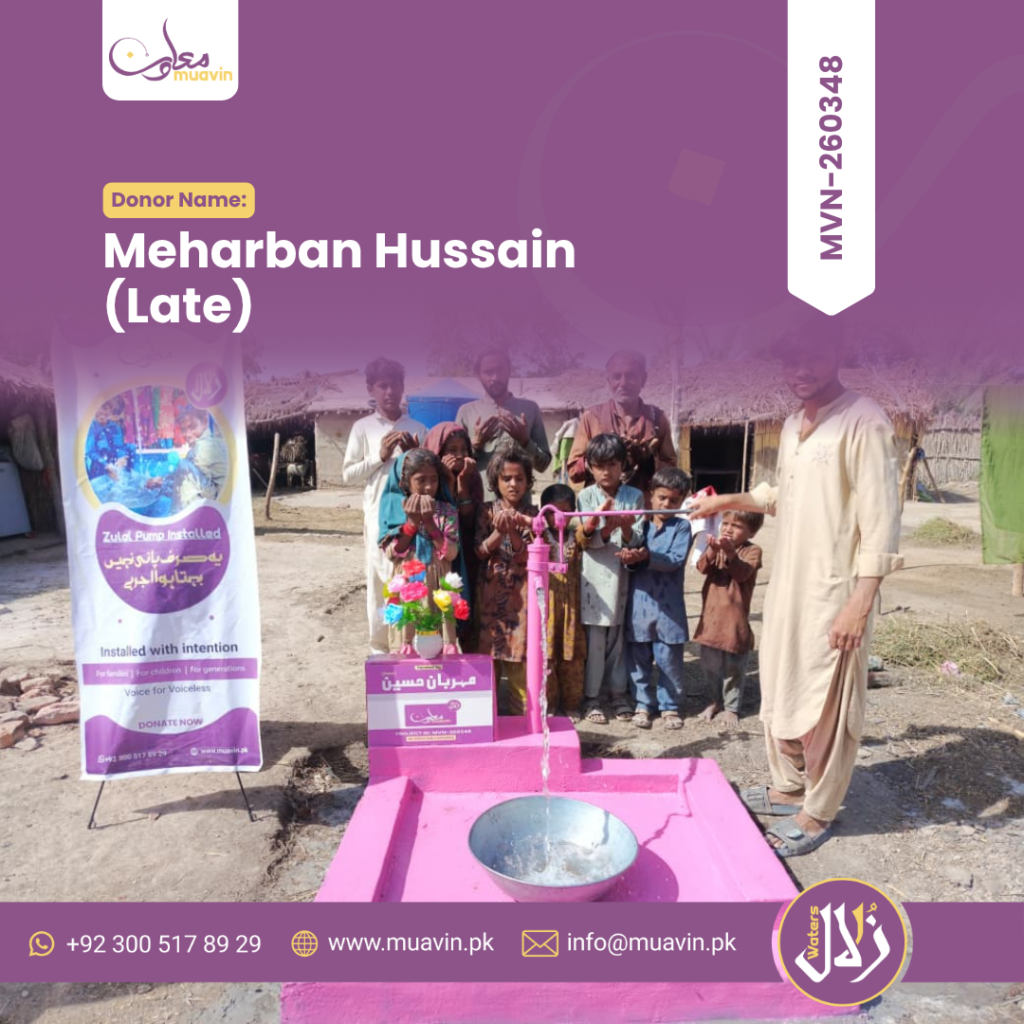
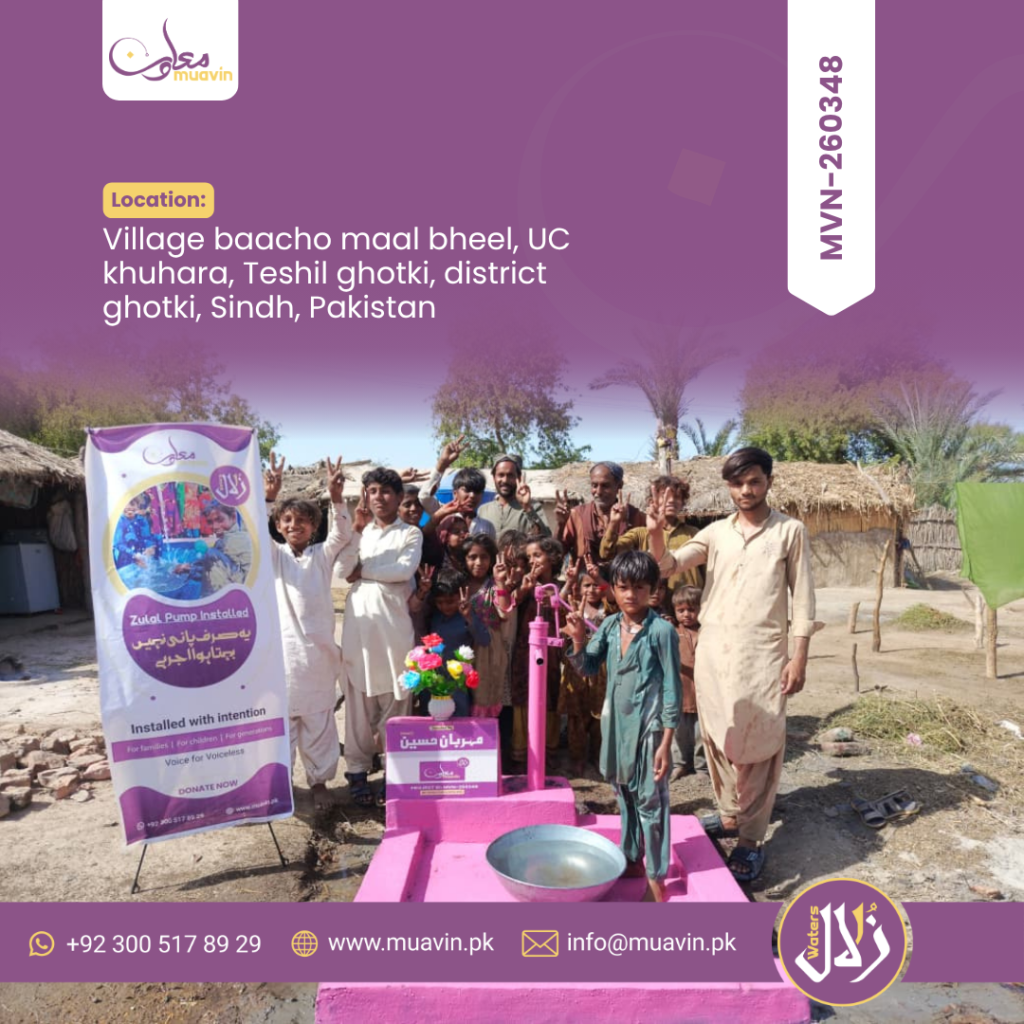
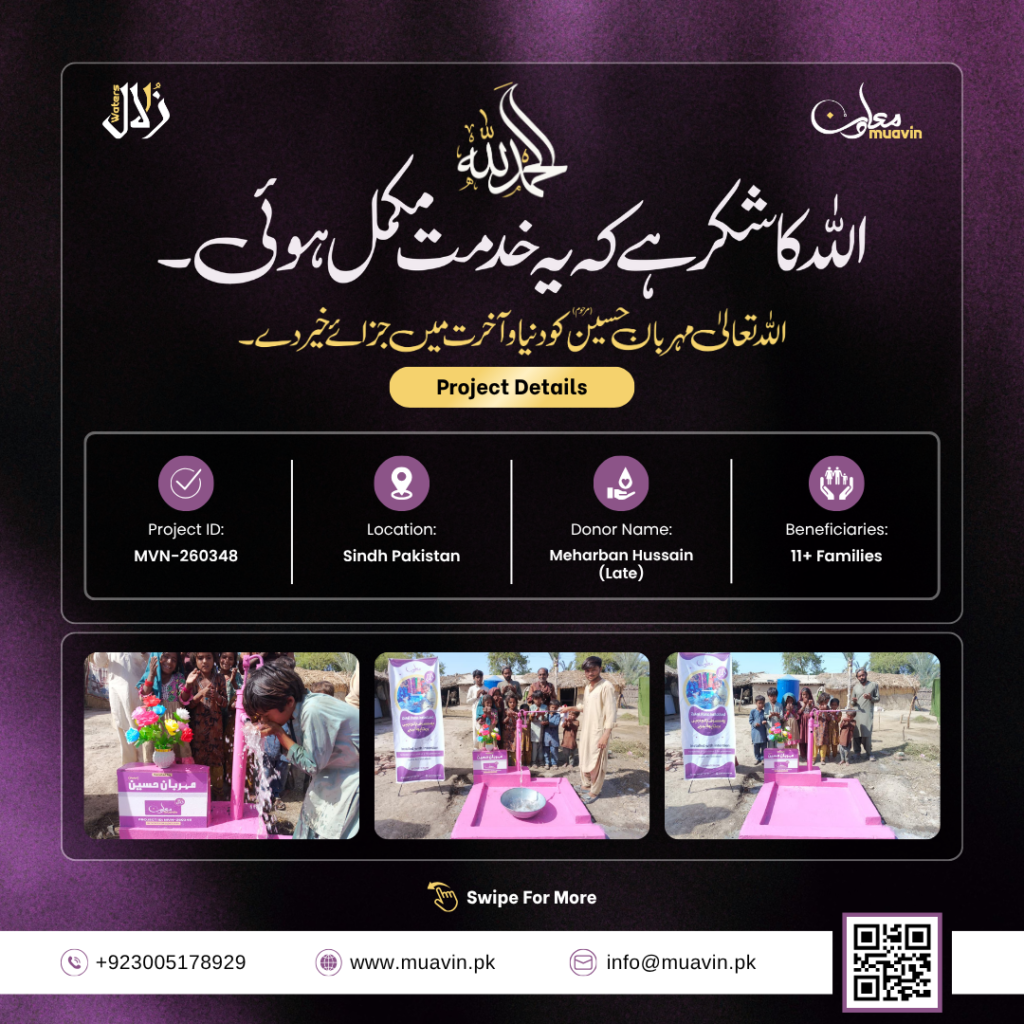
Hand Pump Donation Price Breakdown in Pakistan
Instead of one fixed price, donation systems are usually divided into levels. This makes it easier for people to contribute according to their budget while still being part of a meaningful project.
Family Hand Pump
A family hand pump is designed for a single household or a small group. It is one of the most common donation options.
- Share contribution: PKR 5,000
- Half sponsorship: PKR 25,000
- Full sponsorship: PKR 50,000
This option provides a focused and consistent benefit for a smaller group of people.
Community Hand Pump
A community hand pump serves multiple families and often becomes a shared water source for an entire area.
- Share contribution: PKR 10,000
- Half sponsorship: PKR 50,000
- Full sponsorship: PKR 100,000
This type creates a wider impact because it supports more people on a daily basis.
Comparison to Understand Impact
| Donation Level | Contribution | Impact |
|---|---|---|
| Share | Low | Participation in project |
| Half | Medium | Strong contribution |
| Full | High | Complete project support |
What This Means Before You Donate
Instead of focusing only on finding the cheapest option, it is better to think about the level of impact you want to create. A smaller contribution allows you to participate, while a full sponsorship allows you to create a complete water source.
At the same time, price alone does not define value. Two projects with similar costs can be very different in terms of execution, quality, and transparency. Many donors only receive a final confirmation after donating, without seeing how the project was actually completed.
Learn about the Transparency Model
How to donate a hand pump?
The next step is deciding how much you should donate. This is where most people get stuck, because there is no single fixed amount. The right choice depends on your intention, your budget, and the level of impact you want to create. Instead of guessing, it is better to think in terms of contribution levels rather than price only.
Decision Based on Contribution Level
Each donation level represents a different type of participation in the project. You are not just paying more or less; you are choosing how much impact you want to take responsibility for.
- Share contribution: To be part of a larger project with a smaller amount. This is suitable if you want to start or contribute regularly without a high cost.
- Half sponsorship: Gives you a stronger role in the project and covers a significant portion of the installation
- Full sponsorship: Allows you to fund an entire hand pump, creating a complete and dedicated water source
This structure makes donation flexible. Even a smaller amount still contributes to a meaningful outcome.
Choosing Based on Your Goal
Instead of focusing only on affordability, it helps to align your decision with your purpose.
If your goal is participation, then a share contribution is enough to be involved in an ongoing charity. If your goal is a stronger impact, then a half contribution provides a balance between cost and benefit. If your goal is to create a complete list of someone’s name, then a full sponsorship is the most direct option.
This approach makes the decision easier because it connects your donation to a clear outcome.
Why Prices Differ Between Projects
Another common question is why different organizations show different prices for similar hand pump projects.
The variation usually depends on several real-world factors:
- Location conditions: Drilling difficulty depends on ground type, with harder surfaces requiring more time and effort
- Water depth: The deeper the water source, the more resources are needed to reach it safely
- Type of project: Costs vary between family-use pumps and community pumps built for multiple households
- Area accessibility: Projects in remote areas involve higher logistics, transportation, and labor costs
- Execution quality: Higher construction standards and proper testing ensure durability and long-term performance
These factors mean that pricing is not random. It reflects the complexity of the project.
The Hidden Issue is Donation Without Visibility
At this point, many people understand the cost and choose an amount. However, there is another important factor that is often ignored.
What happens after you donate?
In many cases, the process is not visible. Donors may receive a confirmation or a final update, but they do not see how the project was actually carried out. This creates uncertainty, even when the intention of the charity is genuine.
Common gaps in traditional donation
- No updates during the process
- Limited or no tracking
- Only final confirmation provided
- No clear verification of location or beneficiary
This gap is not about price. It is about trust and visibility.
Why Transparent Donation Matters
As donation systems evolve, people are now looking for more than just completion. They want to see how their contribution is being used.
A transparent system provides:
- Step-by-step updates during the project
- Visual proof, such as photos and videos
- Location details of the installation
- Clear confirmation of completion
This type of approach turns donation into a visible and trackable process instead of a one-time action.
A Better Approach to Donation
Instead of thinking only about cost, the better approach is to combine two things.
- Choose the right contribution level based on your goal
- Choose a system that allows you to see and verify the process
This ensures that your donation is not only meaningful but also reliable.
Why Transparent Donation Changes Everything
Once you understand the price and choose your contribution level, the final and most important factor is how your donation is actually handled.
This is where most people make a mistake.
They focus on cost, but ignore what happens after payment.
The Reality of Traditional Donation Systems
In many cases, the donation process looks simple on the surface, but lacks visibility behind the scenes.
A typical experience includes:
- Donation is made: confirmation received
- Waiting period: no updates or communication
- Completion message: sometimes with limited proof
This creates a gap. Even if the work is done, the donor does not see the full process.
What donors often miss
- How the location was selected
- Whether proper testing was done
- Who is actually benefiting
- How the project was executed step by step
This lack of visibility makes it difficult to fully trust the process.
Why Transparency Matters More Than Price
Two projects may have the same cost, but they can be very different in terms of execution and reliability.
A transparent system ensures that your donation is:
- Traceable: Follow the progress
- Verifiable: Receive actual proof
- Accountable: Every step is documented
This shifts the experience from blind trust to informed confidence.
How Structured Donation Systems Work
Modern charity models are moving toward structured processes that allow donors to stay connected throughout the project. Instead of a single update at the end, the process becomes continuous.
Typical structured flow
- Project selection: based on real community needs
- Progress updates: shared during each stage
- Visual documentation: photos and videos
- Location details: clear and verifiable
- Completion proof: confirmed with evidence
This approach ensures that the donation is not just completed but clearly documented.
Transparent Water Projects in Practice
In structured systems, the focus goes beyond installation; it’s about complete visibility and accountability.
Each project is designed to ensure:
- Reliable access to clean water
- Long-term functionality and maintenance
- Clear documentation and proof for donors
This approach ensures that every donation is not only impactful but also transparent and fully traceable from start to completion.
The 7-Step Verified Process (Why It Matters)
One of the strongest indicators of a transparent system is a clearly defined process. Instead of a single action, the project is divided into verified stages.
A structured 7-step approach includes:
- Careful assessment to identify genuine need and select the right location
- Professional drilling to reach a sustainable water source
- Water quality testing to ensure safe and clean usage
- Proper installation of the hand pump for reliable operation
- Durable construction and finishing for long-term usability
- Donor nameplate placement for dedication and recognition
- Final verification with complete proof, including photos, video, and location details
Each step adds a layer of trust because it shows what is happening, not just the final result.
What This Means for You as a Donor
When transparency is included, your role changes completely. Instead of wondering what happened, you know:
- Where your donation was used
- How the project was completed
- Who is benefiting from it
- When it was delivered
This creates peace of mind, especially when someone’s name is involved.
How to Donate a Hand Pump in Pakistan (Step by Step)
Now that you understand the price, contribution levels, and the importance of transparency, the final step is simple. You need a clear and reliable way to donate.
Instead of guessing or choosing randomly, follow a structured approach so your donation creates real and verified impact.
Step-by-Step Donation Process
A proper hand pump donation should follow a clear system, not just a payment.
- Choose your project type: Decide whether you want a family hand pump or a community-level project based on your impact goal
- Select your contribution level: Choose between share, half, or full sponsorship, depending on your budget and intention
- Add dedication details: Enter the name of the person for whom you are donating, especially if it is for parents or loved ones
- Complete your donation: Use a structured platform to ensure proper execution
- Track your project: Follow updates, view progress, and receive final verification
Where to Donate Transparently
At this stage, the real question is not how much you give but where your donation truly goes. Many platforms collect donations, but very few show what happens next with transparency.
A structured system like Muavin Welfare Foundation ensures your contribution is properly managed, executed, and documented from start to completion. For water-focused initiatives, our water projects in Pakistan are designed to create lasting impact, providing reliable access to clean water for communities over the long term.
Conclusion
Donating a hand pump is not just about cost. It is about creating a long-term source of water for people who need it every day.
The right approach is simple:
- Understand the real price
- Choose your impact level
- Donate through a transparent system
When these three elements come together, your donation becomes meaningful, reliable, and fully verifiable.
FAQs: Hand Pump Price & Transparent Donation (Pakistan)
How much does it cost to donate a hand pump in Pakistan
The cost depends on the type and scale of the project. Most hand pump donations in Pakistan range between PKR 45,000 to 110,000, while many standard charity projects fall around PKR 40,000 to 50,000. The variation is due to drilling depth, location, and project size rather than the pump itself.
Why is a donation hand pump more expensive than a normal pump
A normal pump is just equipment, while a donation project includes drilling, labor, installation, testing, and construction. In many cases, additional steps like surveys and verification are also included, which significantly increase the cost compared to a basic household pump.
How many people benefit from one hand pump
A single hand pump can serve a family of 8 to 12 people or multiple families d, depending on the type of installation and location. Community pumps can benefit even larger groups on a daily basis.
How deep is a typical hand pump in Pakistan
The depth of a hand pump depends on the water table and soil conditions. Many hand pumps are drilled up to 60 feet or more, while deeper installations may be required in some regions.
Can I donate in someone’s name?
Yes, most organizations allow you to dedicate someone’s name. This usually includes a nameplate or recorded dedication, making it a meaningful form of ongoing charity.
What proof do I get after donating a hand pump?
This depends on the organization. Some charities only provide a completion report, while others provide photos, videos, and location details. In more structured systems, donors can track the project step by step instead of waiting for a final update.
How long does a hand pump last
The average lifespan of a hand pump is around 5 years, but with proper maintenance, it can last 7 to 10 years or more. Longevity depends on usage, environment, and upkeep.
Can Zakat be used for a hand pump donation?
Yes, in many cases,s hand pump donations are eligible for Zakat, especially when the pump is installed for families in need. However, it is always better to confirm with the organization before donating
Is a higher price always better
Not necessarily. A higher price does not always guarantee better impact. What matters more is how the project is executed and whether you receive clear proof and updates. Transparency and proper implementation are more important than cost alone.
What is the best way to donate a hand pump
The best approach is to choose:
- A contribution level that matches your budget
- A project type that matches your impact goal
- A system that provides transparency, tracking, and verification
This ensures your donation is both meaningful and reliable.