When planning or considering water project maintenance in Pakistan in 2027, ensuring transparent field execution, robust engineering, and verified water lab testing is vital. Every donation funds audited installations tracked with live GPS mapping and community photos to ensure enduring Sadaqah Jariyah benefits.
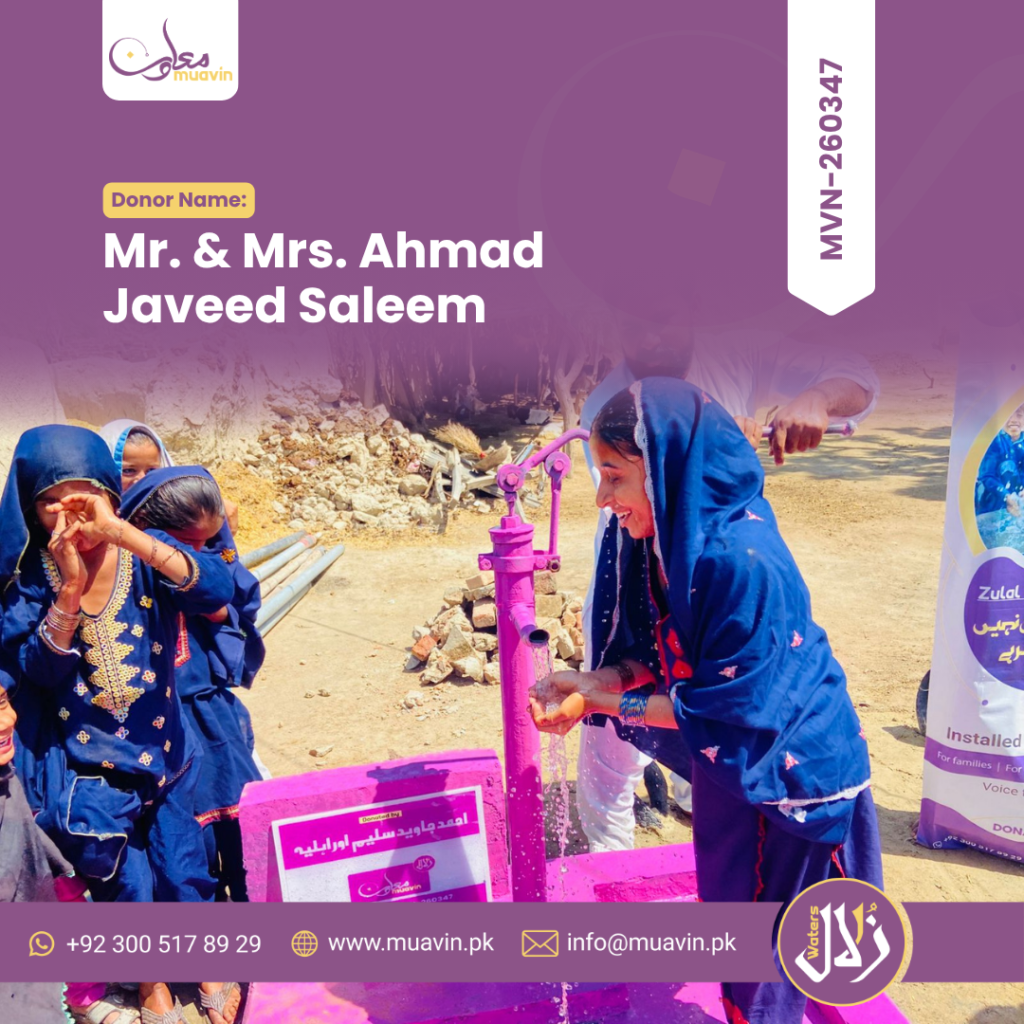
In this definitive guide to Water Project Maintenance Pakistan, we examine how transparent charity and community-backed infrastructure bring life-saving relief to water-scarce regions. Clean, safe water remains an essential human right; as documented by the World Health Organization (WHO), dependable drinking water dramatically reduces childhood mortality, prevents waterborne illnesses, and safeguards rural families.
Table of Contents

Verified clean water initiative in Pakistan providing life-saving access as Sadaqah Jariyah.
Installing a water project is a significant milestone, but it is only the beginning of a much longer journey. Whether the project is a hand pump, solar water system, filtration plant, water cooler, or community water facility, long-term success depends on what happens after installation.
Sustainable water access requires ongoing care, routine inspections, monitoring, and community involvement to ensure the system continues to serve beneficiaries effectively.
Many donors naturally focus on project installation because it represents the visible completion of a charitable initiative. However, experienced water infrastructure organizations understand that sustainability depends on more than construction alone.
A project that is installed successfully but receives little attention afterward may face avoidable challenges that affect its performance over time. Water projects are often designed to provide communities with reliable access for many years.
Achieving this goal requires maintenance strategies that protect equipment, identify problems early, and support continued operation. Different types of water infrastructure require different levels of maintenance, but all systems benefit from periodic oversight and responsible management.
For donors supporting water projects as Sadaqah Jariyah, understanding maintenance is particularly important. The continued benefit of a water project depends on its ability to remain operational and accessible to the people who rely on it. When infrastructure remains functional, communities continue to receive support, and charitable impact continues over time.
Maintenance is therefore not simply a technical requirement. It is a key part of protecting community wellbeing, supporting operational continuity, and ensuring that water infrastructure continues creating meaningful value long after installation.
Understanding how different water projects are maintained helps donors appreciate the long-term importance of sustainability, accountability, and project monitoring.
Water project maintenance in Pakistan: Core Impact and 2027 Verification
Water projects are designed to provide reliable access to clean water over extended periods. While installation creates the foundation for community benefit, maintenance helps preserve that benefit by keeping infrastructure functional and dependable.
Without maintenance, even well-designed systems can experience reduced efficiency, component failures, or service interruptions. With proper care, however, many water projects continue serving communities successfully for years.
Installation is only the first stage of a water project’s lifecycle
A completed installation often represents the beginning rather than the end of a project’s lifecycle. Once a water system becomes operational, attention shifts to ensuring it continues to function safely and effectively.
Sustainable infrastructure is built with the understanding that ongoing care is part of long-term success.
- Long-term functionality depends on regular upkeep: Routine maintenance helps identify wear and tear before it develops into larger problems. Small adjustments, inspections, and repairs often prevent more significant operational issues later. By addressing concerns early, communities can reduce downtime and maintain consistent access to water.
- Sustainable infrastructure requires ongoing attention: Every infrastructure system experiences natural wear over time. Water projects are no exception. Components may require cleaning, servicing, replacement, or adjustment depending on usage patterns and environmental conditions. Regular attention helps preserve system performance and reliability.
Maintenance helps protect the project’s lifespan and reliability
One of the primary goals of maintenance is extending the useful life of infrastructure. Water projects are valuable community assets, and protecting them helps maximize long-term impact. Reliability is particularly important because many communities depend on these systems for essential daily needs.
- Properly maintained systems often remain operational for many years: Water systems that receive routine inspections and timely maintenance continue to serve communities effectively for extended periods. The ability to identify issues early helps prevent unnecessary deterioration and supports long-term sustainability.
- Neglected systems can become less effective: When maintenance is delayed or overlooked, small issues can become larger operational challenges. Reduced performance, equipment wear, and service interruptions may affect beneficiaries who depend on the project.
Maintenance supports continuous community benefit.
The purpose of a water project is not simply to install infrastructure but to provide reliable access to water for the people who depend on it. Maintenance helps ensure that communities continue receiving this benefit over the long term.
When systems remain operational, families can access water consistently for drinking, cooking, cleaning, hygiene, and other daily needs. This continuity is what transforms a water project from a short-term intervention into a sustainable community resource.
- Reliable water access improves public health outcomes: Access to dependable water infrastructure supports healthier communities by making water more consistently available for hygiene, sanitation, and household use. When systems remain functional, communities are better positioned to maintain healthy routines and improve overall wellbeing.
- Operational continuity strengthens community resilience: Communities become more resilient when critical infrastructure remains available during changing environmental conditions, seasonal challenges, or periods of increased demand. Reliable water systems help reduce uncertainty and support long-term community stability.
Maintenance also protects the long-term value of Sadaqah Jariyah
For many donors, water projects represent more than infrastructure investments. They are also a form of Sadaqah Jariyah intended to create ongoing benefit for communities over time. The continued value of a water project depends on its ability to remain operational and accessible to beneficiaries.
- Ongoing functionality supports ongoing benefit: A water project can continue serving people only if it remains functional. Maintenance helps preserve the project’s ability to provide access to water and support daily community needs. The longer a project remains operational, the longer its positive impact can continue.
- Continuous benefit helps extend charitable impact: Sadaqah Jariyah is closely connected to ongoing benefit. Water projects that continue to serve communities for many years create opportunities for ongoing charitable impact. This is one of the reasons sustainability and maintenance are considered important components of long-term water infrastructure planning.
Water projects last for 10+ years through maintenance:
Organizations focused on sustainability often incorporate maintenance planning into the project design process. Rather than waiting for problems to occur, they consider how systems will be monitored, maintained, and supported throughout their operational life.
This proactive approach helps strengthen project reliability and improve long-term outcomes.
- Community-managed systems often improve sustainability: Community participation frequently plays an important role in maintaining water infrastructure. Local involvement helps ensure that projects receive regular attention and that minor issues can be identified quickly.
Communities that feel ownership over a project are often more motivated to support its long-term success.
- Routine inspections help prevent larger problems: Routine inspections allow maintenance needs to be identified before they become major operational challenges. By addressing minor issues early, communities and project managers can reduce repair needs and improve system longevity.
The most effective sustainable water projects are designed not only for installation but also for years of reliable service through proper monitoring and upkeep.
Maintenance of different water projects:
Different water projects require different maintenance approaches depending on the technology, infrastructure, and operational requirements involved. While all systems benefit from routine oversight, the specific maintenance tasks vary according to project type.
Understanding these differences helps donors appreciate the planning and ongoing care required to support long-term water access.
Hand pumps require routine mechanical maintenance:
Hand pumps are among the most common forms of community water infrastructure because they are relatively simple, durable, and practical for many rural environments. Although hand pumps are often considered low-maintenance systems, they still require periodic servicing to remain reliable.
- Routine inspections help identify wear and tear: Frequent use naturally creates wear on mechanical components over time. Routine inspections help identify developing issues before they affect system performance. Early detection often allows repairs to be completed quickly and efficiently.
- Handle repairs may be required over time: Pump handles experience regular movement and mechanical stress during daily operation. Occasional adjustments or repairs may be necessary to maintain safe and efficient operation. Addressing these issues promptly helps prevent larger mechanical problems.
- Seals occasionally require replacement: Seals play an important role in maintaining proper pump performance. Over time, normal wear may reduce their effectiveness. Periodic replacement helps maintain efficiency and supports continued access to water.
- Lubrication helps maintain smooth operation: Moving mechanical components benefit from proper lubrication. Routine lubrication reduces friction, minimizes wear, and supports smoother operation. This simple maintenance task can contribute significantly to system longevity.
- Access to spare parts improves long-term reliability: The availability of replacement parts helps communities address maintenance needs quickly when components wear out or are damaged. Access to commonly used parts often improves operational continuity and reduces downtime.
Solar water projects require preventive maintenance.
Solar water systems are designed to provide sustainable and energy-efficient water access. While they generally require less day-to-day intervention than some traditional systems, preventive maintenance remains essential for long-term reliability. Routine inspections help ensure that all components continue operating efficiently.
- Solar panels benefit from regular cleaning: dust, dirt, leaves, and other debris can accumulate on them over time. Regular cleaning helps maintain energy production and ensures the system continues to operate at optimal performance.
- Pumps should be inspected periodically water pumps are critical components in solar water systems. Periodic inspections help identify mechanical wear, reduced efficiency, or performance issues before they affect water availability. Preventive maintenance often reduces the likelihood of unexpected service interruptions.
- Electrical systems require routine checkss.Solar water projects include electrical components that help manage power generation and distribution. Routine inspections of wiring, controllers, and related systems help maintain safety and operational reliability.
- Water output monitoring helps identify performance issues: it provides valuable information about system performance. Changes in output levels may indicate maintenance requirements, groundwater variations, or equipment issues that should be addressed.
- Seasonal inspections support operational continuity: Environmental conditions change throughout the year. Seasonal inspections help ensure that solar infrastructure remains prepared for varying weather conditions and usage patterns. Regular evaluations support consistent performance and long-term sustainability.
Water filtration plants require ongoing performance monitoring
Water filtration plants focus on improving water quality, making maintenance especially important. The effectiveness of these systems depends on treatment components functioning properly and consistently. Without routine monitoring, water quality can be affected.
- Filters require scheduled replacement: Filters play a central role in removing contaminants and improving water quality. Over time, filters reach capacity and require replacement to maintain effectiveness. Scheduled replacement programs help ensure continued performance.
- Water quality testing helps maintain safety standards: Regular testing verifies that filtration systems continue to produce water that meets intended quality objectives. Testing provides valuable information that supports ongoing system management.
- Treatment systems require routine cleaning: Filtration equipment can accumulate residue and contaminants during operation. Routine cleaning helps preserve performance and reduces the risk of system inefficiencies.
- Equipment servicing improves long-term performance: Mechanical and treatment components benefit from periodic servicing to maintain reliability. Servicing helps identify wear, prevent breakdowns, and support consistent operation.
- Monitoring ensures treatment systems remain effective: Continuous monitoring allows operators to evaluate performance and respond quickly to any changes in system effectiveness. This proactive approach helps protect both water quality and community confidence.
Water coolers and Wazu Khana facilities require regular upkeep
Public water facilities often experience high daily usage because they serve schools, mosques, community centers, and other gathering places. Regular maintenance helps ensure that these facilities remain safe, hygienic, and accessible.
- Cleaning supports hygiene standards: Routine cleaning helps maintain sanitary conditions and improves user experience. Clean facilities encourage consistent use while supporting public health objectives.
- Plumbing inspections help prevent service interruptions: Water coolers and Wazu Khana facilities depend on functioning plumbing systems. Periodic inspections help identify leaks, blockages, or other issues before they disrupt service.
- Routine maintenance improves public usability: Consistent upkeep helps ensure that facilities remain comfortable, functional, and dependable for daily users. Reliable public infrastructure creates ongoing community benefit and supports long-term project value.
Responsibility for Water Project Maintenance
One of the most important questions donors ask is who maintains a project after installation. While maintenance responsibilities vary by project type and location, successful water systems typically rely on a combination of community involvement, local oversight, technical support, and monitoring structures.
Long-term sustainability is strongest when maintenance responsibilities are clearly understood and shared among stakeholders.
Successful projects often rely on shared responsibility
Water infrastructure performs best when multiple stakeholders contribute to its care and sustainability. Shared responsibility helps ensure that maintenance tasks are addressed promptly and that systems continue serving communities effectively.
Projects that combine community participation with organizational support often achieve stronger long-term outcomes.
- Local communities play an important role in daily oversight: Community members are often the first to notice changes in system performance because they use the infrastructure regularly. Their involvement helps identify maintenance needs early and supports quicker responses to developing issues.
- Trained caretakers can support routine maintenance: Some projects benefit from designated individuals who oversee daily operations and perform basic maintenance tasks. These caretakers often play an important role in preserving system functionality and reducing preventable problems.
Water committees often improve project sustainability.
Many successful community water systems rely on local management structures that help coordinate maintenance activities and encourage accountability . Water committees can help ensure that projects receive regular attention and remain responsive to community needs.
- Local management structures strengthen accountability: Organized local oversight creates clear responsibilities and helps communities monitor project conditions over time. Accountability mechanisms often contribute to stronger long-term sustainability.
- Community ownership encourages long-term care: When communities view a project as their own shared resource, they are often more motivated to protect and maintain it. This sense of ownership can significantly improve project longevity.
Partner organizations may assist with monitoring and support
Technical expertise and external support can help strengthen maintenance programs, particularly for more advanced infrastructure systems. Organizations involved in implementation may also provide guidance related to inspections, repairs, and sustainability planning.
- Technical guidance helps maintain project quality: Professional support can help communities understand maintenance requirements and address technical issues appropriately . This guidance often improves system performance and reliability.
- Follow-up support can improve operational continuity: Periodic follow-up activities help evaluate project conditions and identify opportunities for improvement. Ongoing support contributes to stronger operational continuity and sustainability.
Charity oversight remains important for accountability.
Maintenance is not only a technical issue but also an accountability issue. Donors increasingly want confidence that projects will continue to serve beneficiaries after installation. Oversight mechanisms help ensure that project performance remains visible and measurable.
- Monitoring systems improve visibility: Monitoring programs help organizations understand how projects are performing and whether maintenance requirements are being addressed effectively. This visibility supports both sustainability and accountability.
- Project reporting strengthens donor confidence: Reporting systems help communicate project status and long-term outcomes to supporters. When donors receive evidence of ongoing functionality, confidence in the project’s impact increases.
Long-term success often depends on community participation
The most sustainable water projects typically combine quality infrastructure with strong community engagement; infrastructure alone cannot guarantee long-term success. Community participation helps ensure that systems remain relevant, maintained, and operational.
- Sustainable projects combine infrastructure with local engagement: Projects that integrate local involvement into maintenance planning often achieve stronger long-term results. Community engagement supports ownership, accountability, and sustainability.
- Shared responsibility supports project longevity: Long-lasting projects usually depend on cooperation among benefamongs, local leaders, technical teams, and supporting organizationsorganizationsponsibility creates a stronger foundation for continued operation and community benefit.
Operational Lifespan of Different Water Projects:
One of the most important measures of project success is longevity. Donors often want to know how long a water project can continue serving a community after installation.
While there is no single lifespan that applies to every system, proper maintenance significantly influences operational life. Projects that receive regular inspections, timely repairs, and responsible oversight often remain functional far longer than systems that receive limited attention.
Project lifespan depends heavily on maintenance quality
The quality and consistency of maintenance often determine how long infrastructure remains effective. Well-maintained systems generally experience fewer interruptions, lower repair costs, and longer operational lifespans.
- Regular upkeep extends operational life: Routine inspections, preventive maintenance, and timely repairs help reduce wear and support continued performance. Consistent care allows communities to maximize the value of existing infrastructure.
- Neglected systems often experience earlier failures: When maintenance needs are ignored, components may deteriorate more rapidly, increasing the likelihood of service interruptions. Addressing problems early is usually more effective than waiting for major failures.
Hand pumps can provide years of reliable service.
Hand pumps are widely used because of their durability and relatively simple maintenance requirements. When routine inspections and basic repairs are performed consistently, these systems can continue to support communities for many years. Their straightforward design often makes maintenance more manageable than that of more complex infrastructure systems.
- Routine repairs improve longevity: Small repairs completed at the appropriate time help prevent larger mechanical issues from developing. Regular attention to moving components, seals, and handles supports continued performance.
- Component replacement supports continued operation: Like any infrastructure system, individual parts may eventually require replacement due to normal wear. Replacing worn components helps restore functionality and extend overall project lifespan.
Solar water systems can remain effective for extended periods
Solar-powered water projects are designed for long-term operation and sustainability. Their ability to generate energy from renewable sources makes them particularly valuable in communities with limited access to reliable electricity.
When preventive maintenance is performed regularly, solar systems can continue providing dependable water access for extended periods.
- Panel maintenance improves performance: Solar panels operate most efficiently when they remain clean and free from dust, debris, and environmental buildup. Regular cleaning helps maintain energy generation capacity and supports consistent water production.
- Preventive inspections reduce downtime: Routine inspections help identify electrical, mechanical, or operational concerns before they affect system performance. Preventive maintenance reduces unexpected interruptions and improves long-term reliability.
Filtration plants depend on continuous maintenance
Water filtration systems focus on both water quality and water access. Because treatment effectiveness depends on functioning equipment and filters, ongoing maintenance plays a particularly important role. Regular monitoring helps ensure that treated water continues meeting intended quality standards.
- Filter replacement protects water quality: Filters gradually lose effectiveness as they process water. Scheduled replacement helps maintain treatment performance and supports continued access to cleaner drinking water.
- Equipment servicing supports operational efficiency: Treatment systems contain components that require periodic inspection and servicing. Regular maintenance helps preserve efficiency and reduce the risk of operational problems.
Common challenges can affect the project lifespan.
Even well-designed water projects may encounter challenges over time. Environmental conditions, infrastructure wear, and changing community needs can all influence performance Understanding these risks helps communities and organizations prepare effective maintenance strategies.
- Mechanical wear occurs naturally over time: Continuous wear occurs on pumps, valves, seals, and other moving components. Routine maintenance helps manage this wear and prevent avoidable failures.
- Groundwater fluctuations may influence performance: Changes in groundwater levels can affect water availability and pumping efficiency in some locations. Monitoring helps identify these changes and supports appropriate responses.
- Contaminated water sources can affect systems: Poor water quality may place additional strain on treatment equipment and infrastructure. Regular testing and monitoring help protect system effectiveness.
- Broken components require timely repairs: Infrastructure performs best when damaged parts are repaired or replaced promptly. Delays in addressing maintenance issues can increase downtime and reduce service reliability.
- A lack of inspections can increase the risk of failure: many operational problems begin as small maintenance issues. Routine inspections help identify issues early and reduce the likelihood of major disruptions.
Why project monitoring is as important as maintenance:
Maintenance keeps infrastructure functioning, but monitoring helps ensure that maintenance needs are identified and addressed appropriately. Together, maintenance and monitoring form the foundation of sustainable water project management.
A project that is maintained but rarely monitored may still experience performance issues that go unnoticed. Monitoring provides visibility into how systems are operating and whether communities continue receiving intended benefits.
Monitoring helps identify issues before they become serious
One of the greatest advantages of monitoring is the ability to detect problems early. Small performance changes often signal that maintenance may be required.
- Routine performance checks improve reliability: Regular evaluations help confirm that systems are operating as intended. Performance monitoring supports consistent service delivery and helps reduce unexpected interruptions.
Hand pumps can provide years of reliable service
Hand pumps are widely used because of their durability and relatively simple maintenance requirements. When routine inspections and basic repairs are performed consistently, these systems can continue supporting communities for many years.
Their straightforward design often makes maintenance more manageable than that of more complex infrastructure systems.
- Routine repairs improve longevity: Small repairs completed at the appropriate time help prevent larger mechanical issues from developing. Regular attention to moving components, seals, and handles supports continued performance.
- Component replacement supports continued operation: Like any infrastructure system, individual parts may eventually require replacement due to normal wear. Replacing worn components helps restore functionality and extend overall project lifespan.
Solar water systems can remain effective for extended periods
Solar-powered water projects are designed for long-term operation and sustainability. Their ability to generate energy from renewable sources makes them particularly valuable in communities with limited access to reliable electricity.
When preventive maintenance is performed regularly, solar systems can continue providing dependable water access for extended periods.
- Panel maintenance improves performance: Solar panels operate most efficiently when they remain clean and free from dust, debris, and environmental buildup. Regular cleaning helps maintain energy generation capacity and supports consistent water production.
- Preventive inspections reduce downtime: Routine inspections help identify electrical, mechanical, or operational concerns before they affect system performance. Preventive maintenance reduces unexpected interruptions and improves long-term reliability.
Filtration plants depend on continuous maintenance
Water filtration systems focus on both water quality and water access. Because treatment effectiveness depends on functioning equipment and filters, ongoing maintenance plays a particularly important role.
Regular monitoring helps ensure that treated water continues meeting intended quality standards.
- Filter replacement protects water quality: Filters gradually lose effectiveness as they process water. Scheduled replacement helps maintain treatment performance and supports continued access to cleaner drinking water.
- Equipment servicing supports operational efficiency: Treatment systems contain components that require periodic inspection and servicing. Regular maintenance helps preserve efficiency and reduce the risk of operational problems.
Common challenges can affecthe t the project lifespan..
Even well-designed water projects may encounter challenges over time. Environmental conditions, infrastructure wear, and changing community needs can all influence performance.
Understanding these risks helps communities and organizations prepare effective maintenance strategies.
- Mechanical wear occurs naturally over time: Continuous use wears out pumps, valves, seals, and other moving components. Routine maintenance helps manage this wear and prevent avoidable failures.
- Groundwater fluctuations may influence performance: Changes in groundwater levels can affect water availability and pumping efficiency in some locations.`Monitoring helps identify these changes and supports appropriate responses.
- Contaminated water sources can affect systems: Poor water quality may place additional strain on treatment equipment and infrastructure. Regular testing and monitoring help protect system effectiveness.
- Broken components require timely repairs: Infrastructure performs best when damaged parts are repaired or replaced promptly. Delays in addressing maintenance issues can increase downtime and reduce service reliability.
- Lack of inspections canincrease thee risk of failure: Many operational problems begin as small maintenance concerns. Routine inspections help identify issues early and reduce the likelihood of major disruptions.
Why project monitoring is as important as maintenance:
Maintenance keeps infrastructure functioning, but monitoring helps ensure that maintenance needs are identified and addressed appropriately. Together, maintenance and monitoring form the foundation of sustainable water project management.
A project that is maintained but rarely monitored may still experience performance issues that go unnoticed. Monitoring provides visibility into how systems are operating and whether communities continue receiving intended benefits.
Monitoring helps identify issues before they become serious
One of the greatest advantages of monitoring is the ability to detect problems early. Small performance changes often signal that maintenance may be required.
- Routine performance checks improve reliability: Regular evaluations help confirm that systems are operating as intended. Performance monitoring supports consistent service delivery and helps reduce unexpected interruptions.
- Early intervention often reduces repair requirements: Addressing issues while they are still minor is more effective than responding to major fectivesystem failures. Early intervention failures. Early interventioninimize downtime, and preserve infrastructure value.
Monitoring supports accountability
Monitoring is not only important for technical performance but also for transparency and accountability. Communities, organizations, and donors all benefit when project status remains visible after installation.
- Follow-up visits help assess project condition: Periodic site visits provide opportunities to evaluate system performance, review maintenance needs, and confirm continued functionality. hese visits often provide valuable insights that may not be visible through routine reporting alone.
- Performance tracking improves transparency: Tracking project performance over time helps demonstrate whether the infrastructure continues to deliver its intended benefits. Performance data supports informed decision-making and strengthens accountability.
Donors increasingly expect visibility beyond installation..
M. donors today want to understand what happens after a project is completed. Installation photographs and completion reports are valuable, but they represent only one stage of the project lifecycle. Long-term visibility helps donors appreciate the ongoing impact of their contribution.
- Proof of completion is important: Completion documentation confirms that a project has been successfully installed and delivered. This evidence provides an important foundation for donor confidence.
- Long-term monitoring provides additional confidence: When monitoring continues after installation, donors gain a better understanding of how the project is performing over time. This visibility helps demonstrate sustainability and long-term community benefit.
Monitoring helps verify continued community benef…
The purpose of monitoring is ultimately to ensure that communities continue to receive reliable access oreceiveer. Projects thatto water.n operational continue to create value ing ee, improving d by improvingg and supprand supportingelopment.
- Operational projects continue to serve beneficbenefit; watertructure only has impacttimpact;y fonly uonly functionalcessible. Moniring help verify that systems continue supporting the people they were designed to serve.
- Ongoing visibility strengthens trust: Trust grows when stakeholders can see evidence that projects continuto operateng successfully aftecompletionon .Visibility and transparency help strengthen confidence in both the project and the organization supporting it.
Transparency for Long-Term Impact :
Transparency plays an essential role in demonstrating that water projects continue creating meaningful value after installation. While maintenance and monitoring help sustain infrastructure, transparency helps communicate outcomes and build trust among donors, communities, and partner organizations.
Long-term impact becomes easier to understand when project information remains visible and accessible.
Transparency should continue after project completion
Many organizations focus heavily on installation documentation, but long-term accountability requires continued communication beyond ccompletionTransparency is most effective when it extends throughout the entire project lifecycle.
- Installation evidence is only one part of accountability: Photographs and completion reports provide important proof that a project was implemented. However, understanding how a project performs over time often provides a more complete picture of impact.
- Continued reporting strengthens donor trust: Regular updates help donors remain informed about project outcomes and sustainability efforts. Ongoing communication strengthens confidence and demonstrates organizational accountability.
Muavin’s transparency portal helps donors understand project outcomes
Transparency becomes more meaningful when donors can access information that helps them follow a project’s journey from donation through implementation and beyond. Mavin emphasizes visibility and accountability by helping donors understand how projects progress and how communities benefit from completed installations.
- Donation tracking improves visibility: Tracking systems help donors understand where projects are within the implementation process and provide greater clarity throughout the donor journey.
- Installation updates connect donors to implementation: Project updates help demonstrate how contributions translate into completed infrastructure. These updates strengthen engagement and accountability.
- Photos and videos provide project evidence: Visual documentation helps donors see completed projects and better understand community impact. Images and videos often provide some of the strongest forms of project verification.
- Beneficiary locations support verification: Location information adds transparency by connecting projects to specific communities and regions. This visibility helps strengthen accountability.
- Completion reports strengthen accountability:t theyprovide documentation that helps verify implementation and communicate outcomes. These reports contribute to donor confidence and trust.
- Continued visibility helps demonstrate long-term impact: Transparency does not end when a project is completed. Continued visibility helps demonstrate sustainability, operational continuity, and ongoing community benefit.
Water projects often require ongoing support in water-scarce regions
Long-term sustainability is particularly important in regions where communities depend heavily on reliable water infrastructure. Maintenance, monitoring, and transparency help ensure that projects continue supporting people in areas facing persistent water accessibility challenges.
- Layyah continues to face water accessibility challenges: Many communities in Layyah rely on dependable water infrastructure to meet their daily needs. Sustainable maintenance practices help protect long-term access.
- Alipur Muzaffargarh relies on sustainable infrastructure solutions: Water projects in Alipur Muzaffargarh often provide important support for communities where reliable access remains a priority.Ongoing oversight contributes to project effectiveness.
- Interior Sindh benefits from long-term water system reliability: Many areas across Interior Sindh continue to benefit from infrastructure that remains operational and accessible over time. Long-term sustainability helps strengthen community resilience.
Maintenance protects the value of Sadaqah Jariy..ah
For donors supporting water projects as Sadaqah Jariyah, maintenance plays an important role in preserving long-term benefit. The continued operation of a project helps ensure that communities continue to receive support and that the charitable impact endures over time.
- Ongoing operation creates ongoing community benefit: Every day a project remains functional is another day that beneficiaries can access water for drinking, cooking, cleaning, hygiene, and daily living. Continued operation strengthens community wellbeing.
- Continuous benefit supports continuous reward: Water projects are often viewed af ongoing charity because they continue to benefit people long after installation. Maintenance helps protect this ongoing impact.
- Sustainability strengthens long-term impact: The most meaningful projects are often those that continue to serve communities reliably for years.Sustainability helps maximize both humanitarian value and community benefit.
- Support long-term clean water access by donating a community hand pump that benefits families for years: Projects that remain operational over extended periods often provide significant and measurable long-term value to communities.
Conclusion
Installing a water project is an important achievement, but long-term success depends on what happens afterward. Maintenance, monitoring, community participation, and transparency all play essential roles in ensuring that water infrastructure continues serving beneficiaries effectively.
Different systems require different forms of maintenance. Hand pumps benefit from routine inspections and repairs, solar water systems require preventive mamaintenance filtration plants depend on ongoing mrmonitoring and public facilities need regular upkeep to remain safe and accessible.
The quality of maintenance and oversight strongly influences project longevity. Communities that support infrastructure through routine care and responsible management often experience stronger long-term outcomes.
Monitoring is equally important because it helps identify issues early, verify continued functionality, and strengthen accountability. Transparency further enhances trust by helping donors understand how projects perform over time.
Ultimately, the greatest impact is achieved when water projects remain operational for years after installation. Sustainable maintenance practices protect infrastructure, support communities, and help ensure that charitable contributions continue creating meaningful benefits well into the future.
Frequently asked questions
Do water projects need maintenance after installation?
Yes. All water projects require some level of maintenance after installation. Routine inspections, cleaning, repairs, and monitoring help ensure that systems remain operational and continue serving communities effectively.
How often should a hand pump be serviced?
Service schedules vary depending on usage levels and local conditions. Routine inspections are generally recommended to identify wear and maintenance needs before larger issues develop.
What maintenance does a solar water project require?
Solar water projects typically require solar panel cleaning, pump inspections, electrical system checks, water output monitoring, and seasonal maintenance evaluations.
How are water filtration plants maintained?
Filtration plants require filter replacement, water quality testing, equipment servicing, routine cleaning, and ongoing performance monitoring.
Who repairs community water projects?
Maintenance responsibilities often involve local communities, trained caretakers, water committees, partner organizations, and project oversight teams working together.
How long does a water project last?
Project lifespan depends on infrastructure quality, usage patterns, environmental conditions, and maintenance practices. Properly maintained systems often remain operational for many years.
How can donors verify a project remains operational?
Donors can look for organizations that provide monitoring updates, project reports, photographs, videos, beneficiary information, and transparency systems that support ongoing visibility.
What makes a water project sustainable?
A sustainable water project combines quality infrastructure, regular maintenance, community participation, monitoring systems, and accountability practices that support long-term operation and community benefit.
Verified Field Implementations & Beneficiary Impact
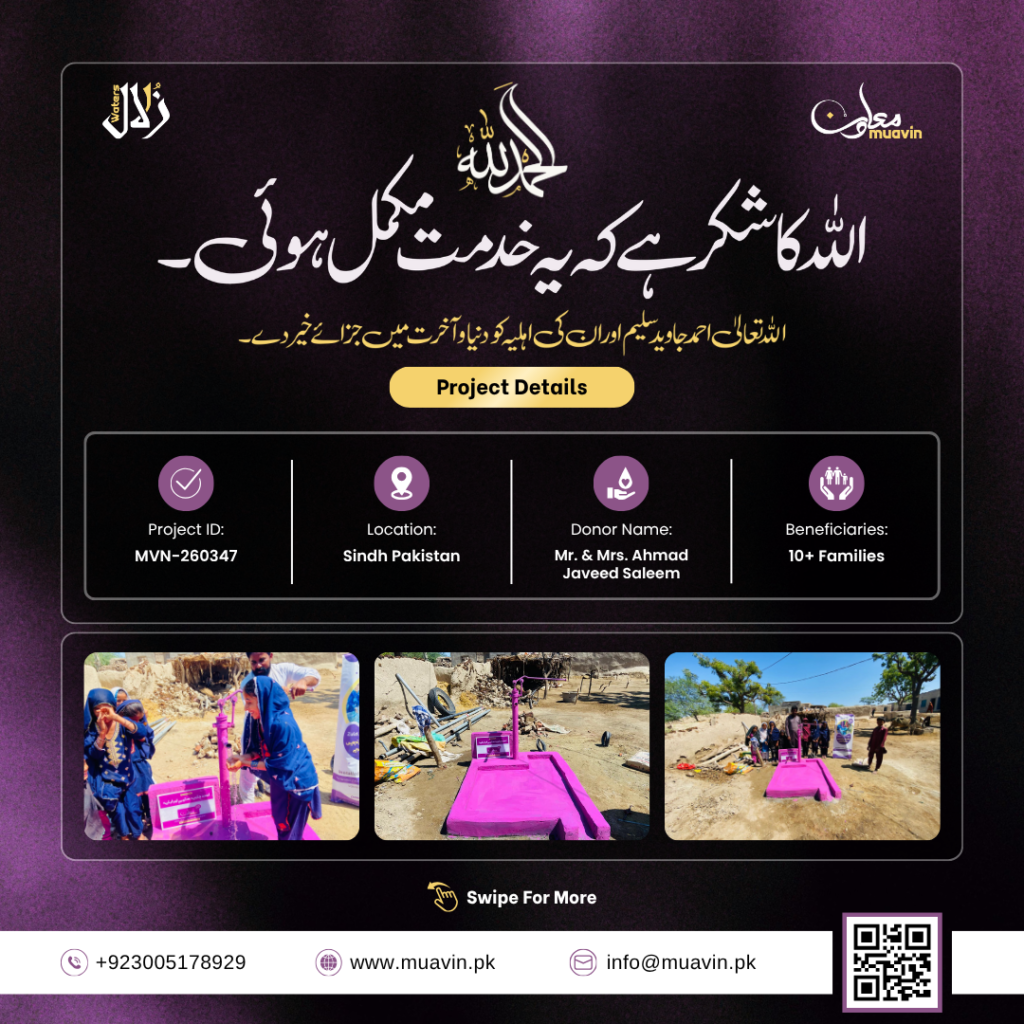
Real water projects delivered by Muavin Welfare across Sindh and South Punjab with 100% transparent GPS verification.
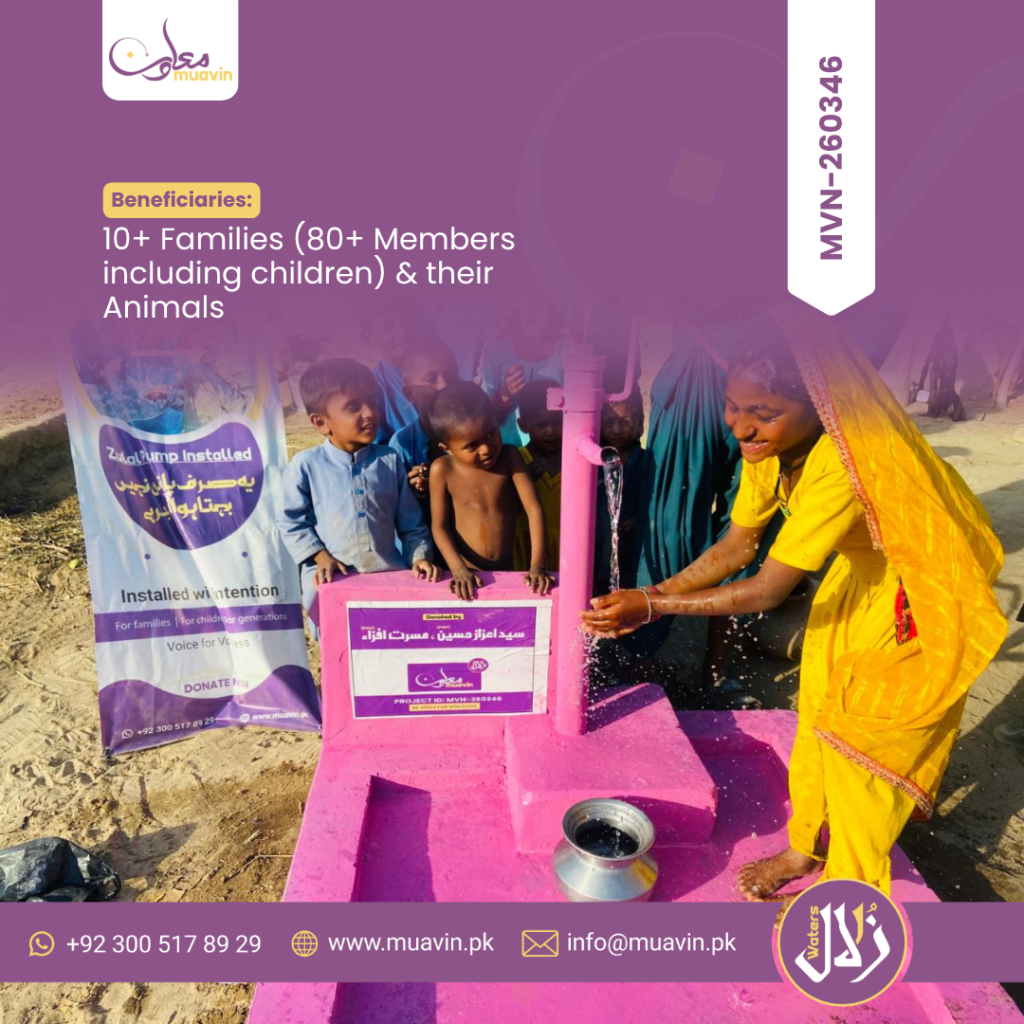
Durable installation providing fresh, clean drinking water.

Local children and families served directly at their doorstep.

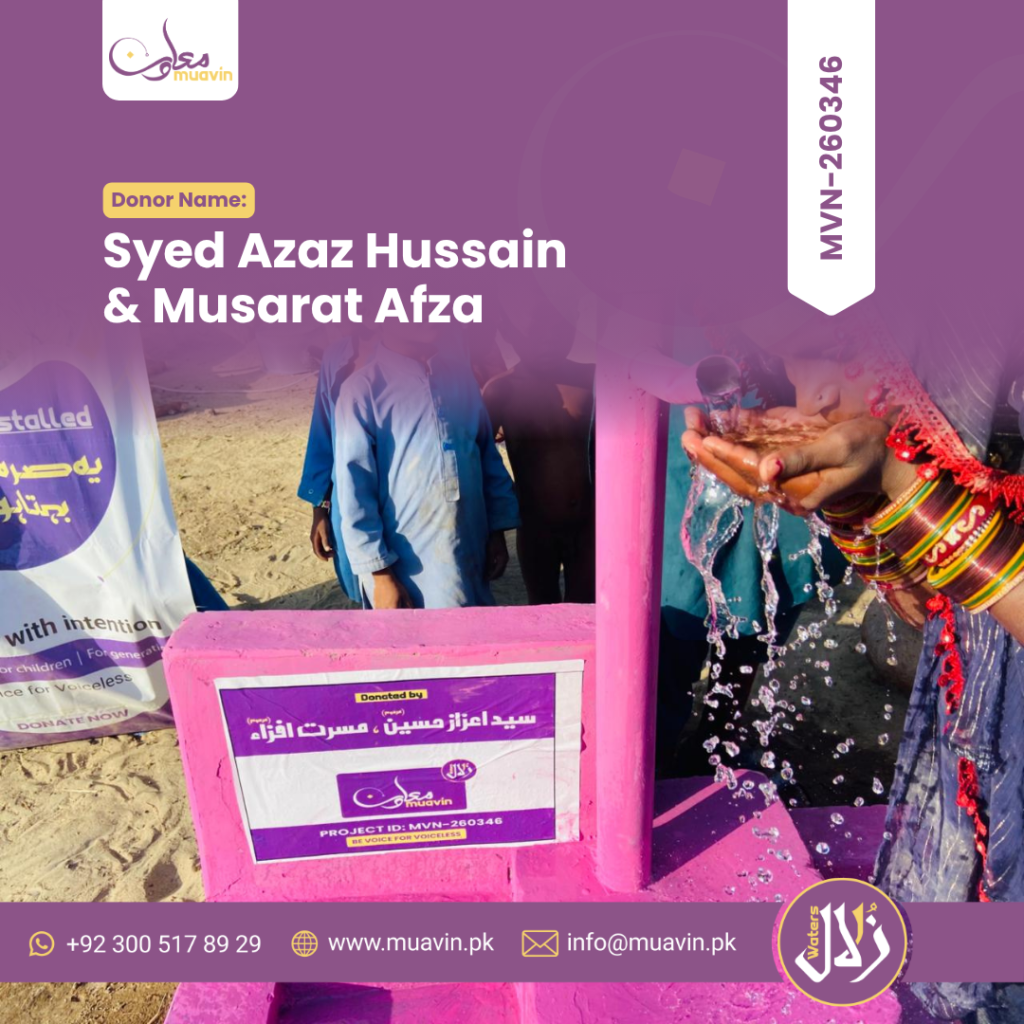
Customized dedication plaque installed as Sadaqah Jariyah.
Support Sustainable Water Project Maintenance
Your contribution directly funds durable water infrastructure, water quality testing, GPS completion reports, and routine maintenance for families in dire need across Pakistan.