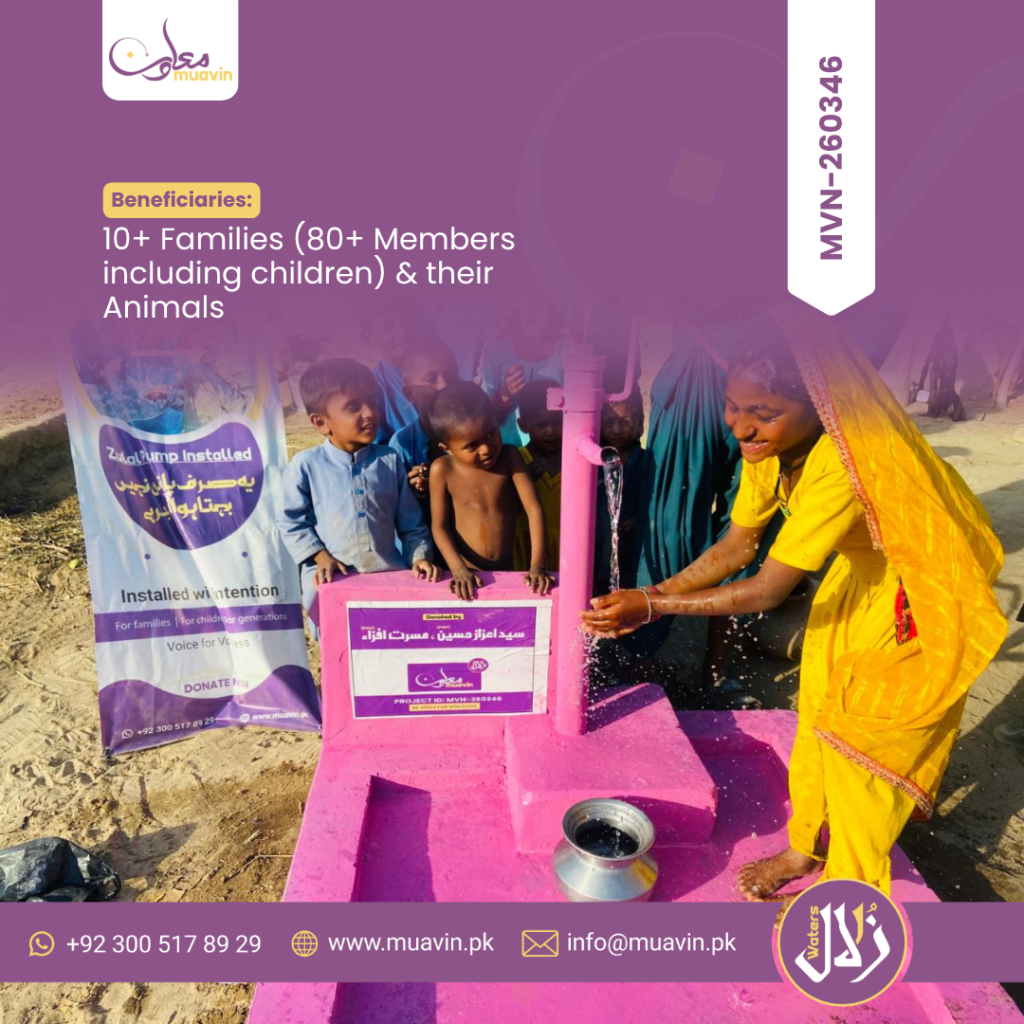

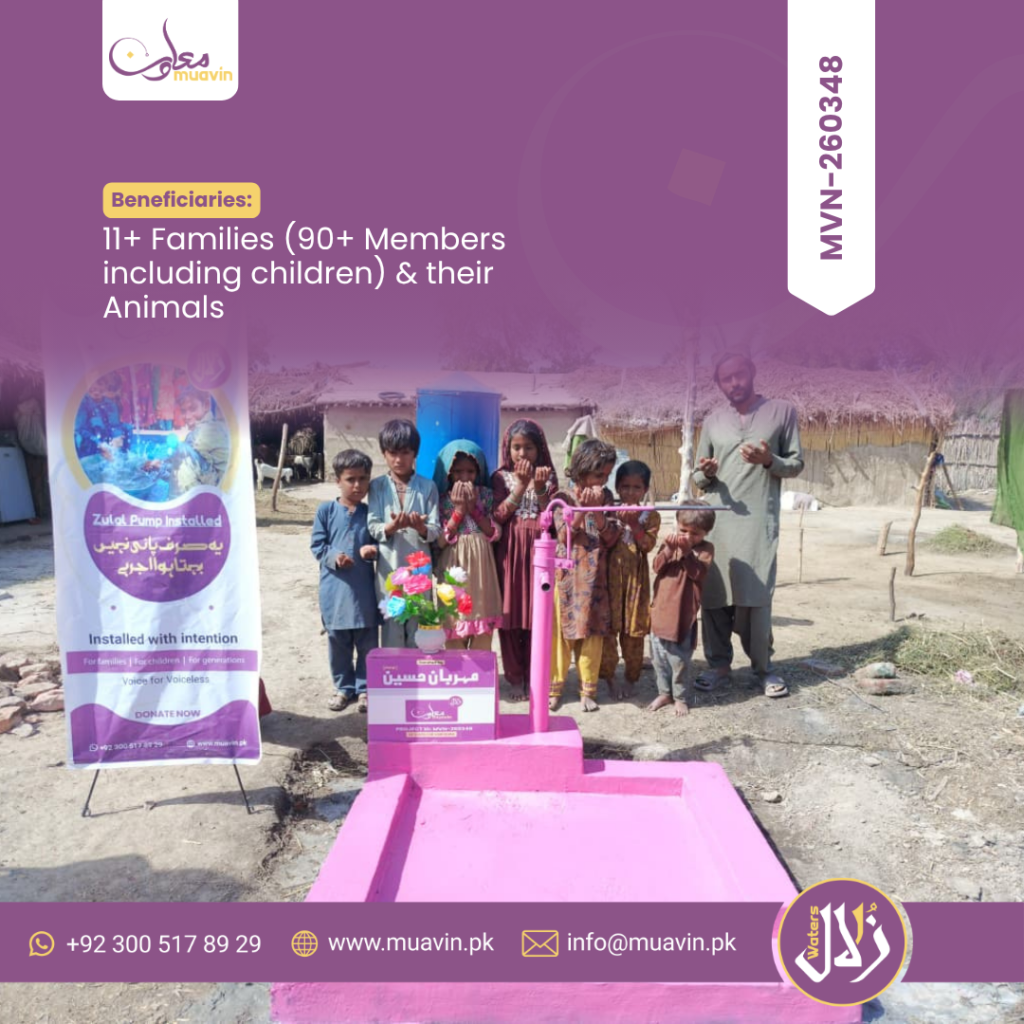
Access to clean and reliable water remains one of the most important infrastructure challenges in many parts of Pakistan. While water resources exist across various regions of the country, the ability to access, extract, store, and distribute water consistently remains a significant concern for rural and off-grid communities. In many areas, households, schools, mosques, and public facilities continue relying on infrastructure systems that struggle to provide dependable water access throughout the year.
The challenge is often not the complete absence of water. Instead, communities frequently face limitations related to infrastructure availability, groundwater accessibility, energy dependency, and long-term operational sustainability. As populations grow and demand for water continues increasing, these infrastructure pressures become even more noticeable.
Electricity instability remains one of the most significant factors affecting water continuity. Many conventional pumping systems depend heavily on reliable electrical power to extract groundwater and distribute water to users. When electricity interruptions occur, water systems can experience operational disruptions that directly affect community access. This challenge becomes even more pronounced in remote areas where infrastructure networks are already limited.
Table of Contents
- What Are Solar Water Projects and How Do They Work?
- solar water infrastructure supports reliable water access in off-grid communities
- why Pakistan needs solar water infrastructure more than ever
- Electricity instability continues affecting water continuity across rural areas
- Diesel dependency increases operational costs and infrastructure pressure
- Rural communities continue facing water scarcity and infrastructure limitations
- Climate resilience is becoming increasingly important for long-term water security
- Why solar water systems are growing rapidly across Pakistan
- Renewable energy adoption is accelerating throughout the country
- Solar systems reduce fuel dependency and recurring operational expenses
- Operational continuity makes solar infrastructure attractive for rural communities
- Sustainability awareness is influencing infrastructure planning decisions
- Public health priorities are increasing demand for reliable water systems
- What types of solar water projects support communities in Pakistan?
- Medium power solar water projects support village-level infrastructure
- Heavy-duty solar water systems support large-scale community operations
- Hybrid water projects combine solar operations with manual continuity systems
- How solar water systems improve daily life, public health, and community resilience
- Reliable water access supports healthier communities
- Women and children benefit from reduced water collection burdens
- Schools, mosques, and public facilities benefit from sustainable infrastructure
- Agricultural support improves local sustainability
- Climate resilience helps communities adapt to future challenges
- Solar water projects and public health
- Safe drinking water supports preventive public health systems
- Sanitation infrastructure strengthens healthier environments
- Why transparency, accountability, and long-term sustainability matter in water infrastructure projects
- Infrastructure accountability strengthens long-term trust
- Transparency systems help verify infrastructure outcomes
- Why solar water projects are a powerful form of Sadqa Jariya
- Continuous clean water access creates ongoing community value
- The future of renewable water infrastructure in Pakistan
- Climate resilience supports sustainable development
- Conclusion
- Frequently Asked Questions
Fuel-dependent systems face similar difficulties. Diesel-powered pumps have traditionally played an important role in water extraction across many regions of Pakistan. However, fluctuating fuel costs, transportation challenges, and recurring operational expenses can make long-term sustainability increasingly difficult. Communities that depend heavily on fuel-powered infrastructure often face ongoing financial and operational pressures that affect water reliability.
At the same time, climate-related challenges and water scarcity concerns are increasing the need for more resilient infrastructure systems. Sustainable development now requires solutions that improve operational continuity while reducing dependency on unstable energy sources and expensive fuel-based operations.
This changing environment has accelerated interest in renewable water infrastructure. Solar-powered water systems are becoming increasingly important because they combine renewable energy with sustainable clean water access. These systems help communities generate their own operational energy while maintaining reliable groundwater extraction and distribution capabilities.
Pakistan's broader renewable energy transition is also contributing to this growth. Solar adoption continues expanding across residential, commercial, agricultural, and infrastructure sectors as communities seek more sustainable and energy-efficient alternatives. Water infrastructure has become one of the most practical applications of this transition because access to reliable water remains essential for daily life, public health, and community development.
This is why solar water projects are becoming one of the most important long-term clean water solutions in Pakistan. By combining renewable energy, infrastructure sustainability, operational continuity, and community resilience, solar water systems are helping create a more reliable future for water access across rural and underserved regions.
Solar water projects in Pakistan: Core Impact and 2027 Verification
Solar water projects are renewable infrastructure systems that use solar energy to power water extraction, storage, and distribution operations. These projects are designed to improve long-term access to clean water while reducing dependence on conventional electricity grids and fuel-powered pumping systems.
Unlike traditional water systems that often rely on unstable electricity or recurring fuel consumption, solar water systems generate their own operational energy through photovoltaic technology. This renewable energy is then used to power pumps, motors, storage systems, and distribution networks that provide water to households, villages, schools, mosques, healthcare facilities, and public institutions.
The primary goal of a solar water project is not simply to provide water. Its purpose is to establish sustainable infrastructure capable of maintaining reliable water access over the long term. This makes solar water systems particularly valuable for communities facing energy instability, groundwater accessibility challenges, and infrastructure limitations.
Solar Water Systems Combine Renewable Energy with Sustainable Water Infrastructure
Solar water systems combine two essential infrastructure components: renewable energy generation and water delivery infrastructure. Together, these systems create a sustainable model that supports reliable water access while reducing operational dependency on external energy sources.
Renewable infrastructure is becoming increasingly important because many communities require systems capable of functioning independently from conventional electricity networks. By generating energy directly from sunlight, solar water projects help communities maintain operational continuity while improving long-term sustainability.
Solar Panels Convert Sunlight into Usable Electricity
Solar panels are the foundation of every solar water system. These photovoltaic panels capture sunlight and convert solar radiation into electrical energy that powers the entire infrastructure network.
Pakistan receives significant sunlight throughout most of the year, making solar energy particularly suitable for decentralized infrastructure systems. This abundant solar resource allows communities to generate electricity locally rather than depending entirely on external energy providers.
Modern photovoltaic technology has become increasingly efficient and accessible, allowing solar panels to support a wide range of infrastructure applications. Within water systems, this renewable electricity provides the energy required to operate pumps, motors, storage controls, and distribution equipment.
By generating electricity directly from sunlight, solar panels help reduce fuel dependency, improve energy independence, and strengthen long-term infrastructure sustainability.
Water Pumps Extract Groundwater from Underground Sources
Once solar energy is converted into electricity, water pumps use that energy to extract groundwater from underground aquifers. These pumps serve as one of the most important operational components within the entire infrastructure system.
Groundwater remains a critical source of water for many communities throughout Pakistan. However, accessing these underground resources requires dependable extraction systems capable of operating consistently under varying conditions.
Solar-powered pumps allow communities to access groundwater without relying heavily on unstable electricity grids or fuel-powered generators. The extracted water can then be transported to storage tanks, distribution systems, or public access points where it becomes available for daily use.
The efficiency and reliability of these pumping systems play a major role in determining the overall effectiveness of solar water infrastructure, making them a key component of sustainable clean water access.
Motors power renewable pumping operations
Electric motors are the mechanical components that convert electrical energy into motion. Once solar panels generate electricity and supply power to the system, motors enable pumps to extract and move water through the infrastructure network.
The efficiency of a solar water system depends heavily on the quality and performance of its motor components. Modern systems often utilize energy-efficient motors designed to maximize water output while minimizing energy consumption. This improves infrastructure sustainability and helps communities achieve greater value from renewable energy generation.
Motors also contribute to operational reliability by ensuring that water extraction can continue consistently whenever sufficient solar energy is available. By combining renewable electricity with efficient motor technology, solar water systems create a practical and sustainable approach to long-term water access.
Storage tanks improve operational continuity
Storage tanks are one of the most important components of sustainable water infrastructure because they help maintain water availability beyond active pumping periods. Water extracted through solar-powered pumps is often transferred into storage facilities where it can be held until needed by the community.
These storage systems improve operational continuity by creating a reserve that remains accessible throughout the day. Even when pumping activity slows or temporarily stops, stored water can continue supporting households, schools, mosques, healthcare facilities, and public infrastructure.
Storage tanks also improve efficiency by helping communities manage changing demand patterns. Water can be collected during periods of strong solar generation and distributed later according to local requirements. This approach creates a more stable and resilient infrastructure system.
In larger projects, storage facilities often play a critical role in supporting multiple users simultaneously. By maintaining reliable reserves, communities can improve water security and reduce vulnerability to short-term operational fluctuations.
Pipelines and taps distribute water to communities
After water is extracted and stored, distribution systems ensure that it reaches the people who need it. Pipelines transport water from storage facilities to homes, schools, mosques, community centers, healthcare facilities, and public access points.
Taps and community water points provide convenient access while reducing the distance users must travel to collect water. This improves accessibility and allows infrastructure systems to serve larger populations more efficiently.
Distribution networks are particularly important in village-scale projects where multiple households depend on shared infrastructure. Well-designed systems improve operational efficiency, strengthen community access, and maximize the long-term benefits of renewable water infrastructure.
The combination of extraction, storage, and distribution creates a complete infrastructure ecosystem capable of supporting sustainable clean water access over extended periods.
solar water infrastructure supports reliable water access in off-grid communities
Many rural areas across Pakistan operate outside major infrastructure networks. These communities often experience limited access to public utilities, inconsistent electricity availability, and restricted infrastructure investment. As a result, maintaining reliable water access can become a significant challenge.
Solar water infrastructure provides an effective solution because it operates independently from many conventional energy systems. Communities can generate their own electricity while maintaining direct control over local water operations. This independence strengthens resilience and improves long-term infrastructure sustainability.
Off-grid communities benefit particularly from renewable infrastructure because localized systems reduce reliance on external networks. Instead of waiting for large-scale utility expansion, communities can develop water infrastructure that responds directly to local needs.
Decentralized systems reduce dependence on unstable electricity
One of the greatest advantages of solar water systems is their ability to operate independently from unstable electrical networks. Traditional pumping systems often rely on grid electricity, making them vulnerable to power interruptions and infrastructure limitations.
Decentralized solar systems generate energy at the point of use. This means communities can operate water infrastructure without depending entirely on external power providers. Localized energy generation improves operational continuity while reducing vulnerability to electricity disruptions.
This decentralized approach is especially valuable in remote regions where electrical infrastructure may be limited or inconsistent. Communities gain greater control over essential services while improving infrastructure reliability.
Renewable operations improve long-term sustainability
Renewable operations contribute directly to long-term sustainability because they reduce recurring dependency on external fuel and electricity resources. Instead of continuously purchasing fuel or relying on unstable power networks, solar systems generate energy through a renewable source that remains available throughout much of the year.
This improves infrastructure sustainability by reducing operational costs, strengthening energy independence, and supporting more predictable long-term planning. Communities benefit from infrastructure systems designed to remain functional and effective for many years.
Renewable operations also align closely with broader sustainable development objectives. By combining clean energy with water accessibility, solar infrastructure supports environmental responsibility while addressing essential community needs.
As renewable adoption continues growing across Pakistan, solar-powered water systems are becoming an increasingly important component of modern infrastructure planning.
why Pakistan needs solar water infrastructure more than ever
Pakistan's growing need for sustainable water infrastructure is closely linked to broader challenges involving energy availability, climate pressure, groundwater accessibility, and long-term infrastructure development. While conventional systems continue serving many communities, increasing operational demands are creating stronger demand for renewable alternatives.
Reliable water access depends on more than simply locating water resources. Communities require infrastructure capable of extracting, storing, and distributing water consistently despite changing environmental and operational conditions.
Across many regions of Pakistan, electricity instability, fuel dependency, infrastructure limitations, and water scarcity continue affecting long-term water security. These pressures are particularly visible in rural communities where access to public utilities remains limited.
As a result, solar water infrastructure is becoming increasingly important because it addresses both energy and water challenges through a single sustainable solution.
Electricity instability continues affecting water continuity across rural areas
Many conventional water systems rely heavily on electricity to power groundwater extraction and distribution operations. When electricity becomes unreliable, water continuity can also be affected.
Communities that depend on electrically powered pumps may experience interruptions that reduce water availability, delay distribution, and affect daily activities. These challenges can impact households, schools, mosques, healthcare facilities, and public infrastructure that rely on dependable water access.
As electricity demand continues increasing across the country, maintaining reliable pumping operations becomes more challenging in certain areas. This creates a strong need for infrastructure solutions capable of operating independently from conventional power networks.
Unreliable power supply creates operational challenges
Water infrastructure functions most effectively when extraction, storage, and distribution systems operate consistently. Frequent power interruptions can disrupt this process, creating operational pressure and reducing infrastructure reliability.
Communities require systems capable of maintaining continuity even when external electricity availability becomes uncertain. Renewable infrastructure helps address this challenge by reducing dependence on unstable power sources.
Water systems often struggle during power interruptions
Power interruptions can affect groundwater extraction, storage tank replenishment, and distribution activities. Even short disruptions may create operational difficulties when water demand remains high.
Solar-powered systems help reduce these risks by generating energy locally and supporting pumping operations independently from conventional electrical infrastructure.
Diesel dependency increases operational costs and infrastructure pressure
For many years, diesel-powered pumps have played an important role in water extraction across rural Pakistan. These systems have helped communities access groundwater in locations where electrical infrastructure was limited or unavailable. However, increasing fuel costs, transportation challenges, and recurring operational expenses are making fuel-dependent systems less sustainable over the long term.
Unlike renewable infrastructure that generates energy from sunlight, diesel-powered systems require continuous fuel purchases to maintain operations. This recurring dependency creates financial pressure that can affect the reliability and sustainability of water infrastructure.
As communities seek more efficient and resilient solutions, renewable water systems are increasingly viewed as a practical alternative capable of reducing operational dependency while improving long-term water access.
Fuel costs affect long-term sustainability
One of the primary challenges associated with diesel-powered infrastructure is the ongoing cost of fuel. Water extraction systems that depend on diesel generators require continuous operational spending, making long-term planning more difficult.
Fuel price fluctuations can directly affect infrastructure budgets and operational stability. Communities may find it increasingly challenging to maintain predictable costs while ensuring reliable water access throughout the year.
Solar-powered water systems address this challenge by replacing recurring fuel consumption with renewable energy generation. This shift helps improve infrastructure sustainability while supporting more predictable operational planning.
Remote communities face greater operational challenges
Communities located far from major transportation routes often face additional difficulties when relying on fuel-dependent systems. Delivering fuel to remote areas requires transportation networks, logistics support, and consistent supply chains.
Any disruption in these systems can affect fuel availability and potentially impact water continuity. As a result, infrastructure reliability may become dependent on factors unrelated to water resources themselves.
Renewable water infrastructure reduces this vulnerability by generating energy locally. Communities gain greater independence while improving the resilience of essential water services.
Rural communities continue facing water scarcity and infrastructure limitations
Water scarcity remains a significant concern across many rural regions of Pakistan. While water resources exist in numerous areas, access often depends on the availability of infrastructure capable of extracting, storing, and distributing water effectively.
Rural communities frequently operate with limited access to large-scale public utilities and centralized infrastructure systems. As a result, local water access often depends on community-level solutions capable of functioning under varying environmental and operational conditions.
Groundwater accessibility, seasonal fluctuations, and infrastructure limitations all contribute to long-term water challenges. These factors increase the importance of sustainable systems that can maintain reliable operations while supporting future development needs.
Layyah experiences ongoing water accessibility challenges
Layyah is one of several districts where reliable water access remains closely connected to infrastructure availability and groundwater conditions. Communities often depend on effective extraction systems capable of supporting long-term access despite environmental and operational pressures.
Seasonal variations, groundwater depth, and infrastructure limitations can all influence water availability. Sustainable water infrastructure helps address these challenges by improving operational reliability and supporting consistent access.
Renewable systems are increasingly relevant because they reduce dependence on external energy sources while strengthening local infrastructure resilience.
Ali Pur Muzaffargarh faces groundwater and infrastructure pressures
Communities in Ali Pur Muzaffargarh continue facing challenges related to groundwater accessibility, infrastructure development, and operational continuity. Reliable pumping systems play a critical role in ensuring that available water resources can be accessed efficiently and distributed effectively.
Infrastructure limitations can create barriers to long-term water security. Renewable water systems help overcome some of these challenges by providing energy-independent operations capable of supporting sustainable access.
As communities seek long-term infrastructure solutions, solar-powered systems are becoming increasingly important because they address both energy and water requirements simultaneously.
Interior Sindh remains vulnerable to seasonal shortages
Many areas of Interior Sindh experience seasonal water pressures that affect community resilience and infrastructure planning. Water scarcity, environmental variability, and infrastructure limitations can create challenges for maintaining consistent access throughout the year.
Long-term solutions require infrastructure capable of adapting to changing conditions while maintaining operational continuity. Solar water systems contribute to this objective by supporting sustainable operations that reduce dependency on unstable energy sources.
By strengthening local infrastructure capacity, renewable systems help communities improve resilience and prepare for future water-related challenges.
Climate resilience is becoming increasingly important for long-term water security
Climate resilience has become one of the most important considerations in modern infrastructure planning. Water systems must increasingly operate under changing environmental conditions, shifting rainfall patterns, groundwater pressures, and growing population demands. Communities require infrastructure that can adapt to these challenges while continuing to provide reliable access to essential resources.
Long-term water security depends not only on the availability of water but also on the ability of infrastructure systems to maintain continuity during environmental and operational disruptions. This is where renewable water infrastructure offers significant advantages.
Solar water systems contribute to climate resilience by reducing dependence on unstable energy sources while improving local infrastructure sustainability. Their ability to operate independently from conventional power networks helps communities maintain essential services even when external systems experience challenges.
As climate-related pressures continue affecting water resources globally, resilient infrastructure will become increasingly important for ensuring sustainable access in both rural and urban environments.
Environmental pressure affects existing infrastructure systems
Many traditional infrastructure systems were developed under conditions that differ from today's environmental realities. Population growth, changing weather patterns, and increasing resource demand place additional pressure on water infrastructure across many regions.
Communities require systems that can continue operating efficiently despite these evolving challenges. Infrastructure resilience is therefore becoming a critical component of long-term planning and sustainable development.
Solar-powered water systems support this objective by combining renewable energy with reliable water access, creating infrastructure that is both adaptable and sustainable.
Sustainable water systems improve resilience and continuity
Sustainable infrastructure improves resilience because it reduces operational dependency on external resources that may become unreliable during periods of stress. Communities that generate their own energy through solar technology gain greater control over essential services while improving long-term stability.
Water systems that incorporate renewable operations, efficient storage, and reliable distribution networks are often better positioned to maintain continuity during changing environmental conditions.
This combination of sustainability and resilience explains why solar water infrastructure is becoming an increasingly important part of future water security planning across Pakistan.
Why solar water systems are growing rapidly across Pakistan
The rapid expansion of solar water systems across Pakistan reflects a broader shift toward renewable infrastructure, sustainable development, and long-term operational planning. Communities, development organizations, infrastructure planners, and humanitarian institutions are increasingly recognizing that reliable water access depends on both sustainable energy and effective water delivery systems.
Traditional infrastructure continues serving many areas, but growing operational pressures are encouraging communities to explore alternatives that provide greater efficiency, independence, and resilience. Solar-powered water systems address many of these concerns by combining renewable energy generation with practical water infrastructure.
As awareness of sustainability and operational continuity continues growing, solar water projects are becoming one of the most widely adopted approaches to long-term water access.
Renewable energy adoption is accelerating throughout the country
Pakistan has experienced significant growth in renewable energy adoption over recent years. Solar technology is increasingly visible across residential, commercial, agricultural, and public infrastructure sectors as communities seek alternatives to conventional energy systems.
This transition has improved awareness of how renewable energy can support essential services, including water access. Solar-powered water systems represent one of the most practical examples of renewable infrastructure because they address two critical needs simultaneously: energy generation and clean water access.
Growing familiarity with solar technology is helping accelerate its adoption within water infrastructure projects throughout the country.
Solar technology is becoming increasingly accessible
Advancements in solar technology have improved efficiency, reliability, and accessibility. Modern solar systems can support a wide range of applications while providing dependable performance over long periods.
As technology becomes more widely available, communities are increasingly able to implement renewable infrastructure solutions that previously may not have been practical or affordable.
This accessibility is contributing significantly to the growth of solar water projects across Pakistan.
Infrastructure modernization is supporting renewable growth
Modern infrastructure planning increasingly prioritizes sustainability, resilience, and operational efficiency. Renewable technologies align naturally with these objectives because they provide long-term solutions that reduce dependency on conventional energy systems.
Solar-powered water infrastructure supports modernization efforts by combining renewable operations with reliable water access. As communities continue investing in future-ready infrastructure, renewable water systems are expected to play an increasingly important role.
Solar systems reduce fuel dependency and recurring operational expenses
One of the strongest reasons for the growth of solar water systems is their ability to reduce long-term dependency on fuel-based operations. Unlike conventional systems that require continuous fuel consumption, solar-powered infrastructure generates energy directly from sunlight.
This significantly improves operational sustainability while reducing recurring costs associated with water extraction and distribution.
Communities benefit from greater predictability, improved energy independence, and reduced exposure to fuel price fluctuations.
Energy-efficient operations improve sustainability
Solar-powered infrastructure uses renewable energy to support daily operations while minimizing ongoing resource consumption. This improves overall system efficiency and strengthens long-term sustainability.
Energy-efficient operations allow communities to maintain reliable water access without depending heavily on external fuel supplies or unstable energy networks.
Renewable infrastructure lowers long-term operating costs
Long-term operating costs play an important role in infrastructure planning. Systems that require continuous fuel purchases or expensive operational inputs often create sustainability challenges over time.
Renewable infrastructure helps reduce these pressures by generating energy locally and supporting more efficient operations. This improves long-term viability while contributing to broader sustainable development objectives.
Operational continuity makes solar infrastructure attractive for rural communities
Reliable water access depends on more than the availability of water resources. Communities also require infrastructure capable of operating consistently throughout the year despite changing environmental, economic, and operational conditions. This requirement for continuity is one of the primary reasons solar water systems are becoming increasingly attractive across Pakistan.
Conventional systems often face interruptions caused by electricity instability, fuel shortages, equipment limitations, or operational expenses. Solar-powered infrastructure helps reduce many of these risks by generating energy locally and supporting independent operations.
For rural communities, operational continuity can significantly influence water security. Systems that continue functioning reliably over long periods contribute to stronger infrastructure resilience and improved community wellbeing.
Off-grid systems improve infrastructure reliability
Many rural communities operate beyond the reach of large-scale utility networks. In these environments, access to reliable electricity and infrastructure services may be limited or inconsistent.
Solar water systems improve reliability by creating localized infrastructure that can function independently from centralized energy systems. Communities gain greater control over essential services while reducing exposure to external disruptions.
This localized approach improves operational stability and supports long-term infrastructure sustainability.
Independent operations reduce interruption risks
Infrastructure systems that depend heavily on external resources often face greater vulnerability to operational disruptions. Solar-powered systems reduce this dependency by generating energy directly at the point of use.
Independent operations allow communities to maintain water access even when external electricity systems experience interruptions. This improves resilience while supporting more predictable and reliable infrastructure performance.
Sustainability awareness is influencing infrastructure planning decisions
Sustainability is becoming an increasingly important factor in infrastructure development. Communities, institutions, and development organizations are placing greater emphasis on solutions that provide long-term benefits rather than temporary outcomes.
Water infrastructure is no exception. Long-term sustainability requires systems capable of maintaining operations while minimizing recurring resource dependency and operational pressures.
Solar water systems align naturally with these objectives because they combine renewable energy, operational efficiency, and long-term infrastructure performance within a single solution.
Communities increasingly prioritize long-term solutions
Communities are becoming more aware of the value of infrastructure that continues providing benefits for many years. Sustainable systems reduce the need for repeated interventions and contribute to stronger development outcomes.
Solar-powered water infrastructure supports this objective by creating systems designed around long-term functionality rather than short-term access alone.
This shift toward sustainable infrastructure planning is one of the major reasons renewable water systems continue gaining popularity throughout Pakistan.
Infrastructure investments focus on measurable impact
Modern infrastructure planning increasingly emphasizes measurable outcomes, operational performance, and long-term value. Communities and organizations seek systems capable of delivering consistent results while supporting broader development goals.
Solar water projects contribute to measurable impact through improved water accessibility, renewable energy utilization, infrastructure resilience, and operational continuity. These factors make them attractive investments for communities focused on sustainable development.
Public health priorities are increasing demand for reliable water systems
Access to reliable clean water plays a critical role in supporting public health systems, sanitation infrastructure, and community wellbeing. As awareness of public health challenges continues growing, so does the demand for dependable water infrastructure.
Communities increasingly recognize that reliable water access influences hygiene practices, environmental conditions, educational environments, and overall quality of life. Sustainable water systems therefore contribute not only to infrastructure development but also to broader public health objectives.
This connection between water infrastructure and public health is helping drive greater adoption of solar-powered water systems across both rural and underserved communities.
Safe drinking water supports healthier communities
Safe drinking water remains one of the most important foundations of public health. Communities with reliable access to clean water are generally better positioned to support healthy living conditions and maintain daily hygiene practices.
Water infrastructure contributes to community wellbeing by reducing reliance on potentially unsafe sources while improving accessibility to essential resources.
Solar-powered systems strengthen these outcomes by supporting consistent access through sustainable infrastructure operations.
Sanitation continuity improves daily wellbeing
Reliable water access supports sanitation systems in homes, schools, mosques, healthcare facilities, and public environments. Without dependable infrastructure, maintaining hygiene standards can become increasingly difficult.
Solar water systems help improve sanitation continuity by supporting stable water availability throughout the year. This contributes to healthier environments while strengthening overall community resilience.
The combined benefits of operational continuity, sustainability, renewable energy adoption, and public health relevance explain why solar water systems are growing rapidly across Pakistan. They provide communities with infrastructure capable of addressing multiple challenges simultaneously while supporting long-term development objectives.
What types of solar water projects support communities in Pakistan?
Water infrastructure needs vary significantly between communities. Population size, groundwater depth, geographic conditions, infrastructure availability, and operational requirements all influence which type of system is most suitable for a particular location.
As a result, solar water infrastructure includes multiple project models designed to address different challenges while maintaining sustainability, operational continuity, and long-term water accessibility.
From medium-scale village systems to high-capacity solar infrastructure and hybrid continuity models, each project type plays a unique role within Pakistan's growing renewable water infrastructure ecosystem.
Medium power solar water projects support village-level infrastructure
Medium power solar water projects are among the most widely implemented renewable water systems because they provide a practical balance between operational capacity, infrastructure investment, and community coverage. These projects are designed for villages, schools, mosques, community centers, and shared public environments where moderate but consistent water demand exists.
By combining solar panels, pumps, storage facilities, and distribution systems, medium power projects create reliable access to water while maintaining sustainable operations. Their design allows communities to benefit from renewable energy without requiring highly complex infrastructure.
These systems are particularly valuable in locations where communities need dependable water access but do not require the large-scale capacity associated with major infrastructure projects.
Shared access systems improve community water availability
Many villages depend on shared infrastructure rather than household-level water systems. Medium power solar projects support this model by creating centralized access points capable of serving multiple families, institutions, and public facilities.
Shared infrastructure improves efficiency by maximizing the benefits of renewable energy while reducing the need for separate systems across the same community.
As a result, communities can achieve broader water coverage through a single sustainable infrastructure project.
Renewable pumping systems strengthen operational continuity
Reliable pumping operations are essential for maintaining consistent access to water. Medium power solar systems use renewable energy to support groundwater extraction while reducing dependency on unstable electricity and expensive fuel sources.
This improves operational continuity and helps communities maintain reliable service throughout the year.
Renewable pumping systems also contribute to infrastructure sustainability by reducing recurring operational pressures.
Medium-scale infrastructure supports sustainable development
Medium power projects support sustainable development because they combine clean energy with essential infrastructure services. Communities benefit from improved water access while simultaneously strengthening renewable energy adoption.
These projects create long-term value by improving infrastructure reliability, supporting public health objectives, and reducing operational dependency on external energy systems.
For many rural communities, medium-scale solar infrastructure represents an effective pathway toward greater resilience and long-term water security.
Medium power solar project infrastructure overview
A typical medium power solar project includes photovoltaic panels, energy-efficient pumps, storage facilities, pipelines, taps, and community distribution systems. These components work together to create an integrated infrastructure network capable of supporting daily water requirements.
When properly designed and maintained, these systems can provide reliable service for many years while supporting sustainable infrastructure goals.
For communities seeking village-scale renewable water solutions, medium power projects often represent one of the most practical infrastructure options available.
Heavy-duty solar water systems support large-scale community operations
Some communities require infrastructure capable of supporting significantly larger populations and higher daily water demand. In these situations, heavy-duty solar water systems provide a scalable solution designed for high-capacity operations.
These systems are engineered to extract larger volumes of groundwater, support extensive distribution networks, and maintain operational continuity under demanding conditions.
Heavy-duty solar infrastructure is particularly valuable in larger villages, community clusters, and regions where shared infrastructure must support a substantial number of users.
High-capacity systems improve access for larger populations
As community size increases, infrastructure requirements become more complex. Larger populations require systems capable of delivering greater volumes of water while maintaining reliability and efficiency.
Heavy-duty solar projects address this challenge by combining larger photovoltaic arrays, higher-capacity pumps, expanded storage facilities, and stronger distribution infrastructure.
This enables communities to maintain dependable access even when demand levels remain consistently high.
Deeper groundwater extraction supports long-term availability
Groundwater conditions vary significantly across Pakistan. In some regions, accessing reliable water resources requires extraction from greater depths.
Heavy-duty systems are designed to support deeper groundwater access while maintaining efficient operations. Their enhanced pumping capabilities help communities utilize available resources more effectively while supporting long-term water availability.
This capability is particularly important in areas where groundwater accessibility presents a significant infrastructure challenge.
Large-scale infrastructure improves operational efficiency
Large-scale infrastructure allows communities to serve more users through a single integrated system. Instead of relying on multiple smaller installations, heavy-duty projects provide centralized infrastructure capable of supporting broader community needs.
This approach can improve operational efficiency while strengthening long-term sustainability.
By combining renewable energy generation with high-capacity water delivery systems, heavy-duty projects contribute to more resilient and scalable infrastructure development.
Hybrid water projects combine solar operations with manual continuity systems
Hybrid water projects represent one of the most innovative approaches within modern renewable water infrastructure. These systems combine solar-powered operations with manual backup mechanisms to create stronger operational continuity and infrastructure resilience.
Unlike systems that rely exclusively on a single operational method, hybrid infrastructure provides multiple pathways for maintaining water access. This significantly reduces interruption risks while improving long-term reliability.
Hybrid projects should be viewed as infrastructure continuity systems rather than simple water projects because their primary advantage lies in their ability to maintain service under a wider range of conditions.
Solar-powered operations improve sustainability
The solar component of a hybrid system provides renewable energy for daily water extraction and distribution activities. Communities benefit from reduced fuel dependency, lower operating costs, and improved infrastructure sustainability.
Renewable operations strengthen long-term performance while supporting broader sustainable development objectives.
Manual backup systems reduce interruption risks
The defining feature of hybrid infrastructure is the inclusion of manual backup capabilities. If operational challenges affect the primary solar system, communities can continue accessing water through alternative mechanisms.
This reduces vulnerability to interruptions and improves overall infrastructure resilience.
By maintaining multiple operational pathways, hybrid systems help ensure that water access remains available when it is needed most.
Water coolers improve public hydration accessibility
Public hydration infrastructure plays an important role in supporting community wellbeing. Water coolers provide convenient access to drinking water in locations where large numbers of people gather throughout the day.
Schools, mosques, healthcare facilities, public institutions, and community centers all benefit from reliable hydration infrastructure that improves accessibility and supports healthier daily routines.
Water coolers are particularly valuable during periods of high temperatures when maintaining adequate hydration becomes increasingly important. By providing convenient access to clean drinking water, these systems contribute to both comfort and public health.
In many communities, public water coolers represent a practical infrastructure investment that delivers visible and continuous benefits to users.
Wazu Khana systems strengthen hygiene infrastructure
Wazu Khana facilities provide structured access to water for hygiene and religious purposes. These systems are commonly installed in mosques, Islamic centers, educational institutions, and public facilities where regular access to water is required throughout the day.
Beyond their religious function, Wazu Khana systems contribute to broader hygiene infrastructure by improving water accessibility in organized and efficient ways. Reliable water availability supports cleanliness, sanitation practices, and healthier public environments.
As part of a comprehensive water infrastructure strategy, Wazu Khana facilities demonstrate how water systems can support both community wellbeing and daily public needs.
Sanitation-focused infrastructure supports healthier environments
Sanitation and hygiene infrastructure are closely connected to public health outcomes. Communities benefit when water systems support cleaner environments, safer public spaces, and improved daily hygiene practices.
Reliable water access enables schools, mosques, healthcare facilities, and community institutions to maintain sanitation standards that contribute to overall wellbeing. Infrastructure that supports both water accessibility and hygiene continuity provides long-term value far beyond basic water delivery.
As a result, filtration systems, water coolers, Wazu Khana facilities, and related infrastructure should be viewed as important components of preventive public health systems rather than standalone installations.
Together, these systems strengthen community resilience while supporting healthier and more sustainable environments.
How solar water systems improve daily life, public health, and community resilience
The impact of solar water systems extends far beyond infrastructure itself. Reliable access to clean water influences health, education, sanitation, productivity, and overall quality of life. Communities that benefit from dependable water infrastructure often experience improvements across multiple areas of daily living.
By combining renewable energy with sustainable water access, solar infrastructure creates benefits that continue supporting individuals, families, and public institutions over long periods. These systems help reduce operational challenges while strengthening community resilience and long-term development outcomes.
As renewable water infrastructure expands across Pakistan, its contribution to daily life is becoming increasingly visible in both rural and underserved communities.
Reliable water access supports healthier communities
Access to clean and reliable water remains one of the most important foundations of community wellbeing. When water is consistently available, households can maintain healthier routines, institutions can operate more effectively, and public facilities can support broader community needs.
Reliable infrastructure improves daily living conditions while reducing dependence on uncertain or distant water sources. Communities benefit from greater stability, improved convenience, and stronger long-term resilience.
Water infrastructure therefore serves as more than a utility service. It functions as a critical component of sustainable community development.
Safer drinking water improves wellbeing
Safe drinking water contributes directly to healthier living conditions. Communities with dependable access to clean water are better positioned to support hydration, hygiene, food preparation, and daily household activities.
Improved access reduces the need to rely on potentially unsafe sources while helping strengthen overall community wellbeing.
Solar-powered infrastructure supports these outcomes by maintaining reliable water availability through sustainable operations.
Improved sanitation supports healthier environments
Sanitation depends heavily on consistent access to water. Homes, schools, mosques, healthcare facilities, and public institutions all require reliable water systems to maintain cleanliness and support healthy environments.
When infrastructure functions consistently, communities are better able to maintain sanitation standards that contribute to overall public wellbeing.
Reliable water access therefore supports not only individual households but also the broader environments in which communities live, learn, work, and worship.
Women and children benefit from reduced water collection burdens
In many communities, water collection remains a time-consuming responsibility. Long travel distances and repeated collection trips can create physical and logistical challenges for households.
When reliable infrastructure brings water closer to communities, these burdens are significantly reduced. Time and effort previously spent obtaining water can be redirected toward education, family responsibilities, economic activities, and other productive pursuits.
Improved accessibility therefore creates benefits that extend beyond infrastructure itself.
Shorter travel distances reduce physical strain
Access points located within communities reduce the need for lengthy travel to distant water sources. This improves convenience while reducing the physical effort required to obtain daily water supplies.
Reduced travel requirements contribute to greater efficiency and improved quality of life for community members.
Educational continuity improves when water access becomes more reliable
Reliable infrastructure can indirectly support educational outcomes by reducing disruptions associated with water collection and limited water availability.
Schools also benefit directly when dependable water systems support sanitation facilities, drinking water access, and daily operations.
Improved infrastructure therefore contributes to stronger learning environments and greater institutional stability.
Schools, mosques, and public facilities benefit from sustainable infrastructure
Reliable water infrastructure supports the daily operation of many community institutions. Schools require dependable water access for students and staff, mosques rely on water for hygiene and religious activities, and public facilities depend on consistent availability to serve visitors effectively.
When sustainable water systems are installed, these institutions gain greater operational stability. Reliable infrastructure reduces interruptions, improves accessibility, and supports healthier environments for everyone who uses these facilities.
Solar-powered water systems are particularly valuable because they combine long-term sustainability with operational continuity, ensuring that critical community institutions maintain dependable access to water.
Stable water access supports daily operations
Educational institutions, religious facilities, and public centers function more effectively when water infrastructure operates consistently. Reliable access supports routine activities while reducing operational challenges.
Stable infrastructure improves service delivery and strengthens the overall value these institutions provide to their communities.
Hygiene systems improve public wellbeing
Public facilities often serve large numbers of people each day. Reliable water systems help maintain hygiene standards while supporting healthier and more welcoming environments.
Water accessibility therefore contributes not only to institutional functionality but also to broader public wellbeing.
Agricultural support improves local sustainability
Agriculture remains an important part of many rural communities throughout Pakistan. Access to dependable water resources can influence local productivity, economic stability, and long-term resilience.
Although solar water projects are primarily designed to improve community water access, reliable infrastructure can also contribute indirectly to agricultural sustainability by strengthening overall water security within local environments.
Communities with stronger water infrastructure are often better positioned to adapt to changing environmental and economic conditions.
Reliable water access strengthens community stability
Infrastructure that improves water security supports broader community development objectives. Stable access to water contributes to more resilient local systems and stronger long-term planning.
Communities benefit when essential infrastructure services remain available and dependable.
Renewable systems improve operational continuity
Renewable energy improves operational continuity by reducing dependence on unstable electricity and recurring fuel requirements.
This creates a more sustainable foundation for long-term infrastructure performance while supporting broader development goals.
Climate resilience helps communities adapt to future challenges
Climate resilience is becoming increasingly important for infrastructure planning. Communities require systems capable of maintaining functionality despite environmental variability, changing resource demands, and evolving development pressures.
Solar-powered water systems contribute to resilience by combining renewable energy, sustainable operations, and localized infrastructure management.
These characteristics help communities strengthen long-term adaptability while improving water security.
Sustainable infrastructure supports long-term development
Long-term development depends on infrastructure that remains functional and effective over extended periods.
Solar water systems support this objective by reducing operational dependency while improving infrastructure sustainability.
Resilient systems improve environmental adaptability
Infrastructure resilience improves a community's ability to respond to changing conditions while maintaining essential services.
Renewable water systems contribute to this adaptability by supporting consistent operations and reducing vulnerability to external disruptions.
Solar water projects and public health
Reliable access to clean water is one of the most important foundations of public health. Communities depend on water for hydration, sanitation, hygiene, food preparation, and countless daily activities that influence wellbeing.
When water infrastructure becomes more reliable, communities often experience broader public health benefits. Improved access supports healthier environments while reducing dependence on uncertain water sources.
Solar water systems strengthen these outcomes by providing sustainable and dependable infrastructure that contributes to long-term public health objectives.
Safe drinking water supports preventive public health systems
Preventive infrastructure focuses on reducing risks before problems occur. Water systems play a central role within this approach because safe drinking water contributes directly to healthier communities.
Reliable access helps support daily hydration while reducing dependence on potentially unsafe sources.
Contamination prevention improves water safety
Clean water infrastructure helps improve water quality and supports safer consumption.
Preventive systems contribute to healthier environments by reducing risks associated with contaminated water sources.
Daily hygiene depends on reliable water access
Hygiene practices require dependable access to water. Homes, schools, mosques, and public facilities all rely on water systems to maintain cleanliness and support healthier environments.
Reliable infrastructure therefore contributes directly to community wellbeing.
Sanitation infrastructure strengthens healthier environments
Water and sanitation systems work together to support public health.
Communities benefit when reliable water infrastructure supports hygiene facilities, public institutions, and shared environments.
Schools benefit from improved water accessibility
Educational environments function more effectively when reliable water supports sanitation facilities and drinking water access.
Mosques benefit from dependable hygiene infrastructure
Religious facilities rely on water systems that support cleanliness, accessibility, and daily operations.
These benefits highlight the close relationship between water infrastructure and public wellbeing.
Why transparency, accountability, and long-term sustainability matter in water infrastructure projects
Infrastructure projects create the greatest value when communities and supporters can verify outcomes, monitor progress, and understand long-term impact.
Transparency helps strengthen trust by ensuring that projects remain visible from implementation through completion.
In modern infrastructure development, accountability is increasingly viewed as an essential component of sustainable operations.
Infrastructure accountability strengthens long-term trust
Accountability allows stakeholders to understand how infrastructure projects are planned, implemented, and maintained.
Transparent systems improve confidence while supporting long-term institutional credibility.
Project monitoring improves operational visibility
Monitoring systems help document progress and improve visibility throughout implementation.
Installation tracking strengthens verification
Verification processes help confirm that infrastructure projects are completed as intended.
Measurable impact improves confidence
Clear outcomes strengthen trust and support informed decision-making.
Transparency systems help verify infrastructure outcomes
Verification systems improve accountability by providing evidence of implementation and project completion.
Photos and videos improve project visibility
Visual documentation helps improve transparency and project verification.
Beneficiary verification strengthens accountability
Verification processes improve confidence that infrastructure benefits reach intended communities.
Location proof supports infrastructure validation
Location records strengthen project authenticity and operational accountability.
Nameplate systems improve project identification
Identification systems help improve long-term project visibility and recognition.
Why solar water projects are a powerful form of Sadqa Jariya
Solar water infrastructure creates benefits that continue supporting communities long after installation. Because water remains essential to daily life, projects that improve access often generate long-term value for households, institutions, and future generations.
This continuing benefit is one of the reasons water infrastructure is widely recognized as a meaningful form of Sadqa Jariya.
Continuous clean water access creates ongoing community value
Reliable water infrastructure contributes to daily life every time people access clean water for drinking, hygiene, sanitation, and household needs.
Renewable infrastructure supports future generations
Long-lasting infrastructure helps extend benefits across multiple generations.
Sustainable systems provide long-term public benefit
Renewable water systems continue creating value through ongoing community use.
The future of renewable water infrastructure in Pakistan
Pakistan's future water security will increasingly depend on sustainable infrastructure capable of supporting growing populations, changing environmental conditions, and long-term development objectives.
Renewable water systems are expected to play an important role in this transition because they combine operational continuity, sustainability, and resilience within a single infrastructure model.
Climate resilience supports sustainable development
Future infrastructure planning will increasingly focus on systems that improve adaptability and long-term reliability.
Renewable operations strengthen infrastructure sustainability
Renewable energy improves long-term operational performance while reducing dependency on external resources.
Community resilience supports future readiness
Stronger infrastructure contributes to healthier, more adaptable communities.
Conclusion
Solar water projects are becoming one of the most important long-term clean water solutions in Pakistan because they address both water accessibility and energy sustainability through a single infrastructure model.
Renewable infrastructure improves operational continuity, reduces dependency on unstable electricity and expensive fuel systems, and supports stronger community resilience. Hybrid systems strengthen reliability even further by combining renewable operations with continuity-focused backup mechanisms.
Beyond water access itself, these systems contribute to public health, sanitation, sustainable development, and long-term community wellbeing. Transparency and accountability strengthen trust by ensuring that infrastructure outcomes remain visible and verifiable.
As renewable adoption continues expanding across Pakistan, solar water systems are likely to play an increasingly important role in creating healthier, more resilient communities for future generations.
To verify local groundwater benchmarks and water testing guidelines in Pakistan, consult official research from the Pakistan Council of Research in Water Resources (PCRWR), which monitors nationwide drinking water quality standards.
Frequently asked questions about solar water projects in Pakistan
This section answers some of the most common questions people ask about solar water systems, renewable water infrastructure, hybrid water projects, and sustainable clean water access in Pakistan.
What are solar water projects?
Solar water projects are renewable infrastructure systems that use solar energy to extract, store, and distribute water. These projects typically combine solar panels, pumps, motors, storage tanks, pipelines, and distribution points to provide sustainable clean water access for communities, schools, mosques, healthcare facilities, and public institutions.
How are solar water projects different from traditional water systems?
Traditional systems often depend on electricity grids or fuel-powered generators, while solar water projects generate their own energy using sunlight. This reduces operational dependency and improves long-term sustainability.
How do solar water systems work?
Solar water systems convert sunlight into electricity through photovoltaic solar panels. The generated electricity powers pumps that extract groundwater and move it through storage and distribution infrastructure.
What components are included in a solar water system?
A typical system includes solar panels, pumps, motors, storage tanks, pipelines, taps, and distribution networks that work together to provide reliable water access.
Why are solar water systems important in Pakistan?
Solar water systems help address challenges related to electricity instability, fuel dependency, water scarcity, and weak infrastructure. They provide communities with a sustainable way to access clean water while improving operational continuity.
Which communities benefit the most from solar water systems?
Rural villages, off-grid communities, schools, mosques, healthcare facilities, and underserved regions often benefit the most because they may face greater infrastructure limitations.
What are hybrid water systems?
Hybrid water systems combine solar-powered infrastructure with manual backup mechanisms. This dual-system design improves reliability by ensuring water access remains available through multiple operational pathways.
Why are hybrid systems considered infrastructure continuity solutions?
Hybrid systems reduce interruption risks because communities can continue accessing water even if one operational component experiences challenges. This strengthens infrastructure resilience and long-term reliability.
Why are renewable water systems more sustainable?
Renewable water systems generate energy from sunlight rather than relying on fuel or unstable electricity sources. This reduces recurring operational expenses while supporting long-term infrastructure performance.
How do renewable systems improve sustainability?
They lower fuel dependency, improve energy independence, reduce operational costs, and support predictable long-term infrastructure planning.
How do solar pumps reduce operational costs?
Solar pumps operate using renewable electricity generated by solar panels. Because they do not require continuous fuel purchases, communities can reduce recurring operating expenses and improve long-term affordability.
Do Solar pumps require less fuel than conventional systems?
Solar pumps eliminate fuel consumption for daily operations because they generate their own energy from sunlight.
Why do rural communities need solar water infrastructure?
Many rural communities face infrastructure limitations, electricity instability, groundwater accessibility challenges, and water scarcity. Solar water infrastructure provides a sustainable solution capable of operating independently from conventional energy systems.
How do solar systems help off-grid communities?
Off-grid communities benefit because solar infrastructure generates energy locally, reducing dependence on external utility networks.
How do solar systems improve public health?
Reliable water infrastructure supports safe drinking water access, sanitation systems, hygiene practices, and healthier community environments.
Why is water infrastructure important for public health?
Clean water contributes to hydration, sanitation, hygiene, food preparation, and overall wellbeing, making it one of the most important foundations of public health systems.
What makes solar water charity different from traditional water projects?
Solar water projects combine clean water access with renewable energy infrastructure. This creates a sustainable operational model capable of supporting long-term community needs while reducing energy dependency.
Why are renewable systems often considered long-term solutions?
Because they improve sustainability, operational continuity, and infrastructure resilience while reducing recurring operational pressures.
What is a medium power solar water project?
A medium power solar water project is designed for village-level infrastructure and moderate community demand. These systems typically support multiple households, schools, mosques, and public facilities through shared renewable infrastructure.
Where are medium power systems most effective?
They are most effective in communities that require reliable access but do not need large-scale high-capacity infrastructure.
What is a heavy-duty solar water project?
Heavy-duty solar water projects are high-capacity systems designed to support larger populations, deeper groundwater extraction, and extensive distribution networks.
Why are heavy-duty systems important?
They improve access for larger communities while maintaining operational continuity and long-term infrastructure sustainability.
Why are hybrid systems important for operational continuity?
Hybrid systems improve reliability by combining renewable energy operations with manual backup mechanisms.
How do hybrid systems reduce interruption risks?
Multiple operational pathways allow communities to continue accessing water even when one component experiences difficulties.
What makes a water charity trustworthy?
Trustworthy organizations prioritize transparency, accountability, verification, project visibility, and measurable impact.
What transparency features improve donor confidence?
Project monitoring, installation tracking, beneficiary verification, photos, videos, location proof, and accountability systems all help improve confidence.
How can donors verify solar water projects?
Verification is often supported through project documentation, implementation updates, beneficiary records, installation evidence, and transparent reporting systems.
Why is project verification important?
Verification improves accountability and helps confirm that infrastructure projects are completed as intended.
What is Sadqa Jariya water infrastructure?
Sadqa Jariya water infrastructure refers to projects that continue providing long-term benefits after installation. Water systems often create ongoing value because communities use them daily for drinking, hygiene, sanitation, and public wellbeing.
Why is water considered a powerful form of Sadqa Jariya?
Because access to water continues benefiting people over extended periods, creating lasting community impact.
Why is transparency important in infrastructure projects?
Transparency strengthens accountability, improves trust, and allows stakeholders to understand how projects are implemented and maintained.
How does transparency support infrastructure sustainability?
Clear reporting, verification processes, and project visibility help ensure that infrastructure continues delivering measurable value.
How do solar systems support climate resilience?
Solar systems improve resilience by reducing dependency on unstable energy sources while supporting sustainable water access under changing environmental conditions.
Why is climate resilience becoming more important?
Communities increasingly require infrastructure capable of maintaining continuity despite environmental pressures and evolving development challenges.
Why is long-term infrastructure better than temporary aid?
Long-term infrastructure provides sustainable benefits that continue supporting communities for many years, while temporary solutions often address immediate needs without creating lasting operational capacity.
How do sustainable systems create greater impact?
They strengthen resilience, improve reliability, support development objectives, and contribute to healthier communities over extended periods.