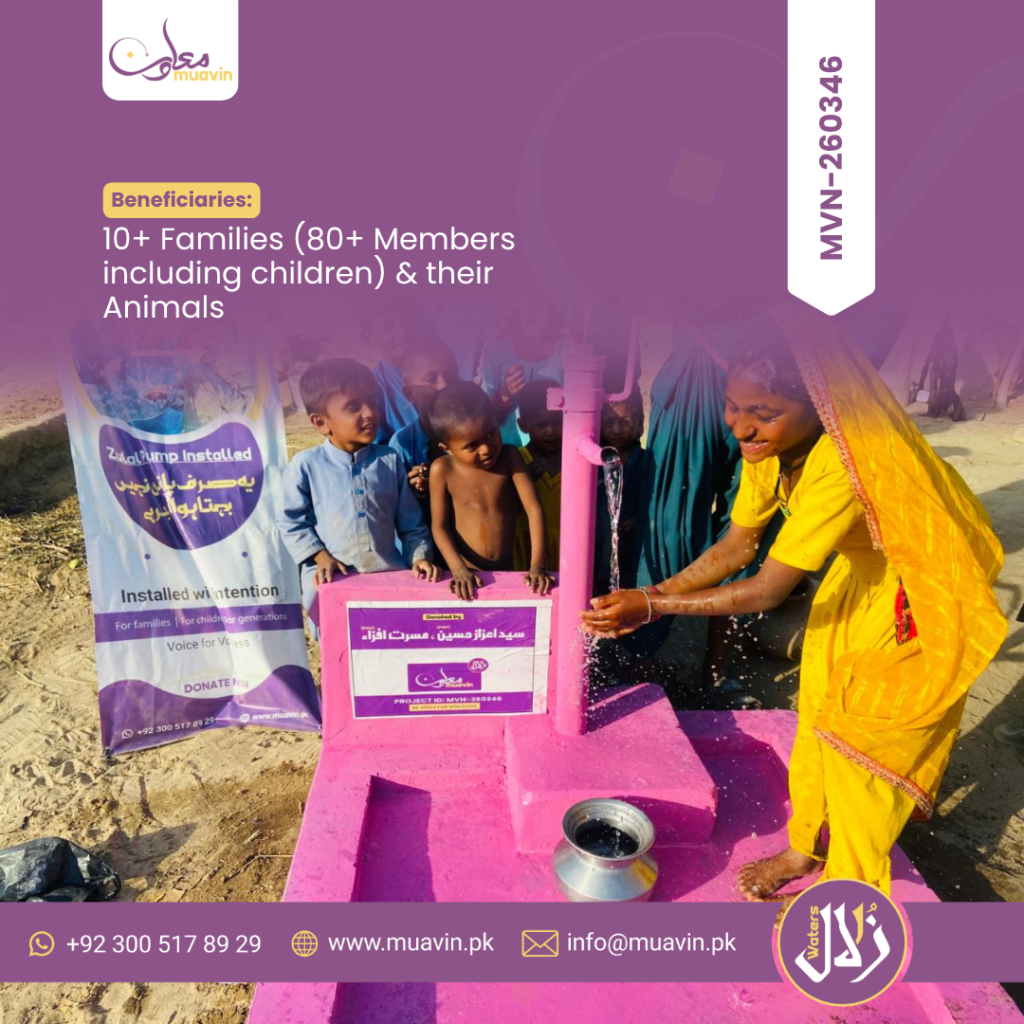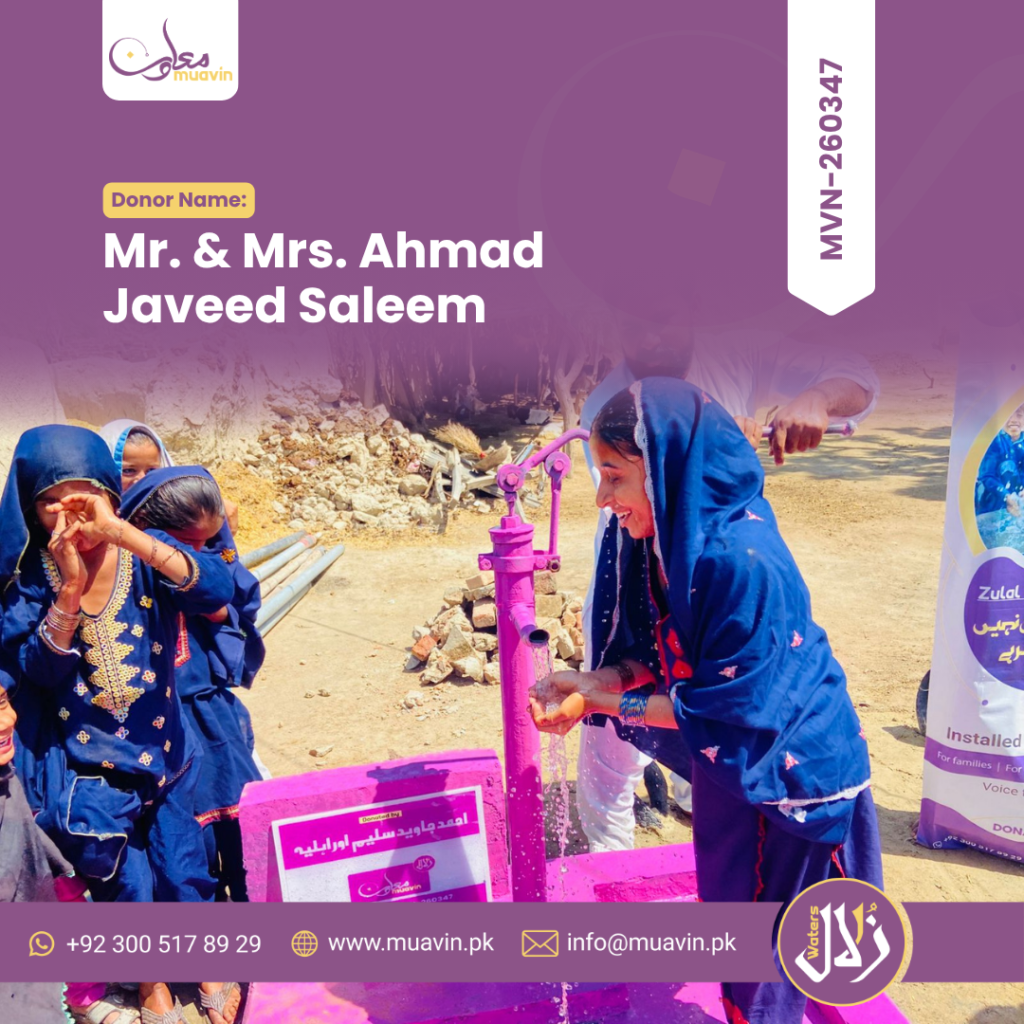
📋 Table of Contents: Water Project Accountability in Pakistan
Access to clean drinking water is essential for human health, dignity, education, and economic development. Across Pakistan, ensuring strict water project accountability pakistan standards is vital, particularly in underserved rural communities where infrastructure projects address significant drinking water deficits.
However, installing a hand pump, solar well, or water filtration plant is only the beginning but the real value of a water project depends on how responsibly it is planned, implemented, verified, operated, and maintained.
According to the United Nations Sustainable Development Goals Country Profile for Pakistan, the proportion of Pakistan's population using safely managed drinking water services increased from 42.6% in 2000 to 45% in 2024. These figures illustrate the critical importance of expanding access while simultaneously improving the quality and long-term sustainability of water services.
For donors, welfare organizations, corporate social responsibility (CSR) teams, and community representatives, understanding what makes water projects accountable is essential for making informed decisions and maximizing impact.
What Makes a Water Project Accountable?
An accountable water project is responsibly planned, technically appropriate, transparently implemented, and supported by credible verification. It addresses documented community needs, considers water-source suitability, includes appropriate safety checks, establishes operational and maintenance responsibilities, and provides meaningful reporting. Accountability continues after installation because lasting benefits depend on continued functionality and responsible management.
1. What Is Water Project Accountability?
Water project accountability refers to the shared responsibility of implementing organizations, technical teams, funding partners, and community representatives to ensure water infrastructure is appropriately planned, delivered, monitored, and managed. It involves far more than demonstrating that donated funds were spent or that construction was completed.
Understanding Accountability in Water Projects
An accountable water project connects its original objectives directly with actual implementation and reported results. This requires thorough documentation, clearly defined roles, and concrete evidence supporting key decisions. For example, a community hand pump project should answer critical questions regarding site selection, water-source suitability, installation quality, functionality, and long-term maintenance arrangements.
Financial Accountability vs Technical Accountability
Financial accountability concerns how resources are allocated, managed, and spent. Technical accountability, on the other hand, evaluates whether the infrastructure is appropriately designed and installed, and whether relevant operational and safety checks have been completed. Both dimensions are essential: a project may remain within budget but encounter technical failures, while a functioning installation may still suffer from financial opacity.
Accountability vs Transparency
Transparency involves making relevant information open and available, whereas accountability goes further by establishing explicit responsibility for decisions, reviewing ongoing performance, addressing operational problems, and explaining results. While both concepts complement each other, they are not interchangeable.
The Six Dimensions of Water Project Accountability
|
Accountability Dimension |
Main Responsibility |
Supporting Evidence |
|
Planning |
Selecting an appropriate intervention |
Community and site assessments |
|
Financial |
Managing project resources |
Budgets and expenditure records |
|
Technical |
Delivering suitable infrastructure |
Specifications and inspection records |
|
Water safety |
Assessing contamination risks |
Water tests and sanitary inspections |
|
Operational |
Maintaining continued service |
Maintenance and responsibility arrangements |
|
Reporting |
Communicating verified results |
Progress and completion reports |
An accountable water project considers these responsibilities throughout its lifecycle rather than treating installation as the final measure of success.
2. Why Accountability Matters in Clean Water Projects
Water infrastructure delivers meaningful benefits only when it responds to genuine community needs and continues to operate effectively over time. Global research demonstrates that water access remains a substantial development challenge.
According to the WHO/UNICEF Joint Monitoring Programme 2025 report, approximately 74% of the global population used safely managed drinking water services in 2024. However, coverage remains starkly uneven across different areas.
|
Global Drinking-Water Indicator |
2024 Figure |
|
Safely managed drinking-water coverage |
74% |
|
Urban safely managed coverage |
83% |
|
Rural safely managed coverage |
60% |
|
Population without safely managed services |
2.1 billion |
|
Population relying on untreated surface water |
106 million |
The differences between rural and urban coverage highlight the need for appropriate infrastructure, effective management, and continued investment.
Protecting the Value of Donor Contributions
Responsible project planning ensures that donated resources support interventions with clearly identified purposes. Donors should always be able to understand which specific infrastructure their contributions fund and what evidence demonstrates its successful delivery.
Reducing the Risk of Nonfunctional Infrastructure
Water installations frequently encounter mechanical failures, unsuitable source conditions, inadequate maintenance, or other operational challenges. Proactive planning and clearly assigned responsibilities minimize avoidable issues and facilitate timely corrective actions.
Supporting Water Quality and Reliability
The WHO Guidelines for Drinking-water Quality: Small Water Supplies highlight technical, operational, managerial, and resource-related challenges affecting smaller water systems. These guidelines emphasize preventive management of water safety risks, prompting implementing organizations to address potential vulnerabilities before they result in severe service failures.
Building Community and Donor Confidence
Credible reporting, rigorous technical checks, and responsive project management build strong foundations of trust among stakeholders. Accountability must be understood as a practical duty to the communities relying on the infrastructure as well as to the partners funding it.
100% Water Project Accountability
Sponsor a Transparent Community Hand Pump in Pakistan
Deliver clean, life-saving water to 25–40 rural families. Every Muavin installation includes a hydrogeological survey, lab water quality testing, concrete platform sealing, and complete GPS-verified donor reporting.
3. Community Needs Assessment: Where Accountability Begins
Responsible water project planning begins with understanding the specific conditions experienced by the people who will use the infrastructure. A project should never be selected simply because a specific intervention is popular with donors; the solution must respond directly to identified local needs and environmental realities.
Identifying the Community's Water Requirements
A needs assessment may consider:
- Existing drinking-water sources.
- Distance and time required to collect water.
- Seasonal water availability.
- Reported water-quality concerns.
- Expected household or community demand.
- Accessibility challenges.
- Existing infrastructure and service limitations.
Selecting Appropriate Beneficiaries and Locations
Site selection must evaluate the severity of service gaps, physical accessibility, technical feasibility, and legal permissions. Community water points should be placed where target beneficiaries can safely and easily access them, while ensuring the intervention does not spark disputes over land, access, or management rights.
Assessing Accessibility and Community Priorities
Women, elderly residents, children, persons with disabilities, and households situated far from central water points often face distinct access barriers. Conducting inclusive consultations prior to installation ensures these specific priorities and accessibility concerns are addressed effectively.
Recording Initial Project Conditions
Documenting initial baseline conditions provides an objective reference for evaluating post-installation impact. For instance, recording collection times, existing water sources, and baseline water quality before installing a new hand pump enables implementing organizations to measure actual improvements accurately.
Example: When a rural community requests a shared hand pump, the project team evaluates existing water sources, community demand, land access, groundwater conditions, and potential contamination risks before selecting a site. This scenario demonstrates how structured planning aligns technical execution with real community requirements.
4. Water Source and Site Verification Before Installation
An accountable water project evaluates the natural water source alongside the physical infrastructure used to extract, treat, or distribute it. Even when groundwater is accessible, a site may present significant challenges related to water quality, flow rate, or seasonal reliability.
Evaluating Groundwater Source Suitability
Groundwater suitability depends on hydrogeological conditions, demand projections, source protection, and chemical safety. Comprehensive hydrogeological assessments are necessary to confirm whether a proposed source can safely meet long-term community demands, as discovering groundwater does not guarantee it is potable.
Understanding Bore Depth, Yield and Seasonal Variation
Bore depth must be determined by site-specific technical evaluations rather than arbitrary standards, as identical drilling depths yield different outputs depending on location. Essential factors include water-table fluctuations, pumping requirements, and aquifer recharge capabilities. While solar power reduces reliance on conventional electricity, it cannot overcome fundamental aquifer limitations.
Identifying Potential Contamination Risks
Contamination risks frequently stem from nearby pit latrines, poor surface drainage, agricultural runoff, industrial waste, or inadequate source headworks. The WHO Sanitary Inspection Packages offer structured frameworks for identifying hazards surrounding small water supplies and executing targeted risk-mitigation measures.
Confirming Technical Feasibility and Permissions
Before commencing work, project teams must secure required land permissions, confirm technical feasibility, and comply with relevant regulatory obligations. Documenting site selection decisions transparently allows stakeholders to verify why specific sources and locations were chosen.
5. How Do Design, Budgeting and Procurement Affect Accountability?
Once community needs and source conditions are understood, the next responsibility is selecting infrastructure appropriate to the proposed service.
Choosing the Right Water Supply Technology
family hand pumps, community hand pumps, solar-powered wells, and filtration plants serve distinct operational roles. Technology selection should be guided by:
Technology selection should consider:
- Water-source conditions.
- Expected demand.
- Water quality.
- Required pumping capacity.
- Energy availability.
- Installation costs.
- Operation and maintenance requirements.
Selecting technology based on these criteria prevents over-engineering or installing systems that local communities cannot maintain. Higher expenditure does not automatically equate to a more effective solution.
Preparing Clear Technical Specifications
Technical specifications define the scope and quality of the intended installation. Depending on the system type, specifications should detail pump models, design capacity, drilling depth, solar panel wattage, storage configurations, and filtration technologies. Clear specifications provide an objective baseline for auditing completed work.
Budget Planning and Cost Transparency
Comprehensive project budgets must account for materials, skilled labor, installation, transport, technical testing, and operational contingencies. Where applicable, planning should also estimate ongoing maintenance expenses. Any scope or budget adjustments caused by unforeseen field conditions must be documented and formally approved.
Responsible Procurement and Quality Control
Procurement accountability requires sourcing high-quality materials that meet confirmed engineering specifications. This process relies on maintaining verifiable records, including vendor quotations, component specifications, detailed bills of quantities, purchase receipts, and pre-installation material inspections.
|
Project Element |
Planned Information |
Potential Verification |
|
Bore |
Site-specific design |
Drilling record |
|
Pump |
Selected model and capacity |
Equipment identification |
|
Solar system |
Electrical and pumping design |
Installed component record |
|
Storage |
Proposed capacity and arrangement |
Installation confirmation |
|
Filtration |
Required treatment process |
Commissioning documentation |
|
Budget |
Approved scope and cost |
Expenditure or variation records |
Maintaining these procurement and design records clarifies original proposals, verifies delivered assets, and justifies any project variations.
6. How Is Water Project Installation and Construction Monitored?
Construction monitoring bridges the gap between engineering design and field execution. Its main objective is to verify that physical construction complies with approved technical specifications and that emerging implementation defects are promptly corrected.
Monitoring Work Against the Approved Project Scope
Field supervisors must maintain detailed work logs and progress reports to verify that delivered equipment, construction materials, and installation methods align perfectly with approved contract documents.
Documenting Construction and Installation Milestones
Water projects involve distinct phases: site preparation, drilling, component delivery, structural assembly, electrical integration, and system testing. Documenting each milestone through geotagged, time-stamped photographs and sign-off sheets ensures complete transparency.
Identifying Installation Defects and Incomplete Work
Technical issues such as substandard apron drainage, equipment defects, or incorrect mounting must be formally logged and rectified prior to project acceptance. Ignoring minor construction flaws often leads to premature system failure.
Technical Inspection and Operational Testing
Functional testing confirms whether installed systems perform effectively under normal operational conditions. For hand pumps, this involves verifying stroke efficiency and yield. For solar-powered schemes, commissioning requires testing pump discharge, solar controller regulation, and electrical safety features.
Recording Problems Before Project Handover
Project completion documentation must clearly differentiate between resolved punch-list items and outstanding obligations. A standardized implementation lifecycle typically follows a structured progression:
A straightforward implementation accountability process may follow this sequence:
- Approved project scope definition.
- Continuous installation monitoring.
- Technical inspection and functional testing.
- Corrective action and verification.
- Formal completion and community handover.
Adhering to this sequence ensures that infrastructure is fully validated before operational responsibilities are transferred.
7. Why Are Water Quality Testing and Safety Checks Essential?
Providing physical access to water is not the same as delivering water that is safe for human consumption. Water may look clear and taste acceptable while still hosting invisible microbial pathogens or harmful chemical contaminants.
Pakistan Drinking-Water Quality: Facts and Statistics
The Pakistan Council of Research in Water Resources (PCRWR) (PCRWR) conducted extensive water-quality monitoring across 29 major cities during its 2020–21 evaluation cycle, assessing 435 public drinking water sources.
|
PCRWR Water-Quality Findings |
Number of Sources |
Percentage |
|
Sources meeting national drinking-water quality standards |
168 |
39% |
|
Sources failing the applicable standards |
267 |
61% |
|
Total monitored sources |
435 |
100% |
These national findings highlight the urgent necessity of baseline and periodic water-quality testing. While these statistics reflect specific sampled locations rather than every rural well in Pakistan, they emphasize why water quality cannot be taken for granted.
When Should Water Be Tested?
Water testing should be conducted at key intervals: initial source screening, system commissioning, following major repairs, and as part of ongoing safety monitoring. Test selection and sampling frequency should follow national standards and expert technical guidance.
Sanitary Inspections and Source Protection
A sanitary inspection evaluates physical structures and surrounding land use to identify vulnerabilities that could contaminate the water source. Assessing apron integrity, surface drainage, and nearby latrines complements lab analysis by identifying risks before contamination occurs.
What Should a Water Quality Report Demonstrate?
|
Report Element |
Why It Matters |
|
Sample location |
Identifies the source or delivery point tested |
|
Sampling date |
Establishes when the assessment occurred |
|
Tested parameters |
Explains which contaminants or characteristics were assessed |
|
Analytical method |
Provides context for the results |
|
Applicable standards |
Establishes the comparison criteria |
|
Findings |
Identifies measured results and relevant concerns |
|
Recommended actions |
Supports appropriate follow-up where required |
A basic TDS test alone cannot confirm microbiological safety or overall potability. Furthermore, a single clean lab result does not guarantee perpetual water safety; accountable projects combine routine testing with continuous source protection.
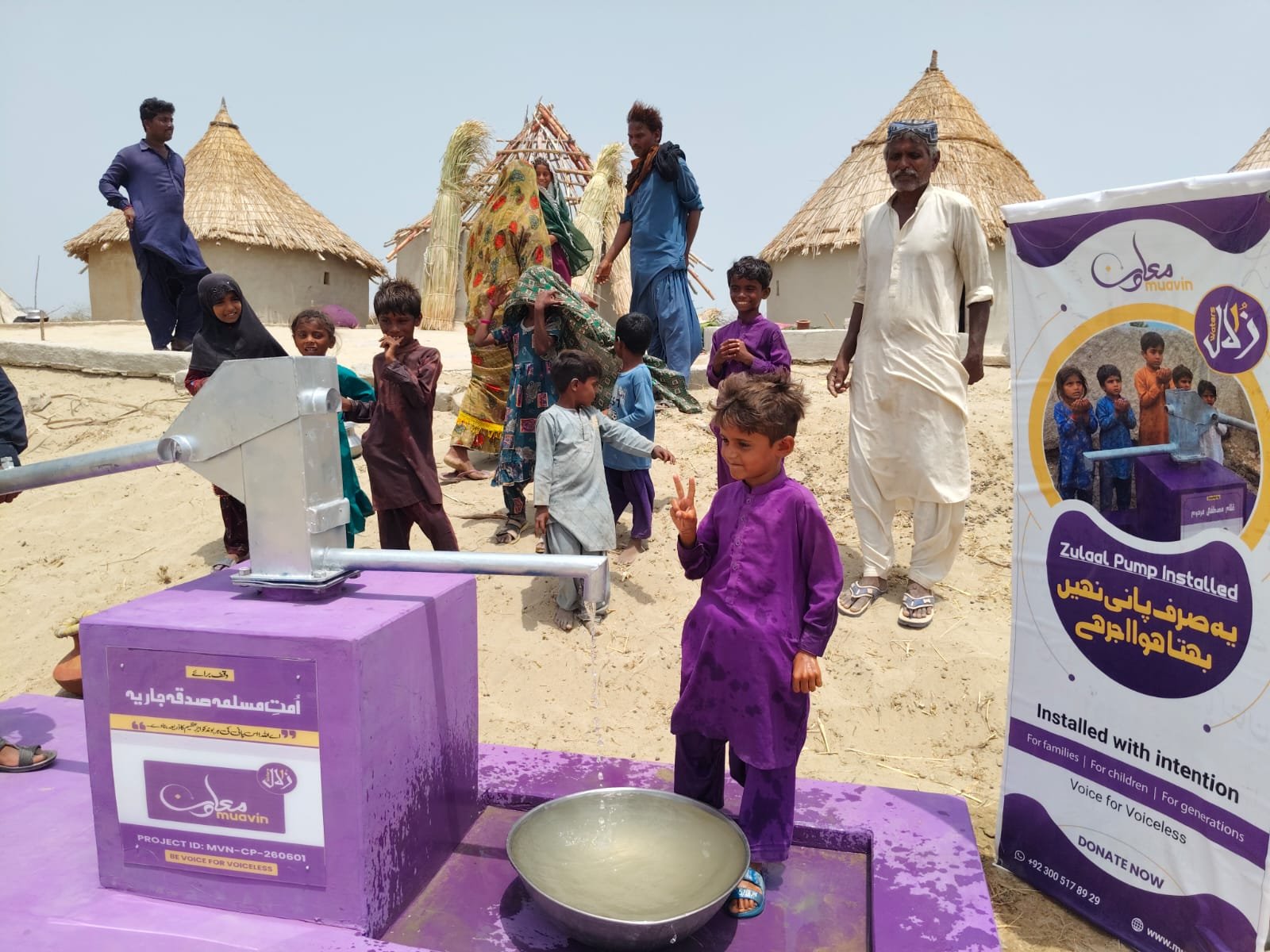
8. What Evidence Verifies Water Project Completion?
Verifying project completion requires comprehensive documentation tailored to the specific infrastructure built. Different types of evidence validate different operational aspects of a project.
Project Completion vs Operational Readiness
Physical construction can be finished while water testing, functional checks, or community handover remain pending. A project should only be reported as fully operational once all technical and safety criteria are satisfied.
Installation Photographs and Documentation
High-resolution, dated completion photos verify physical installation at the designated site. However, photographs alone cannot prove water safety, daily flow rates, or long-term structural integrity.
Equipment and Commissioning Records
Technical records detail installed equipment models, serial numbers, and performance parameters. Formal commissioning documents are vital for verifying multi-component solar pumps and filtration units.
Project Handover and Acceptance
Handover certificates formally identify the entity assuming operational control, outline maintenance duties, and record any unresolved issues. These responsibilities must be explicitly agreed upon by all parties.
Independent Verification, Where Available
Internal technical reviews and third-party evaluations offer distinct levels of quality assurance. Reports should clearly state who performed quality checks and detail the scope of their assessment.
|
Evidence |
What It Helps Establish |
Limitation |
|
Installation photographs |
Visible completed work |
No proof of sustained operation |
|
Equipment records |
Components supplied or installed |
May not establish functionality |
|
Operational checks |
Function under assessed conditions |
Limited to the testing period |
|
Laboratory report |
Tested water-quality parameters |
Not a permanent safety guarantee |
|
Handover documentation |
Assigned responsibilities |
Requires practical implementation |
|
Later inspection |
Subsequent operational condition |
Limited to the inspection scope |
To understand how these verification steps apply to donor transparency, read our related guide, How to Track Your Charity Donation's Impact.
9. Why Does Community Participation Matter in Water Projects?
Water projects exist to serve communities, meaning governance structures must reflect local realities. Active community participation helps organizations pinpoint service gaps, design inclusive facilities, and establish realistic maintenance frameworks.
Involving Communities in Project Planning
Local residents possess invaluable knowledge regarding traditional water sources, seasonal yield changes, land access issues, and historical contamination. Involving them during early planning ensures this local insight guides key project decisions.
Defining Local Ownership and Responsibility
Asset ownership, operational management, and routine maintenance are distinct responsibilities. While a community uses a facility, they may lack the resources for major technical repairs. Handover agreements must explicitly designate who manages access, fault reporting, routine upkeep, and major repair costs.
Including Women and Vulnerable Households
Community consultation must actively include women, elderly citizens, persons with disabilities, and marginalized households. Ensuring equal participation prevents elite capture and guarantees equitable water access for all community members.
Establishing a Process for Community Feedback
Beneficiaries require accessible channels to report breakdowns, water quality changes, or access conflicts. Feedback systems are effective only when specific personnel are assigned to review and resolve reported grievances.
Creating Realistic Management Arrangements
Community management should not replace professional technical support. While local committees can handle basic site cleanliness, complex repairs—such as pump replacements or electrical troubleshooting—require qualified technicians.
The UNICEF Programming for Sustainability in Water Services Framework (July 2026) emphasizes that sustainable services depend on institutional support, suitable service models, and deep community engagement, proving that lasting impact requires far more than physical construction.
10. Who Is Responsible for Water Project Maintenance?
A fundamental test of project accountability is what happens after construction finishes. Even high-quality equipment experiences component wear, technical faults, and changing environmental conditions over time.
Accountability After Installation
Long-term maintenance plans must be established during early design stages rather than after system breakdowns occur. Designated maintenance entities—whether local committees, service providers, or municipal authorities—must have clearly defined operational boundaries.
Routine Maintenance and Preventive Checks
Maintenance requirements vary significantly across water technologies:
- Hand pumps require routine mechanical lubrication and seal replacements.
- Solar systems require panel cleaning, inverter inspections, and electrical testing.
- Filtration plants demand frequent filter media backwashing, chemical replenishment, and membrane checks.
Spare Parts Supply Chains and Technical Support
Sustainable maintenance depends on supply chain access for spare parts and trained technicians. A maintenance strategy fails if replacement components are unavailable locally or unaffordable for the managing body.
Financial Planning for Ongoing Maintenance
Ongoing operations require dedicated funding for spare parts, technician fees, power, and consumables. Project plans must specify how these recurrent costs will be financed—whether through tariff collection, community reserves, or external subsidies.
|
Water System |
Maintenance Considerations |
Possible Responsible Party |
|
Mechanical wear and basic upkeep |
Household or designated support provider |
|
|
Community Hand Pump |
Shared upkeep and repair arrangements |
Community representative or service provider |
|
Solar Well |
Pump, controller and electrical servicing |
Qualified technical provider |
|
Filtration Plant |
Treatment performance and consumables |
Trained operator or maintenance provider |
The responsibilities shown are illustrative and must be confirmed for each project.
What Happens When a Water System Stops Working?
Accountable projects establish clear protocols for reporting breakdowns, dispatching technicians, and logging repairs. Donors should verify whether maintenance commitments are covered by local communities, operating partners, or multi-year service guarantees before donating.
11. How Should Water Projects Be Monitored Over Time?
Post-installation monitoring systematically collects data on system performance, service availability, and user satisfaction over time. Regular monitoring verifies whether infrastructure continues to fulfill its intended purpose long after commissioning.
Understanding Functionality and Service Availability
Functionality measures whether a system produces water at the moment of inspection, whereas availability evaluates service reliability over extended periods. A facility might function during a spot test yet suffer frequent seasonal disruptions; tracking both metrics ensures a complete performance picture.
Monitoring Water Quality and Reliability
Periodic water sampling detects water quality degradation caused by seasonal recharge, wear, or surrounding land use. Testing regimens should align with system complexity and localized contamination threats.
Monitoring Beneficiary Access and Satisfaction
Estimated beneficiary statistics often differ from real-world daily user figures. Conducting community surveys and usage audits reveals whether access remains equitable and if the facility continues to meet community expectations.
Corrective Action and Continuous Improvement
Monitoring data creates value only when it triggers timely corrective action. Recurring technical failures should prompt engineering reviews, operational adjustments, or enhanced technician training.
UNICEF's Sustainability Checks Guidance provides an established framework for assessing facility functionality, institutional support, and long-term WASH sustainability.
Key Water Project Monitoring Indicators
|
Indicator |
Possible Measurement |
|
Functionality |
Whether the system operates when inspected |
|
Availability |
Frequency and duration of service interruptions |
|
Water quality |
Results of relevant testing |
|
Accessibility |
User access and collection conditions |
|
Maintenance |
Defects, repair history and unresolved issues |
|
Usage |
Appropriately assessed users or households |
|
Community feedback |
Documented concerns and responses |
Monitoring indicators must be evaluated alongside their measurement methodologies and sample sizes. Accountable reporting avoids extrapolating long-term success from a single positive field inspection.
12. What Should Transparent Water Project Reports Include?
Transparent reporting connects project design, execution, water testing results, and financial expenditures into an accessible narrative. It provides stakeholders with an objective view of successes, field adjustments, and remaining challenges.
Essential Project Identification Information
Comprehensive reports should record unique project IDs, project types, precise GPS coordinates, target outcomes, timeline milestones, and implementing partners, while maintaining household privacy where appropriate.
Budget and Resource Information
Reports must provide clear financial disclosures, itemizing equipment costs, labor, logistics, and technical testing. Any major cost variations should be fully explained.
Implementation Progress and Milestones
Progress reports must accurately reflect actual field stages. A project that has completed drilling but lacks pumping infrastructure should never be labeled operational.
Water Testing and Operational Results
Reports should attach certified water testing certificates, commissioning logs, and sanitary inspection forms, documenting both verified parameters and technical limits.
Maintenance, Risks and Outstanding Issues
Transparent documentation openly addresses unresolved operational issues, ongoing maintenance handovers, and potential environmental risks to long-term performance.
Example Water Project Accountability Report
|
Report Section |
Suggested Content |
|
Project identification |
Name, reference and category |
|
Community assessment |
Identified water need |
|
Site assessment |
Relevant technical findings |
|
Planned infrastructure |
Intended project scope |
|
Implementation |
Actual work completed |
|
Verification |
Available technical and operational checks |
|
Water quality |
Relevant testing records |
|
Handover |
Confirmed responsibilities |
|
Maintenance |
Agreed upkeep and support arrangements |
|
Limitations |
Outstanding work or unresolved questions |
13. What Makes a Community Hand Pump Project Accountable?
Community hand pumps offer an effective, low-cost water solution when hydrogeological conditions, installation standards, and water quality are fully validated. Accountability requires rigor across every project phase.
Assessing Community Demand and Site Suitability
Site selection must reflect verified community demand, safe walking distances, physical accessibility, and environmental safety. Clear guidelines should govern user access and site management.
Verifying Pump Design and Installation
Pump specifications must match local water-table depth and yield requirements. Installation logs should detail bore depth, casing materials, platform construction quality, and apron drainage work.
Checking Water Quality and Pump Functionality
Mechanical operation confirms water discharge, but lab testing remains essential to establish potability. Both physical yield checks and water quality screens are necessary before opening a pump for public use.
Assigning Local Maintenance Responsibilities
Hand pump planning must designate specific individuals to oversee routine upkeep, manage repair funds, and contact technical support for major overhauls.
Documenting Completion and Follow-Up
Comprehensive records—including geotagged photos, engineering logs, lab reports, and maintenance sign-offs—provide full verification. Donors supporting hand pump projects through Zulaal Waters are encouraged to evaluate these markers of accountability.
14. How Are Solar Wells and Filtration Plants Held Accountable?
Solar wells and filtration plants require distinct engineering and operational protocols. Accountable implementation matches technical standards to the specific functions of each technology.
Solar Well Accountability and Groundwater Reliability
Solar pumping relies on sustainable aquifer yields and properly sized solar arrays. Engineering design must account for dynamic water levels, peak daily demand, solar irradiance, and storage volume. Solar power enhances extraction efficiency but cannot compensate for limited groundwater reserves.
Solar Pump Components and Commissioning
Solar water systems integrate photovoltaic modules, charge controllers, submersible pumps, electrical wiring, and elevated storage. System commissioning validates electrical safety, controller function, and discharge rates, while maintenance plans address panel cleaning and technical servicing.
Water Filtration Plant Source-Water Assessment
Filtration technology must be matched directly to raw water quality parameters. Treatment systems are designed to address specific contaminants, meaning no single filtration unit solves all water quality problems.
Filtration Performance and Water Quality Verification
Verifying filtration effectiveness requires comparing raw and treated water lab analyses. Commissioning records must confirm that filtration media, reverse osmosis membranes, or disinfection units achieve target safety standards.
Operator Responsibility and Long-Term Costs
Filtration plants demand ongoing operational oversight, including filter backwashing, media replacement, power management, and routine testing. Accountable project design ensures operator training and funding for ongoing consumables are fully secured.
|
Accountability Area |
Solar Well Project |
Water Filtration Plant |
|
Primary function |
Water extraction or distribution |
Water treatment |
|
Source assessment |
Availability, yield and quality |
Contaminant profile and treatment requirements |
|
Technical design |
Pumping and solar components |
Treatment technology and operating capacity |
|
Commissioning |
Electrical and pumping performance |
Treatment and operational performance |
|
Monitoring |
Source and system reliability |
Treated-water quality and process conditions |
|
Maintenance |
Pump, controller and solar equipment |
Filters, treatment components and consumables |
|
Key responsibility |
Continued pumping service |
Appropriate treatment and operation |
While solar pumping moves water efficiently, it does not purify contaminated sources. Similarly, filtration plants treat water effectively only when backed by continuous maintenance and water testing.
Sustainable Clean Energy
Fund a Deep-Bore Heavy Duty Solar Water Well
Transform entire drought-prone desert communities with solar-powered deep aquifer extraction (200–350+ ft), automated overhead storage tanks, and multi-tap distribution networks.
15. How Can Donors and CSR Teams Evaluate Water Project Accountability?
Donors and CSR committees can optimize their social investments by evaluating technical design, budget breakdowns, verification metrics, and long-term maintenance plans. Rigorous evaluation relies on objective evidence over promotional claims.
Questions to Ask Before Funding a Water Project
Before committing funds to a water project, sponsors should investigate the following core areas:
- Identified need: What specific community water shortage or safety gap does this project solve?
- Site selection: Why was this location chosen over alternative sites?
- Technical scope: What specific equipment and engineering design will be deployed?
- Baseline testing: What hydrogeological or water quality assessments were conducted beforehand?
- Budget transparency: What is the itemized cost structure and funding allocation?
Questions About Implementation and Testing
Sponsors should request physical completion photos, serial numbers of installed equipment, commissioning logs, and lab-certified water testing reports. CSR projects should establish formal technical sign-offs prior to final fund disbursement.
Questions About Maintenance and Ownership
Clarify which entity manages the facility after handover, how maintenance requests are handled, who finances repairs, and what technical support structures exist to back up local operators.
Recognising Warning Signs and Reporting Gaps
Red flags include unrealistic beneficiary numbers, vague technical specs, recycled photos, unassigned maintenance duties, and claims of permanent water safety without lab proof. Identifying these gaps prompts necessary due diligence.
Ten-Point Water Project Accountability Checklist
- Verified community demand assessment.
- Rigorous site and hydrogeological evaluation.
- Clearly defined project scope and deliverables.
- Detailed technical and engineering specifications.
- Transparent, itemized budget structure.
- Structured construction monitoring plan.
- Lab-certified water testing and safety protocols.
- Independent verification and documentation.
- Assigned post-handover maintenance responsibilities.
- Transparent reporting acknowledging project limitations.
This checklist provides a practical framework for donors and corporate partners to evaluate water project proposals thoroughly before committing resources.
16. How Does Zulaal Waters Relate to Responsible Water Projects?
Muavin Welfare Foundation's Zulaal Waters initiative supports sustainable household and community water infrastructure across Pakistan. Through its official website, the foundation outlines full-project and shared-funding options for clean water schemes.
Zulaal Waters integrates site verification, detailed installation documentation, and post-completion checks into its hand pump and water projects. Donors are encouraged to review program documentation to confirm specific verification procedures.
Community Hand Pumps and Shared Water Access
Community hand pumps solve local water access challenges when properly sited and tested. Complete documentation includes site assessments, technical specs, water quality screens, and community management structures.
Solar Well Projects and Long-Term Operation
Solar wells provide sustainable water extraction using renewable energy. Accountability involves evaluating groundwater availability, solar array sizing, pump performance, and ongoing servicing arrangements.
Water Filtration Plants and Drinking-Water Quality
Water filtration plants target specific biological and chemical contaminants. Verification requires baseline testing, appropriate technology selection, commissioning checks, and clear operator protocols.
What Project Evidence Should Support Accountability Claims?
|
Zulaal Waters Programme |
Accountability Considerations |
Evidence to Request |
|
Community Hand Pump |
Accessibility and functionality |
Site and installation records |
|
Solar Well Project |
Source reliability and system performance |
Design and commissioning information |
|
Water Filtration Plant |
Treatment suitability and water quality |
Relevant testing and operation records |
Specific verification documents should be confirmed directly with program representatives. Budgets, beneficiary estimates, timelines, and maintenance terms vary by project location and technology.
Explore Documented Water Projects
Donors and CSR partners can explore Zulaal Waters projects to review engineering specifications, site assessments, testing protocols, and funding requirements. Responsible giving combines donor support with rigorous operational oversight.
17. Frequently Asked Questions About Water Project Accountability
1. What makes a water project accountable?
An accountable water project fulfills verified community needs through sound engineering, transparent financial management, verified construction quality, certified water testing, and clear maintenance governance beyond installation.
2. Why is accountability important in water projects?
Accountability ensures donor funds are used efficiently to deliver safe, reliable water services. It prevents premature infrastructure failure and protects public health through continuous quality control.
3. What is the difference between transparency and accountability?
Transparency is the open disclosure of project information and finances. Accountability goes further by assigning operational responsibility, taking corrective actions, and ensuring long-term service functionality.
4. How can donors verify that a water project was completed?
Donors should review dated completion photos, equipment serial records, engineering sign-offs, lab water quality certificates, and formal community handover documents.
5. What documents should a water project report include?
A transparent report includes project IDs, GPS coordinates, target outcomes, itemized budgets, construction milestones, lab water tests, and post-installation maintenance plans.
6. Why is a community needs assessment important?
Needs assessments verify genuine community demand, map existing water sources, identify access barriers, and select the most appropriate infrastructure solution.
7. How is a suitable water project site selected?
Sites are selected based on hydrogeological yield, water safety, physical accessibility, land ownership permissions, and environmental risk assessments.
8. Does a working hand pump guarantee safe drinking water?
No. Mechanical pumping proves physical yield, not potability. Water potability requires lab analysis to verify safety from biological and chemical hazards.
9. What water quality tests should be considered?
Testing should screen for microbial coliforms, arsenic, fluoride, nitrates, and total dissolved solids (TDS) based on regional environmental hazards.
10. What is a sanitary inspection of a water source?
A sanitary inspection evaluates physical structures, drainage, and nearby pollution risks around a water source to prevent contamination.
11. Who is responsible for maintaining a community hand pump?
Maintenance duties are assigned via handover agreements to trained community committees, local caretakers, or designated technical service providers.
12. How should solar water wells be monitored?
Monitoring evaluates daily discharge volume, dynamic water table levels, solar array output, controller performance, and periodic water safety.
13. What maintenance does a solar pumping system need?
Solar systems require periodic panel cleaning, electrical inspection, inverter checks, pump servicing, and rapid replacement of damaged wiring.
14. How can water filtration plant performance be verified?
Performance is verified by comparing raw and treated water lab samples, checking filter pressure differentials, and logging media replacements.
15. What happens if a community water project stops working?
Breakdowns should trigger established repair protocols: local fault reporting, technician dispatch, component replacement, and repair logging.
16. How can communities participate in water project management?
Communities participate through planning surveys, water committees, fee collection, site maintenance, and reporting operational faults.
17. What is the difference between project completion and impact?
Completion marks physical construction, whereas impact measures long-term community benefits, such as reduced illness and time savings.
18. How often should water projects be monitored?
Monitoring frequency varies: routine operational checks occur monthly, water quality screens quarterly, and full engineering audits annually.
19. What should CSR teams check before sponsoring a water project?
CSR teams must audit community needs assessments, engineering designs, itemized budgets, water test protocols, and maintenance governance models.
20. How can donors evaluate Zulaal Waters project information?
Donors can examine program frameworks on Muavin's site and request project-specific site assessments, lab tests, and maintenance agreements.
18. Conclusion: Accountability Beyond Installation
Accountable water projects are defined by the governance structures supporting their continuous operation, not just physical construction. Pakistan's water access challenges demand infrastructure that is professionally designed, thoroughly verified, and responsibly maintained. True accountability focuses on long-term health and social benefits.
Through Zulaal Waters, Muavin Welfare Foundation provides a framework for supporting clean water projects grounded in community needs and transparent operations. Reviewing specifications and maintenance structures ensures lasting impact.
A water project's true value is measured by the continuous service it delivers over years, backed by responsible management.
Explore Muavin Welfare to learn more about Zulaal Waters initiatives.