In many villages across Pakistan, access to clean drinking water is not a guaranteed daily reality. It is a struggle that shapes every aspect of life. Millions in rural Pakistan still lack reliable, clean water access, forcing families to walk long distances, queue at contaminated sources, or rely on unsafe wells. This gap undermines health, education, livelihoods, and dignity for entire communities.
The problem is both immediate and chronic. Contaminated water spreads diarrheal disease, stunts childhood development, and contributes to preventable deaths. When women and children spend hours each day collecting water, other essential activities, including schooling, income-generating work, and household care, are crowded out.
For philanthropists and Muslim donors seeking Sadaqah Jariyah, sustainable interventions such as hand water pumps and community water pumps can support long-term wellbeing.
Daily Impact of Unsafe Water
Lack of safe water is not an abstract statistic. It is measured in lost days of school, medical visits, and the toll of chronic illness.
- Children miss classes when they are sick or when they must fetch water.
- Women and girls bear most of the water-collection burden, increasing their risk of violence and limiting economic participation.
- Livestock and shared household needs consume limited water quantities, reducing resources for drinking and hygiene.
- Poor water quality amplifies infection rates and undermines community resilience during floods or droughts.
For donors who want to donate water pump projects, understanding this context shows why a single hand pump can transform a neighborhood’s daily rhythm.
Hand Water Pumps for Rural Areas
A hand water pump is a mechanically simple device that draws groundwater through a borehole or well, providing on-demand access to clean water near homes or community centers. It is low-cost, easy to operate, and maintain to provide decades of sustainable water for drinking.
For communities in rural Pakistan, two common forms of pump installations make the most impact:
- Family hand pump: Installed for a single household or small cluster of homes; serves roughly 20–30 people.
- Community water pump: Positioned in a shared location to serve larger groups, schools, or clinics.
These pumps are not just infrastructure. They support health improvements, time savings, and social change. Donating a hand pump can be a form of sadaqah jariyah, a recurring charity that benefits people long after the initial gift.
Family vs Community Pumps
| Feature | Family Hand Pump | Community Water Pump |
| Typical beneficiaries | 20–30 people | 50+ people or an entire village |
| Ideal location | Close to household compounds | Central village area, school, or clinic |
| Maintenance responsibility | Individual family | Community committee or local authority |
| Impact on daily time burden | Significant reduction in household water trips | Broad community-wide time savings |
| Cost (relative) | Lower | Higher |
This comparison highlights why both types are essential. Family pumps deliver immediate relief to a household’s routine, while community pumps scale benefits across many homes and public services.
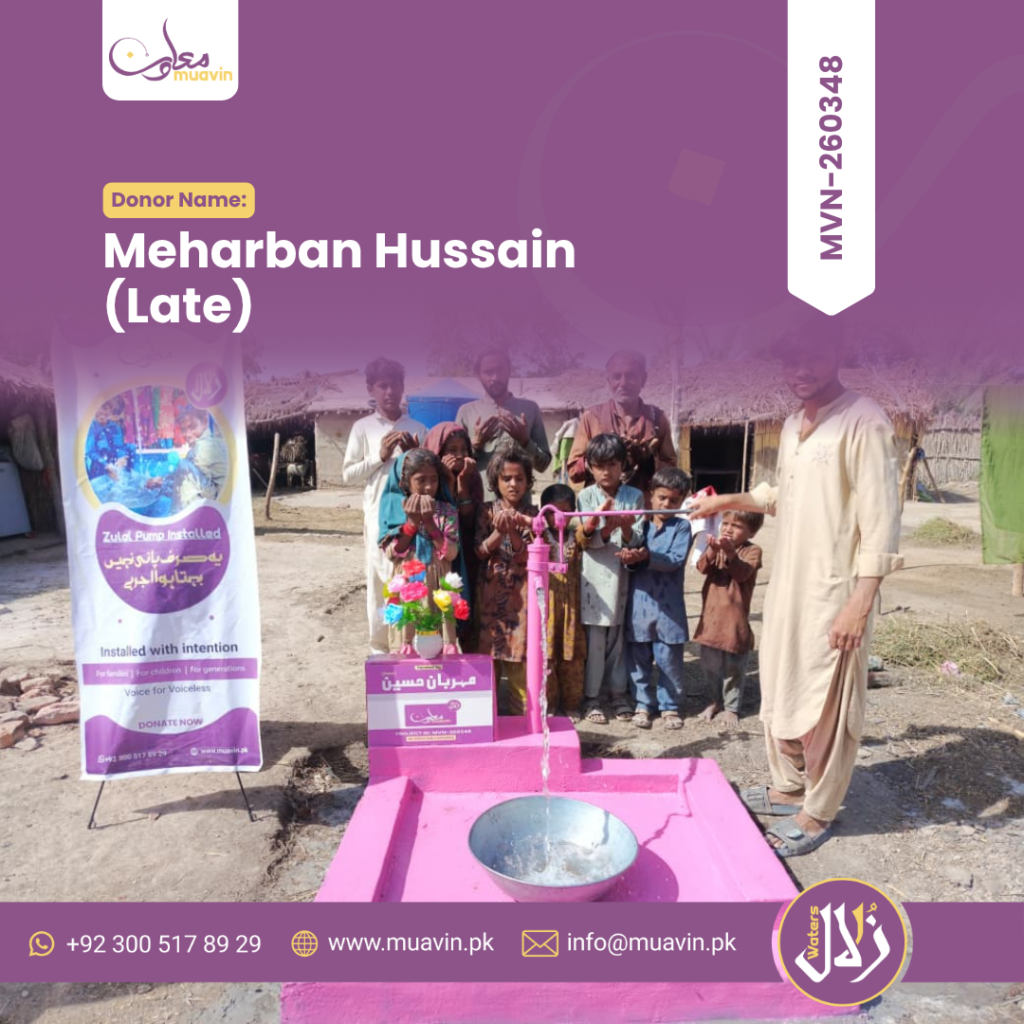
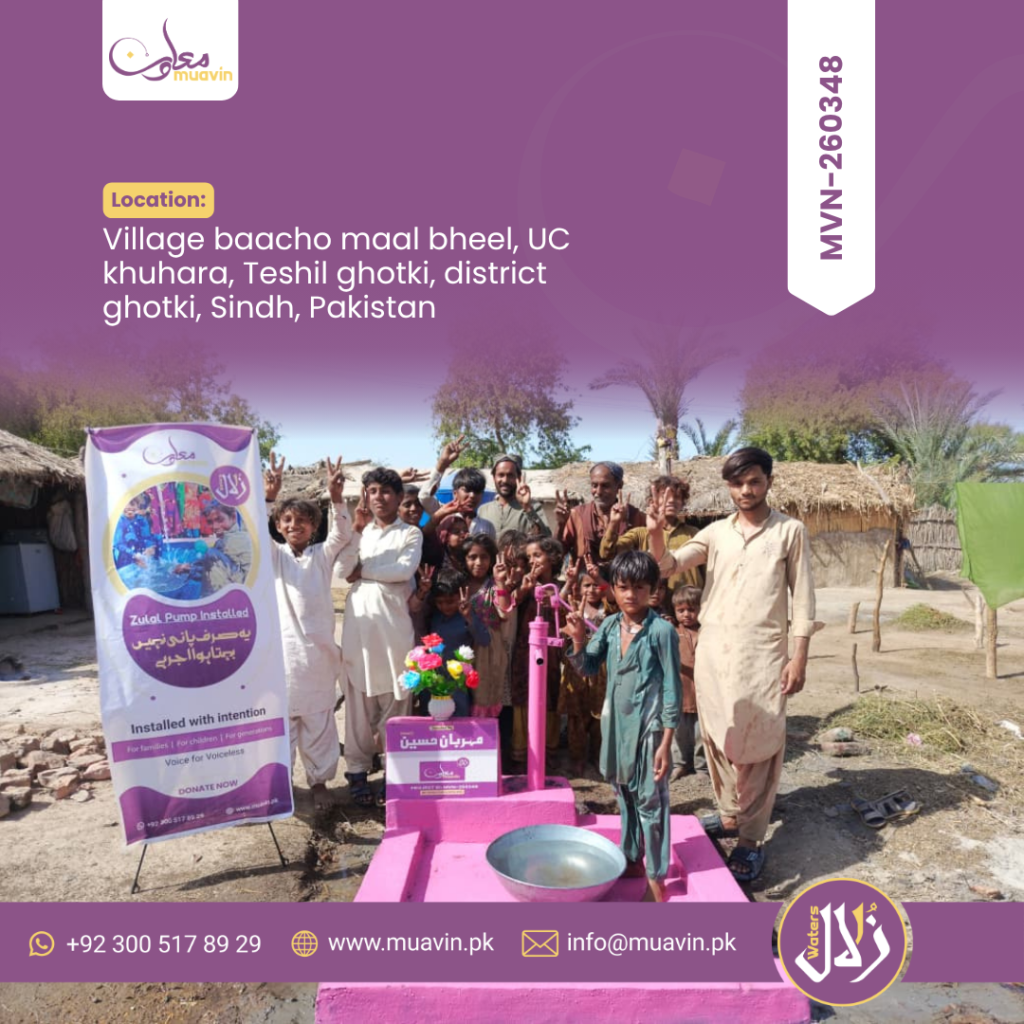
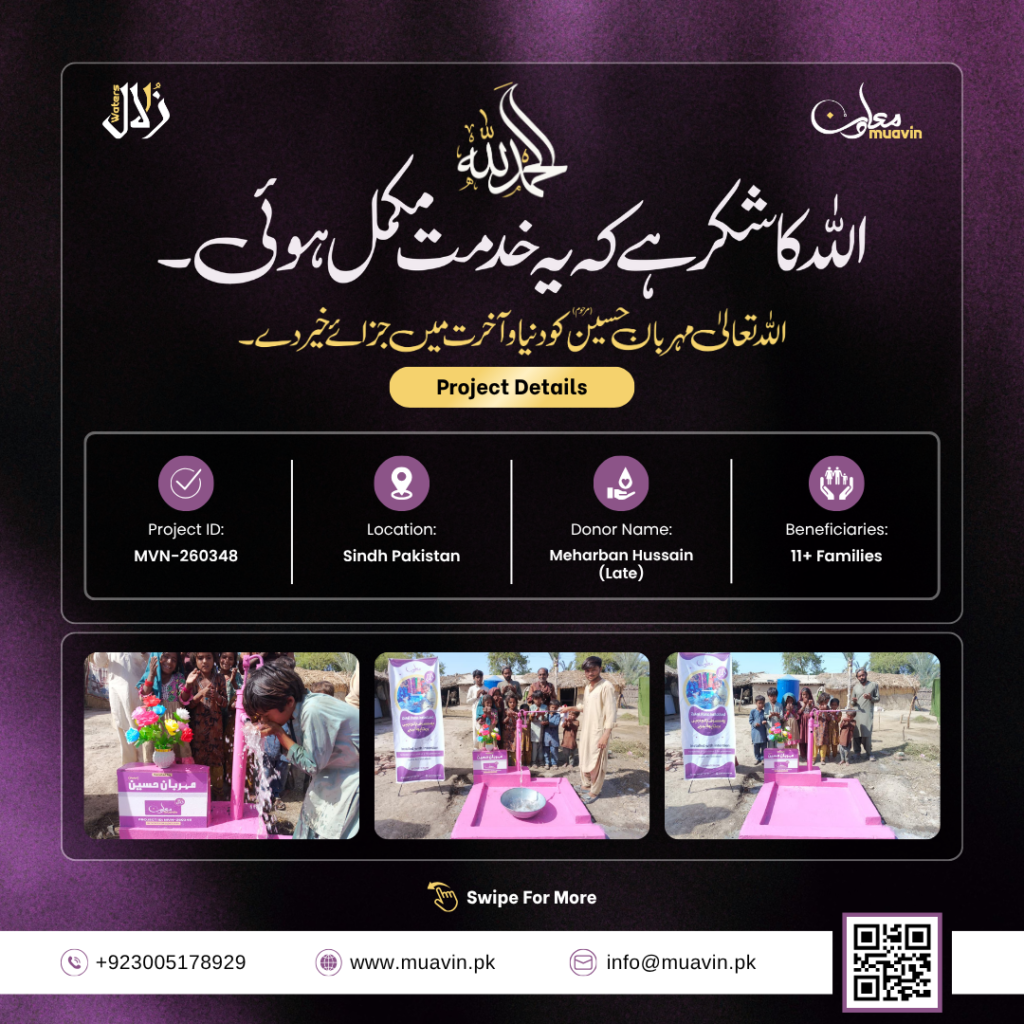
Community Impact of Clean Water
When a village gains reliable clean water through a hand pump or community pump, the changes are measurable and profound. Clean water charity Pakistan’s efforts to install pumps do more than quench thirst. They can unlock social and economic opportunities.
Key community impacts include:
- Reduced waterborne disease and fewer clinic visits.
- Improved school attendance, particularly for girls.
- More time for adults to pursue income-generating activities.
- Better hygiene practices can lower infection rates across the household.
- Increased resilience during seasonal shortages or emergencies.
A single hand pump can be an important step toward providing Clean Water for a group of homes. The ripple effects on health, education, and economic stability can continue for generations, aligning closely with the principles of Sadaqah Jariyah.
Matching Intention to Impact
For donors considering how to support these projects, understanding local needs is essential. Some donors donate hand pumps to Pakistan projects that target single-family hardship, while others focus on community pumps to maximize reach. Both approaches are valid. The right choice depends on the community’s geological conditions and local management capacity.
If you want to support a water pump project that aligns with your values and delivers measurable outcomes, consider options that include community training for maintenance and transparency in impact reporting. This helps ensure your gift supports a sustainable charity rather than a temporary fix.
Donate a hand pump in Pakistan for Sadaqah Jariyah-oriented giving, and learn more about our clean water charity initiative to see how pumps are managed on the ground.
How the Humanitarian Solution Works
Providing clean drinking water through hand water pumps and community water pumps in rural Pakistan is a practical, durable humanitarian solution. The approach combines simple technology, local knowledge, and long-term community stewardship so that a single intervention becomes Sadaqah Jariyah, an ongoing charity that continues to benefit people for years.
At its core, the model has four linked elements:
- Technical assessment and safe source identification;
- Responsible installation of a Hand Water Pump or Community Water Pump;
- Community ownership and maintenance systems;
- Monitoring, reporting, and adaptive support from nonprofit partners.
These elements help projects move from emergency relief to sustainable charity that advances Clean Water and supports rural Pakistan water access in ways donors can trust.
Site Selection and Assessment
Before any equipment is purchased or a borehole is drilled, teams complete a site assessment that includes:
- Hydrogeological surveys to locate productive aquifers and determine safe drilling depths;
- Water-quality testing for contaminants like bacteria, salinity, and arsenic;
- Social mapping to identify users, vulnerable households, schools, and clinics;
- Access and security checks to support long-term functionality.
This groundwork reduces the risk of failed wells and aligns each installation with local water tables and seasonal patterns. Donors who choose to donate water pump projects support an evidence-based process rather than ad-hoc digging.
Facts and impact
- Millions in rural Pakistan still lack reliable, clean water access.
- A family hand pump can serve 20–30 people, including nearby households and animals.
- Community pumps serve larger clusters and improve hygiene and health outcomes.
- Families often walk long distances daily for water; a nearby pump can cut collection time dramatically.
Installation and Handover
Installation follows industry best-practice steps adapted to local conditions:
- Drill a borehole to the depth identified in surveys and install casing and sanitary seals.
- Conduct pump selection to install a family hand pump for household clusters or a community water pump for village-level supply.
- Fit the pump, test flow rates, and treat/monitor initial water quality.
- Build protective infrastructure (apron, drainage, fencing, raised platforms) to keep the site sanitary.
- Formally hand the project to the community with training and documentation.
Family vs community pump implementation
- Family hand pump installations are faster, require shallower drilling in many places, and are ideal for remote homesteads. They directly lower the daily burden for a single household or small cluster (20–30 people).
- Community water pumps involve larger-diameter drilling, higher initial logistics, and formal management arrangements. They deliver broader hygiene and school/clinic benefits across 50+ beneficiaries.
Before vs after local water access
| Metric | Before | After |
| Average daily water collection distance | Long walks, often >1 km | Short walk or on-site access |
| Primary beneficiaries per pump | None or shared unsafe source | Family pump: 20–30 people; Community pump: 50+ |
| Waterborne illness frequency | High | Reduced significantly |
| Time available for school/work | Limited | Increased for women and children |
| Hygiene practices | Restricted | Improved (handwashing, cleaning) |
This “before vs after “snapshot helps donors see how a single intervention can affect health, education, and livelihoods.
How Communities Receive Support
Successful water projects depend on active, ongoing community involvement. Nonprofit initiatives do not simply drop equipment into a village. They partner with communities through clear roles and shared responsibility.
Community Engagement Criteria
Communities are selected based on need, feasibility, and readiness to maintain the resource. Criteria include:
- demonstrable lack of safe water and evidence of health or time-burden impacts;
- availability of a suitable site and local agreement on usage rules;
- community willingness to form a water and sanitation committee;
- local capacity to protect and maintain the pump (or openness to training).
Before installation, teams run awareness sessions that explain the pump’s benefits, hygiene promotion, and the concept of Sadaqah Jariyah, emphasizing that donors’ gifts can continue to benefit the community for years.
Typical community roles after handover
- Elect a Water Committee to oversee operations and maintenance.
- Assign a pump caretaker for daily checks and basic upkeep.
- Collect small, transparent contributions for spare parts and emergency repairs.
- Maintain a logbook of usage, repairs, and water-quality tests.
- Coordinate with local health or school authorities for hygiene promotion.
Training and Maintenance Systems
Sustainable charity hinges on maintenance. Nonprofits aim to ensure that:
- local technicians receive hands-on training for routine repairs and part replacement;
- spare parts are stocked regionally or available through local suppliers.
- Simple manuals and visual guides are left at the site in local languages.
- Female participation is encouraged in water committees to reflect women’s central role in water use.
A pump with local maintenance capacity can function reliably for many years, turning an initial gift into Sadaqah Jariyah. Donors who opt to sponsor hand pump Pakistan projects often choose packages that include training and spare-part guarantees to help protect their investment.
Monitoring and Reporting
Nonprofit partners remain involved after handover through periodic monitoring visits, remote reporting, and emergency support when needed. Their responsibilities include:
- verifying continued water quality and functionality;
- supporting the Water Committee with bookkeeping or governance advice;
- facilitating replacement parts and technical upgrades;
- reporting impact
Cost to Donate a Family Hand Pump
Costs vary by location, type of installation, and the logistics required to reach remote communities in rural Pakistan. Below is a breakdown of typical program pricing and what donors can expect when they choose to donate to water pump projects.
Typical Cost Breakdown
- Site assessment & water-quality testing: Small, fixed cost to confirm a safe source.
- Drilling, casing, and sanitary seals: The highest single cost varies with depth and geology.
- Pump hardware and protective works: Hand pump assembly, concrete apron, drainage, fencing.
- Training and spare parts package: Local technician training, manuals, and initial spare parts stock.
- Monitoring & verification: Post-installation visits, water testing, reporting.
- Community engagement & administration: Forming water committees and establishing maintenance funds.
Typical price ranges (indicative):
- Family Hand Pump package: Modest donation amount covering a household cluster (includes training and a spare-parts starter kit).
- Community Water Pump package: Higher contribution reflecting deeper drilling, larger-diameter boreholes, and extended community support.
Donors looking to donate to water pump initiatives will find options that let them specify family-level or village-level projects, include Sadaqah Jariyah allocations, or dedicate someone’s name. To browse program pages and give directly, consider exploring ways to donate a water hand pump in Pakistan or to support a Sadqa Jariya water project through your preferred charity.
What Your Donation Covers
- Professional hydrogeological survey and water-quality test.
- Drilling and pump installation using local labour whenever possible.
- Construction of a protective apron and drainage.
- Training for a community Water Committee and pump caretaker.
- Initial spare parts and a maintenance plan for the first 1–2 years.
- Periodic monitoring reports with GPS-tagged verification photos.
Family vs Community Pump Differences
Understanding the difference helps donors match impact to budget and need. Both models deliver clean drinking water and advance Clean Water, but they serve different scales and use cases.
Comparison Overview
Family hand pumps are designed to serve a household or small cluster of homes where a shallow, productive aquifer is available. They are faster to deploy, less costly, and ideal for remote homesteads where families otherwise walk long distances for water.
Community water pumps require deeper drilling, larger infrastructure, and formal management arrangements. They provide a central source for a village, school, or clinic and can yield broader public-health and educational benefits.
| Feature | Family Hand Pump | Community Water Pump |
| Typical beneficiaries | 20–30 people | 50+ people |
| Typical cost | Lower | Higher |
| Installation time | Faster | Longer (logistics + drilling) |
| Management | Household/cluster-level | Water Committee + governance |
| Best for | Remote homesteads | Village centres, schools, clinics |
| Maintenance complexity | Low–moderate | Moderate–higher |
Families and donors should weigh cost, beneficiary numbers, and long-term maintenance capacity when deciding whether to sponsor hand pump Pakistan projects or larger community installations.
Sadaqah Jariyah Donations
Yes. In Islamic giving traditions, a durable clean-water project is a strong example of Sadaqah Jariyah, an ongoing charity whose benefits continue to support the donor’s initial contribution.
Sadaqah Jariyah in Water Projects
- The initial installation provides immediate relief and becomes a long-term resource for families and communities.
- Training and spare-part provisions help ensure the pump remains functional, extending the charitable benefit.
- Donors can request that their gift be documented as Sadaqah Jariyah, and many nonprofits include a certificate or report noting long-term impact.
When you choose to donate to water pump projects like Sadayou’reriyah, you’re supporting a sustainable charity that addresses rural Pakistan water access and helps communities meet Clean Water targets.
Donations in Someone’s Name
Donating a hand or community pump in someone’s name is a common and meaningful option. Donors can dedicate a pump in a loved one’s name, for life events, weddings, birthdays, anniversaries, or for memorial Sadaqah Jariyah, so the gift continues to benefit others for years.
When you choose someone’s name, typical options include:
- A dedication certificate or e-card documenting the gift and the Sadaqah Jariyah intention.
- A report after installation with GPS-tagged photos and beneficiary details.
- Naming acknowledgement in community records (where culturally appropriate and requested by the recipient community).
Charities usually accommodate requests to note the donor and honouree, and they can advise whether the dedication will be public or private to respect local cultural norms. If you want to donate water pump projects specifically as a legacy gift or memorial, ask your chosen charity about documentation and ongoing reporting to ensure the donation is recorded as Sadaqah Jariyah.
How Many People Benefit
A single-family hand water pump typically serves an immediate household and nearby neighbours. Practical field experience shows the following ranges:
- Family hand pump: 20–30 people (including households and animals).
- Community pump: 50+ people, often serving a village centre, school, or clinic.
Because:
- Millions in rural Pakistan still lack reliable, clean water access, forcing many families to walk long distances daily for water.
- A family hand pump can serve 20–30 people, reducing daily collection time for women and children.
- Community pumps serve larger clusters of homes and produce wider improvements in hygiene and public services.
Community transformation after water access
When a hand pump is installed and maintained, changes are typically observed across social, educational,l and economic dimensions:
- Time saved on water collection, often several hours per household per day, is reallocated to education, income-generating activities, and caregiving.
- Schools with nearby clean water see better attendance, especially among girls who no longer must walk far for water.
- Local markets and small enterprises benefit as households spend less time fetching water and can invest in livelihoods.
Scale vs speed
- Family hand pumps are quick to install and immediately impactful for a small number of households; they are ideal for isolated homesteads.
- Community pumps require more investment and governance, but they reach many more people and can support broader public services (schools, clinics).
Conclusion
Millions in rural Pakistan still lack reliable access to clean drinking water, forcing families to spend hours each day collecting water. A single Hand Water Pump or Community Water Pump provides long-term Sadaqah Jariyah benefits by serving 20–30 people for family pumps and many more for community units.
Frequently Asked Questions
How many people use one pump?
A family hand pump typically serves 20–30 people, including nearby households and animals. Community pumps can serve 50+ people, often supporting schools and clinics and wider village needs.
Can someone pump someone’s name?
Yes. Many charities offer dedication certificates, GPS-tagged reports, and options to record the gift as Sadaqah Jariyah. Specify whether you wanta public or private acknowledgement.
How long does a hand pump last?
Well-installed hand pumps can function for many years with regular maintenance. Lifespan depends on:
- Quality of parts
- Local usage and maintenance
- Availability of spare parts
What does sustainable charity mean here?
Sustainable charity funds installation, community training, and maintenance systems so pumps remain operable long-term. It prioritizes local ownership, training, and supply chains for spare parts.
How are pump locations chosen?
Selection is based on needs assessments, local requests, and water source tests. Criteria include community size, current access gaps, and willingness to manage the pump.
Who is responsible for maintenance?
Responsibility is usually shared:
- Local community committees or caretakers
- Partner NGOs for training and technical backup
- Donor-funded spare-part provision initially
Can I sponsor a hand pump from abroad?
Yes. International donors regularly sponsor projects through vetted charities, supporting installation, reporting, and Sadaqah Jariyah documentation for overseas donors.
Is this counted as Sadaqah Jariyah?
Donations that provide ongoing community benefit, like a hand pump, are commonly accepted as Sadaqah Jariyah. Confirm with your charity about intended religious documentation.
How will I know my pump was installed?
Many organizations provide post-installation reports with GPS-tagged photos, beneficiary counts, and site details. Ask your chosen charity for its reporting standards.
How long does installation take?
Family hand pumps are typically installed within days once approvals and supply logistics are in place. Community pumps may take weeks due to extra civil works and governance setup.
What types of pumps are used?
Common types include manual hand pumps and shallow-well systems chosen for local hydrogeology. Selection depends on:
- Water table depth
- Community needs
- Maintenance capacity
How is water quality checked?
Basic field tests assess turbidity and salinity; more detailed lab tests check contaminants. Charities should provide results or summaries before and after installation.
Can I visit the project site?
Many charities facilitate visits for donors where safe and appropriate. Ask in advance about travel, cultural protocols, and visit timing.
What if a pump breaks down?
Repair systems include trained local technicians, spare parts stocks, and escalation to NGO partners. Durable projects plan budgets for routine repairs and parts replacement.
Can I target a pump to a specific family?
Yes—donors can fund family pumps for specific households or someone’s pumps in someone’s name. Ensure the chosen charity confirms beneficiary details and cultural appropriateness.
Will a pump help schools and clinics?
Community pumps placed near schools and clinics provide reliable water access that supports daily operations and hygiene practices, often improving attendance and service delivery.
How do charities measure impact?
Impact is tracked through beneficiary counts, time saved estimates, usage monitoring, and periodic field checks. Ask for monitoring indicators before donating.
Is my donation tax-deductible?
Tax deductibility depends on the charity’s registration. Check with the charity and your local tax authority for rules and receipts.
Can companies support pump projects?
Yes. Corporations can sponsor pumps, fund programs, or match employee donations. Many charities offer CSR reporting and visibility aligned with ethical guidelines.
What if the community lacks governance?
Projects include community mobilization and training to form water committees. If local governance is weak, charities often delay or modify plans to ensure sustainability.
How much does a pump project cost?
Costs vary by pump type, location, and logistics. Ask your charity for a clear budget breakdown for family vs community pump projects before donating.
Are animals included in beneficiary counts?
Yes, many family pumps serve households and animals, recognized in beneficiary estimates. Clarify with the implementing partner how beneficiaries are counted.
How does a pump reduce daily burdens?
By localizing water access, pumps cut round-trip collection time, freeing hours for education, childcare, and income-generating activities, including benefits noted in many rural Pakistan communities.
How do I choose a trustworthy charity?
Look for transparent reporting, field documentation (GPS/photos), local partnerships, and clear maintenance plans. Request references and past project summaries.