Where Should You Actually Donate Water in Pakistan?
You can donate clean drinking water in Pakistan through verified and transparent charity platforms that provide long-term water solutions and allow you to track your impact.
But here is the problem.
Not every charity delivers real results. Many donations are made with good intentions, but without verification, the actual impact remains unclear. That is why the real question is not just where to donate water, but where your donation actually reaches people and creates lasting benefit.
- Why Water Charity Is One of the Best Sadaqah in Muharram
- This Muharram, Help Villages Still Struggling for Pure Water
- Donate a Hand Pump in Memory of Loved Ones This Muharram
- This Muharram, Donate Water and Earn Lasting Sadaqah Jariyah
- Why Community Water Projects Matter More Than Temporary Aid
- How Sustainable Water Infrastructure Helps Rural Pakistan
Why This Decision Matters More Than You Think
Water charity in Pakistan is not just a good deed. It is a critical need.
- Only about 47% of Pakistan’s population has access to safe drinking water
- Around 70% of households consume contaminated water
- More than 21 million people lack access to clean water near their homes
- Unsafe water contributes to over 53,000 child deaths every year
These numbers are not just statistics. They reflect a daily reality for millions of families. In many rural areas, people walk long distances to fetch unsafe water. In flood-affected regions, millions are still relying on contaminated sources, increasing the risk of disease and malnutrition.
This is why water donation is not optional in Pakistan. It directly solves a survival-level problem.
The Real Problem: “Where to Donate” Is the Wrong Question
Most people search:
- Where can I donate water in Pakistan?
But that question is incomplete.
The real difference is not between charities; it is between verified impact and unknown outcomes.
What most donors focus on:
- Name of the organization
- Popularity or visibility
- Emotional appeal
What actually matters
- Can you track your donation?
- Do you receive real updates?
- Is the project completed and verified?
- Does it benefit multiple people over time?
This gap is where many donations lose their true value.
How to Choose a Trusted Water Charity (Before You Donate)
Before selecting any platform, use this simple evaluation method. It helps you avoid weak charities and choose one that delivers real results.
1. Transparency
Can you see what happens after your donation?
A strong charity should provide:
- Donation tracking
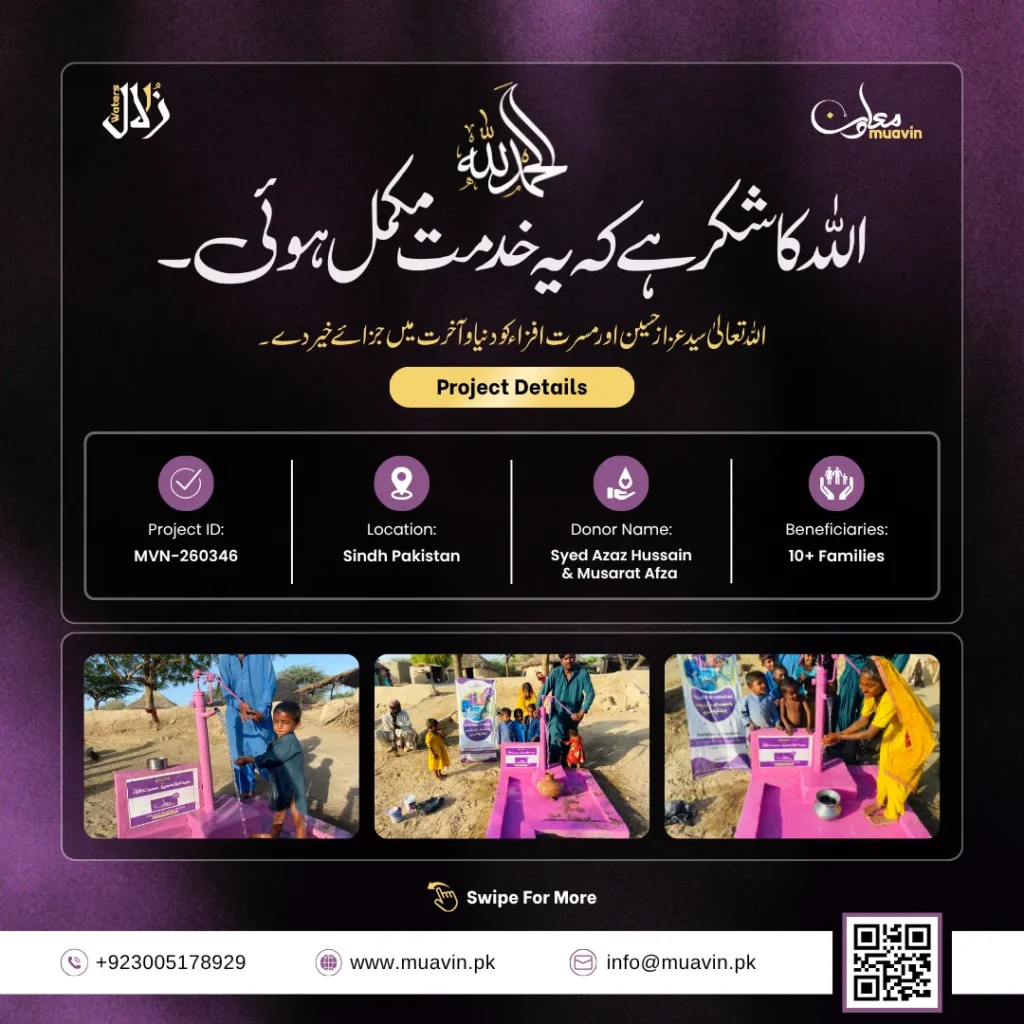
- Project updates
- Visual proof (images or videos)
Without Transparency, the impact cannot be verified.
2. Proof of Work
A reliable charity shows actual results.
Look for:
- Completed project reports
- Real beneficiary information
- Evidence of Implementation
This ensures your donation is not just processed, but delivered.
3. Community-Level Impact
Water projects should not benefit only one person.
The best projects:
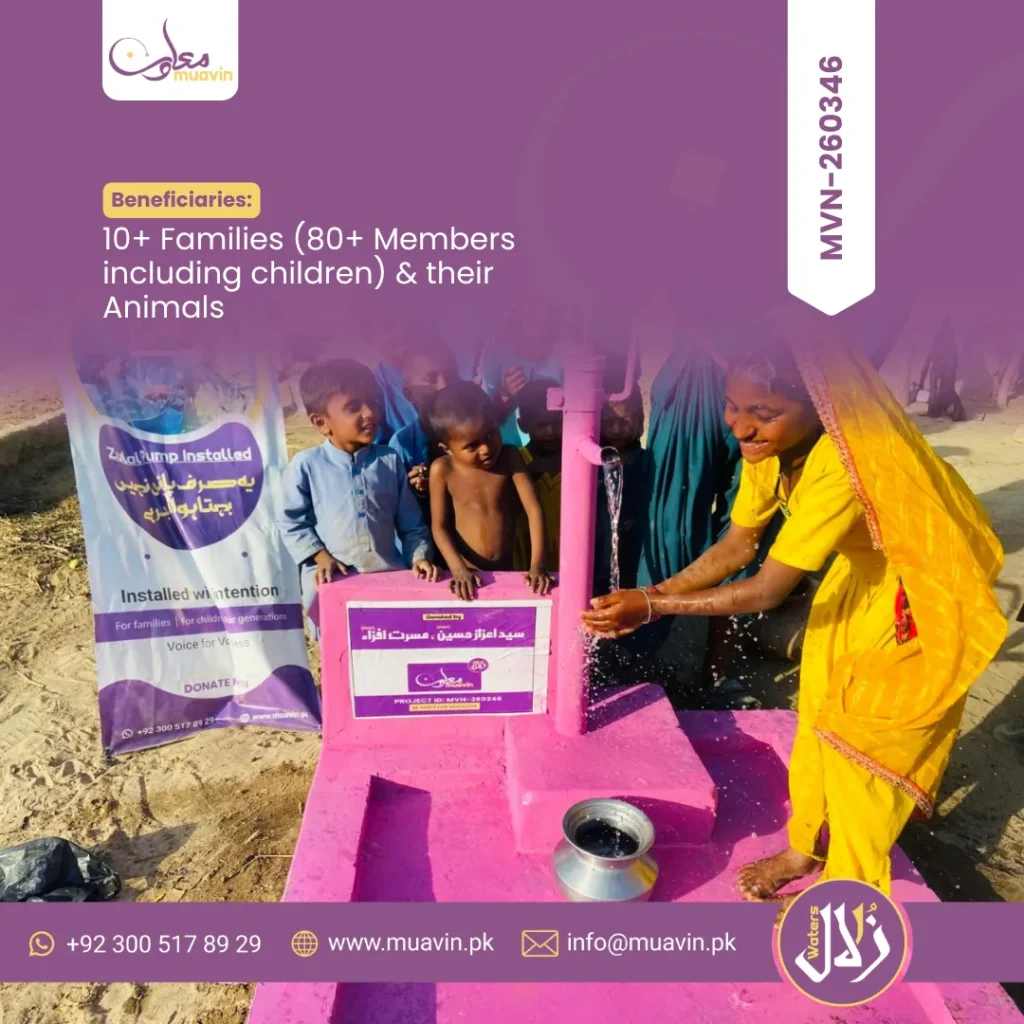
- Serve multiple families
- Provide daily water access
- Support entire communities
This increases both impact and long-term value.
4. Long-Term Sustainability
A strong water project should last for years, not days.
- Hand pumps and water systems typically provide long-term use
- Sustainable solutions reduce repeated need
- Long duration increases overall impact
What This Means Before You Choose
At this point, one thing becomes clear. Choosing where to donate is not about picking a name. It is about selecting a system that:
- Solves a real problem
- Delivers measurable results
- Provides long-term benefit
- Gives you visibility and trust
This is what separates an average charity from a high-impact charity.
Types of Water Donation Projects in Pakistan (What You Should Actually Choose)
Once you understand where to donate, the next critical step is choosing what type of water project to support. This is where most people make a mistake.
They donate without understanding the difference between project types, which directly affects:
- How many people benefit
- How long does the impact last
- How often is the water used
Choosing the right project type can multiply the value of your donation.
Hand Pump Projects (Most Practical Starting Point)
Hand pumps are one of the most common and effective water solutions in Pakistan, especially in rural areas.
Key features
- Provide direct access to groundwater
- Serve families living without nearby water sources
- Require minimal infrastructure
- Cost-effective and scalable
Impact level
- Used multiple times daily
- Can support entire households
- Typically, they last for years with proper installation
Best for
- Entry-level donations
- Sadaqah Jariyah with long-term benefit
- Rural communities with no water access
Community Water Pumps (Higher Impact Option)
Community pumps are designed to serve more than one household. They are placed in locations where multiple families depend on a shared water source.
Key features
- Serve multiple families daily
- Centralized access point
- Higher usage frequency
Impact level
- Continuous usage throughout the day
- Greater reach than individual pumps
- Strong community-level benefit
Best for
- Donors looking for wider impact
- Areas with dense population need
- Long-term, high-value charity
Solar Water Systems (Long-Term Sustainable Solution)
Solar-powered water systems are designed for areas where manual pumping is inefficient or unsustainable.
Key features
- Powered by solar energy
- Reduced manual effort
- Suitable for deeper water sources
Impact level
- Highly sustainable
- Consistent water availability
- Long operational life
Best for
- Advanced-level donations
- Long-term infrastructure impact
- Communities with severe water challenges
Wazu Khana (Religious + Daily Utility)
Wazu Khana projects provide water facilities specifically for ablution, often in mosques or community areas.
Key features
- Used multiple times daily for religious purposes
- Shared community infrastructure
- Combines spiritual and practical use
Impact level
- Frequent daily usage
- Continuous benefit tied to religious practices
- Supports both hygiene and worship
Best for
- Donors seeking religious impact
- Community-based sadaqah
- Long-term daily usage charity
Which Water Project Should You Choose?
| Project Type | Impact Level | Usage Frequency | Best For |
|---|---|---|---|
| Hand Pump | Medium | Daily | Individual families |
| Community Pump | High | Continuous | Multiple families |
| Solar System | Very High | Continuous | Long-term sustainability |
| Wazu Khana | High | Daily | Religious + community use |
What This Means for Your Decision
Choosing the right project is not about price. It is about impact.
- If you want a simple start → hand pump
- If you want a wider reach → community pump
- If you want a long-term infrastructure → solar system
- If you want religious + daily use → Wazu Khana
Each option serves a different purpose, but all fall under the category of high-impact, continuous charity.
Donate to the Zulaal Water Project
Why Location Matters More Than You Think in Water Charity
By now, you understand what type of water project to choose. But here is the deeper layer most donors ignore:
Where your donation is implemented determines how powerful its impact will be. A water project in a low-need area helps. A water project in a high-need area transforms lives.
High-Need Regions Where Water Projects Are Critically Required
Certain areas in Pakistan face severe water challenges due to climate, geography, and infrastructure gaps. These include:
- Layyah (South Punjab)
- Ali Pur, Muzaffargarh
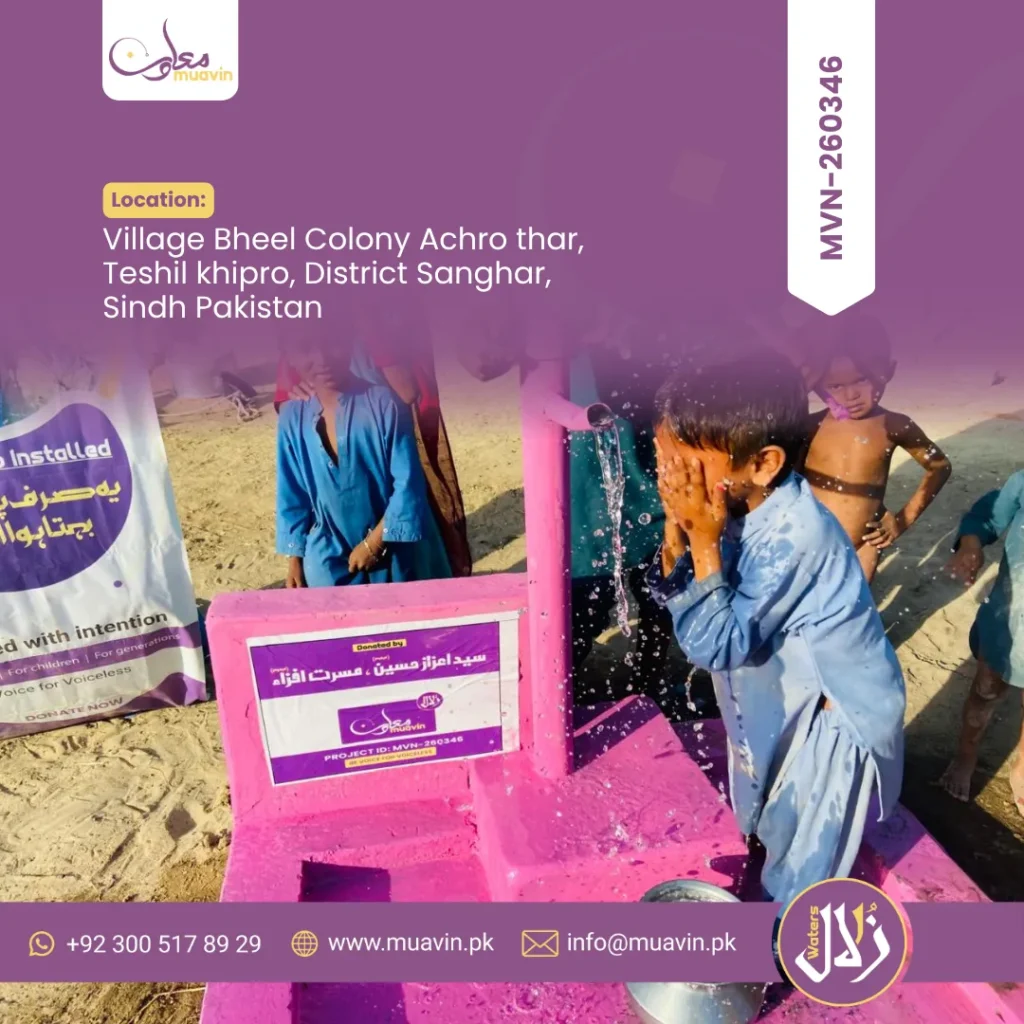
- Interior Sindh (especially desert regions)
These are not random locations. They are priority zones where access to water is limited, unsafe, or unreliable.
Layyah: Desert Belt with Limited Water Access
Layyah is part of the Thal desert region, which is naturally dry and water-stressed.
Ground reality
- Semi-arid climate with extreme heat
- A large rural population is spread across villages
- Limited groundwater access in many areas
- Dependence on distant or unsafe sources
What happens without water projects
- People travel long distances daily
- Unsafe water leads to health risks
- Daily productivity is reduced
Impact of a water project here
- Immediate access to clean drinking water
- Reduced daily struggle for families
- Long-term improvement in health and hygiene
In Layyah, a single hand pump can serve as a lifeline for entire households.
Ali Pur (Muzaffargarh): Flood Impact + Water Contamination
Muzaffargarh is located between major rivers, but still faces serious clean water issues due to flooding and contamination.
Key challenges
- Frequent floods damage water infrastructure
- Contaminated groundwater after floods
- Lack of reliable, clean drinking water sources
- Rural communities depend on unsafe alternatives
Flood events have repeatedly affected villages, forcing families to rely on unsafe water temporarily or long-term.
Why water projects matter here?
- Provide stable and clean water access after floods
- Reduce disease risk caused by contaminated sources
- Support recovery in affected communities
In Ali Pur, water charity is not just helpful, it is essential for rebuilding daily life.
Interior Sindh: Severe Water Scarcity and Unsafe Water
Interior Sindh faces one of the most serious water crises in Pakistan. Recent assessments show that most drinking water in the region does not meet safe health standards, with contamination issues widely reported.
Key challenges
- Extremely low rainfall in many areas
- Groundwater is often saline or unsafe
- Limited infrastructure for clean water
- Long distances to fetch water
In regions like Thar, studies show that:
- Most households rely on groundwater
- Some communities have no permanent water source
- Women and children spend hours collecting water
Impact of water projects
- Safe drinking water becomes available locally
- Reduces the burden on women and children
- Improves health, hygiene, and daily living
In interior Sindh, water projects directly solve a daily survival crisis.
Why Targeted Donation Creates a Stronger Impact
Most people donate without thinking about location. A charity’s impact depends on the intensity of need.
Simple truth: “The higher the need, the greater the impact of your donation.”
Targeted vs General Donation
| Factor | High-Need Areas (Layyah, Ali Pur, Sindh) | General Areas |
|---|---|---|
| Water access | Limited or unsafe | Moderate |
| Urgency | High | Medium |
| Daily impact | Critical | Helpful |
| Community benefit | Large-scale | Limited |
| Overall effectiveness | Very high | Moderate |
What This Means Before You Donate
If your goal is to:
- Create real impact
- Help people who truly need it
- Ensure daily usage of your donation
Then your focus should be:
- Rural areas
- Water-scarce regions
- Underserved communities
This is where your donation becomes more than charity. It becomes a long-term solution to a real problem.
Where This Connects to Real Projects
Projects like the Zulaal Water Project are designed specifically for these types of high-need areas, ensuring that donations are directed where they matter most:
Where Should You Actually Donate Water in Pakistan? Verified & Practical Answer)
By now, you understand:
- Which areas need water the most
- Which type of project creates real impact
Now comes the final and most important step: Where should you actually donate so your money creates a real, trackable impact?
The Reality: Not All Donations Create Real Results
Most people donate with good intentions, but many never know:
- Where their money went
- Whether the project was completed
- Who actually benefited
This is a serious issue, especially in Pakistan, where the need is extremely high.
- Around 70% of households still consume contaminated water
- Only about 47% of people have access to safe drinking water
- More than 10 million people still lack safe water after floods
This means: Donating is not enough. Verified impact is what matters.
What a Reliable Water Charity Should Provide
Before choosing where to donate, check if the platform offers these essentials:
1. Full Transparency
- Can you track your donation?
- Do you receive Workates?
2. Roof of Work
- Images or videos of project completion
- Real beneficiary details
3. Learn Project Structure
- Defined donation options
- Clear explanation of impact
4. Location-Based Implementation
- Work in high-need areas (like Layyah, Ali Pur, interior Sindh)
Structured & Transparent Charity Matters:
Instead of random giving, modern charity is shifting toward structured systems.
This means:
- You know where your money goes
- You can track progress
- You can verify completion
Choosing the Right Donation Option
Instead of thinking in terms of price, think in terms of impact level.
Entry Level
- Share in a water pump
- Start Sadaqah Jariyah with a smaller amount
Medium Impact
- Half pump sponsorship
- Stronger contribution to long-term benefit
High Impact
- Full hand pump
- Dedicated water source for families
How the Donation Process Works (Simple & Transparent)
A structured platform follows a clear process:
- Choose a water project
- Select your contribution level
- Complete the donation online
- Receive updates and progress
- See final project completion
👉 Start Giving: Donate Now
Common Mistakes to Avoid
Most donors lose impact because of these mistakes:
- Donating without checking the Transparency
- Choosparency based only on price
- Ignoring project type
- Not verifying completion
“The biggest mistake is not choosing the wrong charity, it is donating without knowing the outcome.”
Conclusion:
If your goal is to donate clean drinking water in Pakistan, the answer is clear:
- Choose high-need locations
- Select long-term water projects
- Donate through a transparent, trackable system
Because the best donation is not just one that is given, but one that is seen, verified, and that continuously benefits people.
FAQs: Donating Clean Drinking Water in Pakistan
How do I choose a trusted water charity in Pakistan?
Choose a platform that offers Worksparency, Transparency, and project tracking. A reliable charity should provide updates, beneficiary details, and evidence of completion so you know your donation made a real impact.
What is the safest way to donate water online in Pakistan?
The safest way is to donate through a structured platform that provides clear project details, verified updates, and tracking. void platforms that only collect donations without showing real Implementation.
Why is clean water donation so important in Pakistan?
Clean water is a major issue in Pakistan:
- Only about 47% of people have access to safe drinking water
- Around 70% of households consume contaminated water
- Over 21 million people lack nearby access to clean water
This makes water charity one of the most urgent and impactful forms of donation.
Which areas in Pakistan most need water donations?
High-need areas include rural regions like Layyah, Muzaffargarh (Ali Pur), and interior Sindh. These areas face water scarcity, contamination, and limited infrastructure, making them priority zones for water projects.
What type of water project should I donate to?
It depends on your goal:
- Hand pump → practical and affordable
- Community pump → higher impact
- Solar system → long-term sustainability
- Wazu Khana → daily religious + community use
Each option creates continuous benefit but varies in scale.
How long does a water project typically last?
A properly installed water project, such as a hand pump or solar system, can last for several years, depending on usage and maintenance. Its long duration makes it ideal for an ongoing charity.
Can I track my donation after giving?
Yes, if you choose a transparent charity system. Some platforms provide:
- Step-by-step updates
- Images and videos
- Location details
- Completion proof
Explore a transparency-based system: Explore More
Is it better to donate a full water project or a share of one?
Both options are valid. Share allows you to start with a smaller amount, while a full project creates a larger direct impact. The best option depends on your budget and intention.
Why does location matter in water donation?
The impact of charity increases in high-need areas. In regions with severe water scarcity, your donation solves a daily survival problem, making it more effective and meaningful.