Among the many powerful memories of Karbala, one of the most emotional is the story of Hazrat Abbas (RA) carrying water for the thirsty children and families in Imam Hussain’s (RA) camp.
In Islamic historical remembrance, Hazrat Abbas (RA) became deeply associated with:
- loyalty
- courage
- sacrifice
- and helping the thirsty during immense hardship
Historical accounts of Karbala repeatedly mention thirst and limited access to water near the Euphrates River as among the most painful aspects of the tragedy. For centuries, this memory transformed water into a symbol of:
- compassion
- humanity
- mercy
- sacrifice
- and service to others
Today, many Muslims continue honoring these lessons through:
- Sabeel water distribution
- helping thirsty communities
- sponsoring hand pumps
- and supporting clean water projects as Sadaqah Jariyah.
| Topic | Explanation |
| Who was Hazrat Abbas (RA)? | Brother of Imam Hussain (RA), known for courage and loyalty |
| Why is Hazrat Abbas (RA) associated with water? | He is remembered for attempting to bring water to the thirsty camp |
| Why is water symbolic in Muharram? | Karbala connected thirst with sacrifice and compassion |
| Why do Muslims support water charity in Muharram? | To honor helping the thirsty and serving humanity |
| What is Sadaqah Jariyah water charity? | Ongoing charity through long-term water projects |
Who Was Hazrat Abbas (RA)?
Hazrat Abbas ibn Ali (RA) was the son of Hazrat Ali (RA) and the brother of Imam Hussain (RA). He is widely remembered in Islamic history for:
- bravery
- loyalty
- sacrifice
- and unwavering support during the events of Karbala.
During the Battle of Karbala, Hazrat Abbas (RA) served as the standard-bearer of Imam Hussain’s (RA) camp. He became one of the most emotionally remembered figures for his sacrifice and for helping the thirsty.
Historical traditions repeatedly describe him as a symbol of:
- courage in hardship
- loyalty to truth
- service to others
- and compassion during suffering.
The Thirst of Karbala
One of the most painful memories associated with Karbala was the suffering from thirst. Historical accounts of the tragedy repeatedly emphasize that access to water near the Euphrates River became restricted in the days leading up to Ashura.
Under intense desert heat, families, children, and companions in the camp faced severe hardship. The tragedy became emotionally powerful not only because of the battle itself, but because thirst affected:
- children
- families
- the elderly
- and vulnerable members of the camp
This suffering later transformed water into one of the strongest humanitarian symbols associated with Muharram.
Karbala Timeline Overview
| Event | Summary |
| Arrival in Karbala | Imam Hussain (RA) and his companions stopped |
| Water restrictions | Access to water became limited |
| Days of hardship | Families and children suffered from thirst |
| Ashura | Imam Hussain (RA) and his companions were martyred |
Hazrat Abbas (RA) & the Mission to Bring Water
Among the most emotional moments remembered from Karbala is Hazrat Abbas’s (RA) mission to bring water to the thirsty camp. Historical traditions recount how Hazrat Abbas (RA) attempted to reach the Euphrates River to obtain water for children and families suffering from thirst.
This moment became deeply symbolic because it reflected:
- selflessness
- compassion
- courage
- and service to others during hardship
Many narrations connected with Karbala describe Hazrat Abbas (RA) prioritizing the thirst of children and families over his own suffering. Because of this sacrifice, Hazrat Abbas (RA) later became closely associated with:
- helping the thirsty
- water distribution
- humanitarian service
- and compassion through action
A Symbol of Loyalty & Selflessness
Hazrat Abbas (RA) is remembered not only for bravery in battle, but for loyalty and selflessness during immense hardship. The story of the attempt to bring water to thirsty children became one of the strongest emotional memories associated with Karbala.
For many Muslims, Hazrat Abbas (RA) represents:
- loyalty without hesitation
- sacrifice without selfishness
- courage during hardship
- and service to humanity despite suffering
This emotional connection remains deeply embedded within Muharram remembrance traditions today.
Why Water Became So Symbolic in Muharram
Karbala transformed water from a necessity into a symbol of:
- mercy
- compassion
- helping the needy
- and remembering human suffering
This is one reason many Muharram traditions include:
- sabeel stalls
- free water distribution
- helping travelers
- sponsoring wells and hand pumps
- and supporting water charity projects
Across many Muslim communities, helping thirsty people became a meaningful reflection of the lessons associated with Karbala and Hazrat Abbas (RA).
Water Distribution During Muharram
During Muharram, many Muslims distribute:
- cold drinking water
- milk and sherbet
- sabeel water
- and other charitable refreshments
These acts are not only cultural traditions. For many people, they represent:
- compassion in action
- remembrance through service
- helping humanity
- and honoring the suffering associated with Karbala
The tradition of water distribution became emotionally connected with Hazrat Abbas (RA) because of his association with bringing water for the thirsty camp.
Helping the Thirsty in Islam
Islamic teachings strongly encourage:
- helping people in hardship
- showing compassion
- and serving vulnerable communities
Over time, the remembrance of Karbala strengthened the emotional connection between:
- helping thirsty people
- water charity
- and humanitarian compassion
For many Muslims today, supporting water projects represents:
- mercy
- dignity
- compassion
- and service to humanity
The Legacy of Water & Compassion
The story of Hazrat Abbas (RA) continues inspiring Muslims around the world to transform remembrance into humanitarian action.
“The message of Karbala is not only to remember thirst but to help those who still suffer from it today.”
Because of this emotional connection, many Muslims support:
- hand pumps
- wells
- filtration systems
- and clean water projects
as forms of:
- Sadaqah Jariyah
- humanitarian service
- and an ongoing charity for communities in need.
Modern Water Shortages & Humanitarian Need Today
While Karbala is remembered as a historical tragedy, millions of families today still struggle with unsafe drinking water, severe shortages, and daily hardship caused by a lack of clean water access. For many Muslims, this creates a powerful emotional connection between:
- The thirst remembered in Karbala
- and helping communities that still suffer from water scarcity today
This is one reason water charity remains deeply meaningful during Muharram and beyond.
Water Challenges in Rural Pakistan
Across many underserved regions of Pakistan, families continue facing:
- unsafe groundwater
- long travel distances for water
- drought conditions
- infrastructure limitations
- and severe summer shortages
Clean water access remains a major humanitarian challenge in parts of:
- South Punjab
- Interior Sindh
- and remote rural communities.
Many vulnerable households still depend on:
- contaminated water sources
- distant water collection points
- or seasonal access to drinking water.
Layyah & South Punjab Water Hardship
Layyah, located in South Punjab, experiences hot, semi-arid conditions that contribute to water scarcity in many rural areas.
Communities in these regions may face:
- low rainfall
- difficult groundwater conditions
- and limited access to safe drinking water infrastructure.
For many families, obtaining clean water can become a daily struggle, affecting:
- health
- hygiene
- education
- and quality of life.
Interior Sindh & Unsafe Drinking Water
Interior Sindh also continues facing serious water-related challenges in underserved communities. Many families experience:
- unsafe drinking water
- seasonal shortages
- poor sanitation conditions
- and long travel distances to collect water
These conditions may increase risks related to:
- illness
- hygiene problems
- and physical hardship for women and children.
Karbala Inspires Compassion Through Action
The remembrance of the thirst in Karbala continues to inspire many Muslims to transform reflection into humanitarian action.
“The message of Karbala is not only to remember thirst but to help those who still suffer from it today.”
For many people, supporting a water charity becomes:
- an act of mercy
- a form of compassion
- and a practical way to help vulnerable communities
This emotional connection explains why many Muslims support:
- hand pumps
- wells
- filtration systems
- and clean water projects
as forms of:
- Sadaqah Jariyah
- humanitarian service
- and helping the thirsty in Islam.
Helping Communities Through Water Projects
Water projects may help improve:
- access to safer drinking water
- hygiene and sanitation
- daily convenience
- and dignity for families in need
Examples include:
- hand pumps
- community water systems
- solar-powered water projects
- filtration systems
- and mosque water facilities
These projects may continue helping:
- children
- families
- schools
- mosques
- and entire villages for many years.
Water Charity as Sadaqah Jariyah
Water charity is widely associated with Sadaqah Jariyah because its benefits continue long after the original donation.
As long as communities continue benefiting from:
- wells
- hand pumps
- filtration systems
- and water infrastructure
The humanitarian impact may continue daily. This long-term benefit is one reason many Muslims support water projects:
- during Muharram
- in memory of loved ones
- on behalf of parents
- and as an ongoing charity for the hereafter.
Islamic teachings strongly encourage helping thirsty people and providing clean water to communities in need.
Supporting Water Projects Through Muavin Welfare Foundation
Muavin Welfare Foundation supports structured humanitarian water initiatives for underserved communities in Pakistan.
Their projects focus on:
- sustainable clean water access
- verified humanitarian interventions
- and long-term community impact.
Family Water Support
Many donors choose family-level water projects because they directly help households struggling with unsafe or distant water access.
| Water Support Type | Purpose |
| Water Hand Pump Share | Shared participation in a family water project |
| Half Family Hand Pump Sponsorship | Partial household water support |
| Complete Family Water Pump | Full family water access solution |
These projects may help reduce:
- dependence on unsafe water
- long travel distances
- and daily hardship for vulnerable families.
Community Water Solutions
Larger community-level projects help support:
- villages
- schools
- mosques
- and underserved public-use areas
Community support options include:
| Community Water Solution | Purpose |
| Community Water Pump Share | Shared support for larger projects |
| Half Community Sponsorship | Partial village-level sponsorship |
| Complete Community Water Pump | Full community water solution |
Sustainable Water Infrastructure
Some regions require more advanced infrastructure because of:
- electricity limitations
- environmental conditions
- and long-term sustainability needs
Sustainable solutions may include:
- hybrid hand pump systems
- solar-powered water systems
- and larger clean water infrastructure projects
These systems help improve:
- reliability
- sustainability
- and long-term water access.
Solar Wazu Khana Projects
Water access is also important for mosques and community ablution facilities. Some initiatives, therefore, support:
- solar-powered wazu khana systems
- community ablution infrastructure
- and mosque water access projects
Examples include:
- 3 Tap Solar Wazu Khana
- 8 Tap Solar Wazu Khana
- 12 Tap Solar Wazu Khana
These projects help provide:
- cleaner water access
- improved hygiene
- and reliable ablution facilities for communities.
Why Transparency Matters to Donors
Many people donating to water projects want to know:
- where their donation goes
- Who benefits from it
- and whether the project was completed properly
This is especially important for:
- Sadaqah Jariyah
- donations in parents’ names
- Muharram charity
- and memorial giving.
Muavin’s Transparency & Tracking Structure
Muavin Welfare Foundation emphasizes transparency through:
- donor tracking systems
- project updates
- beneficiary verification
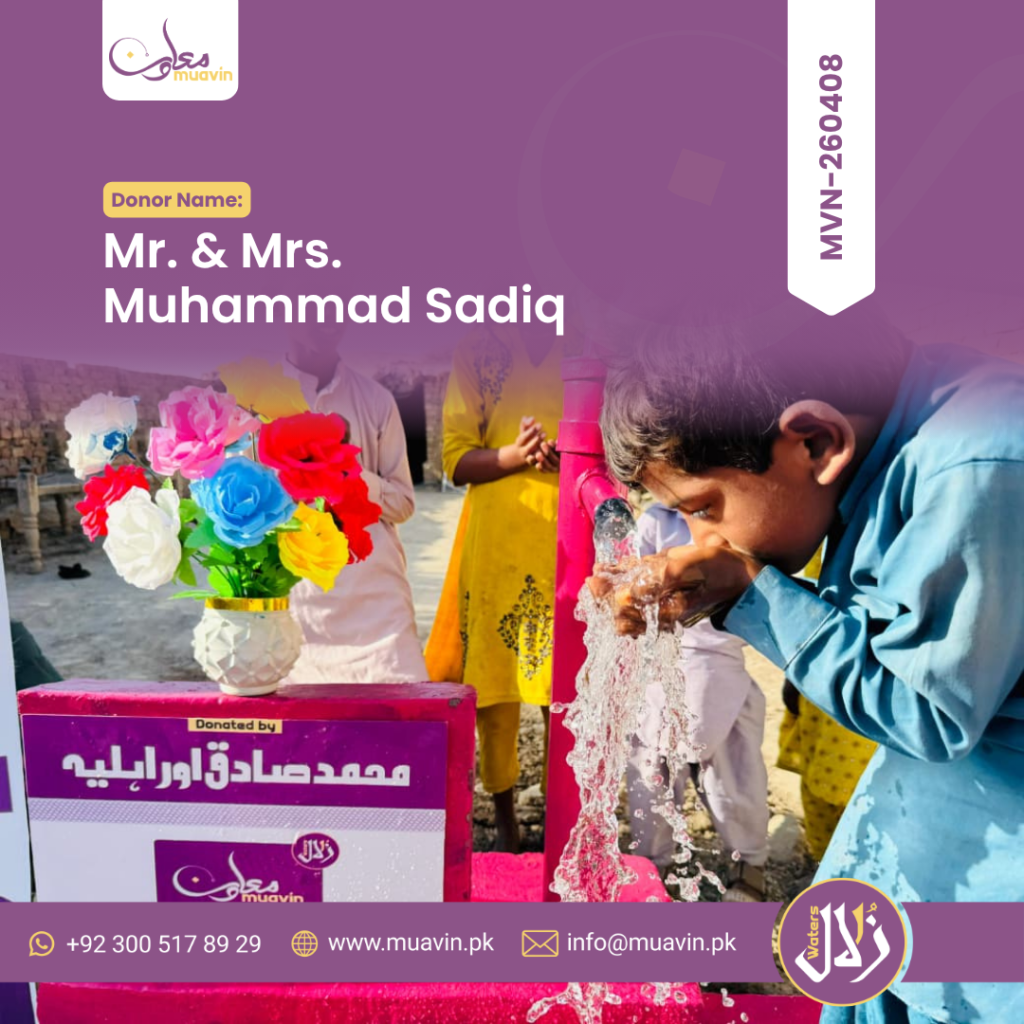
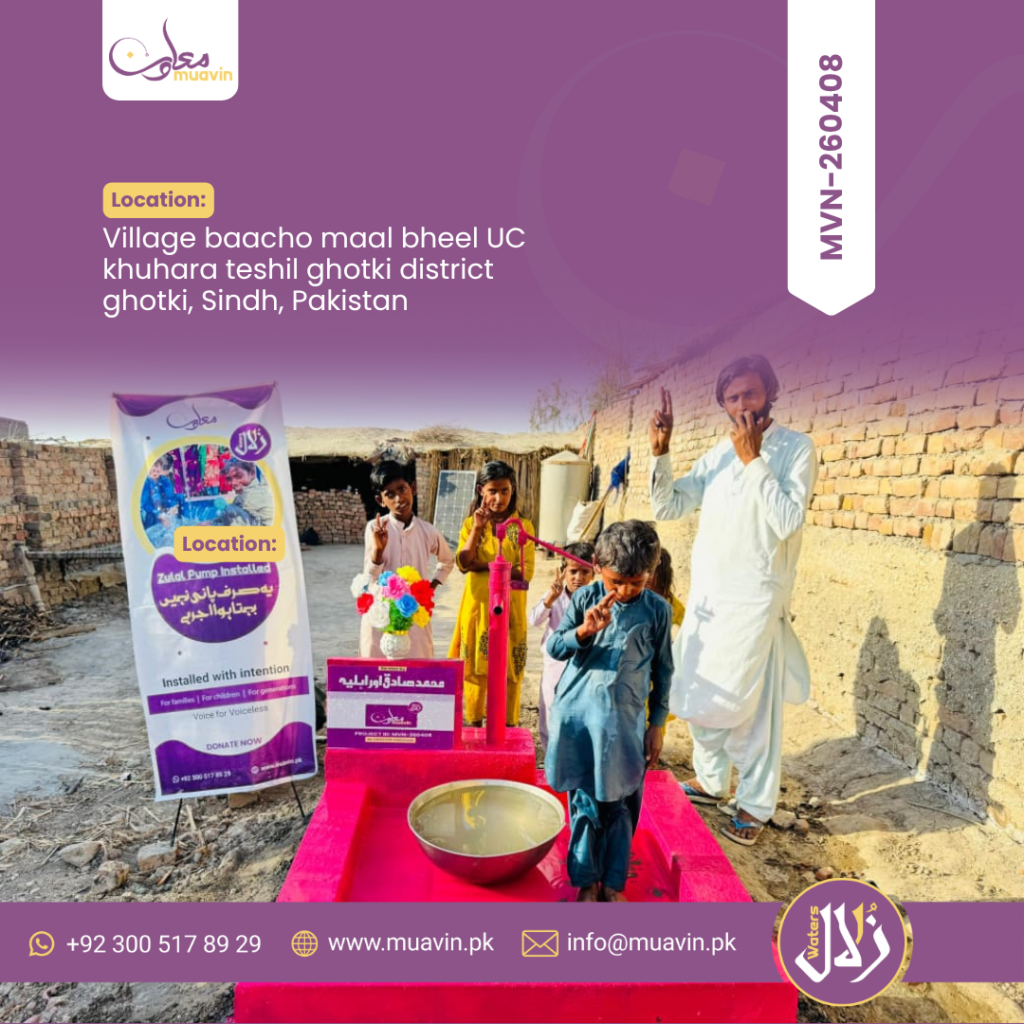
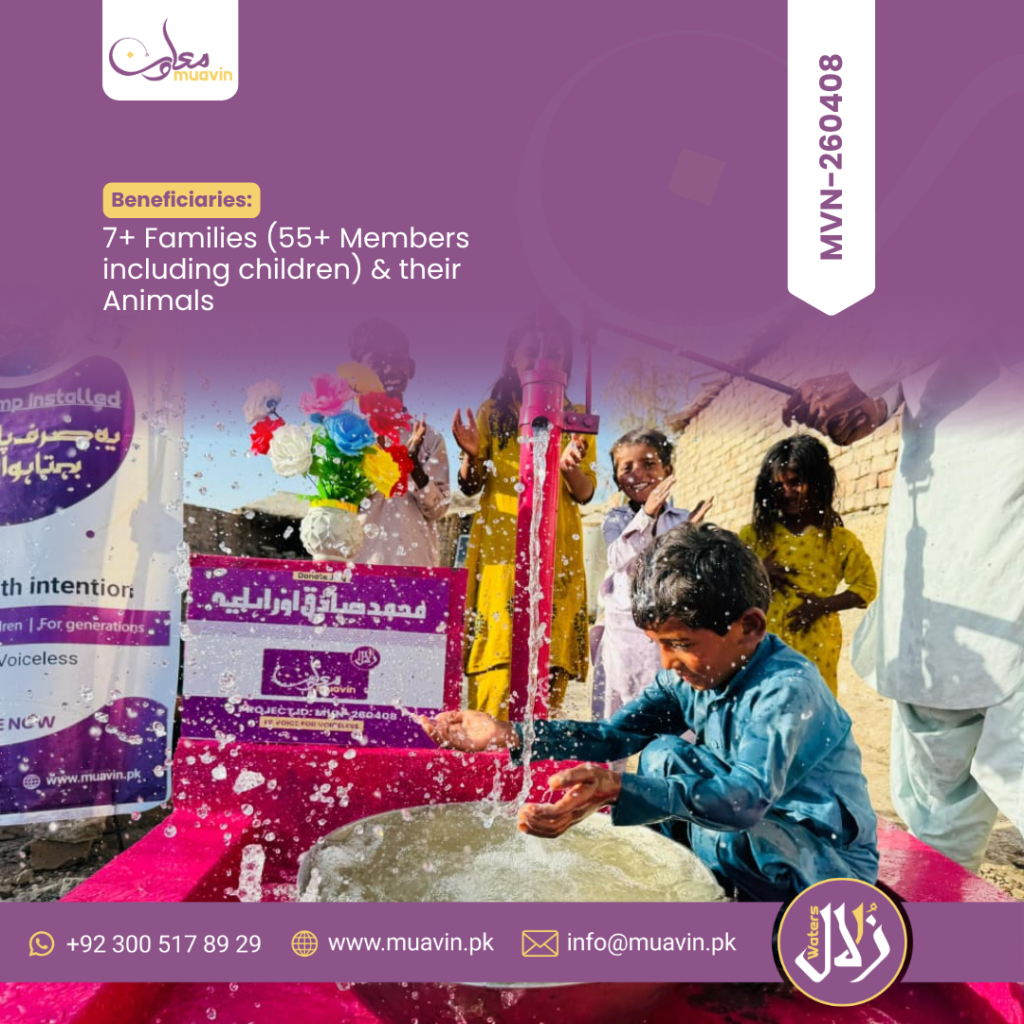
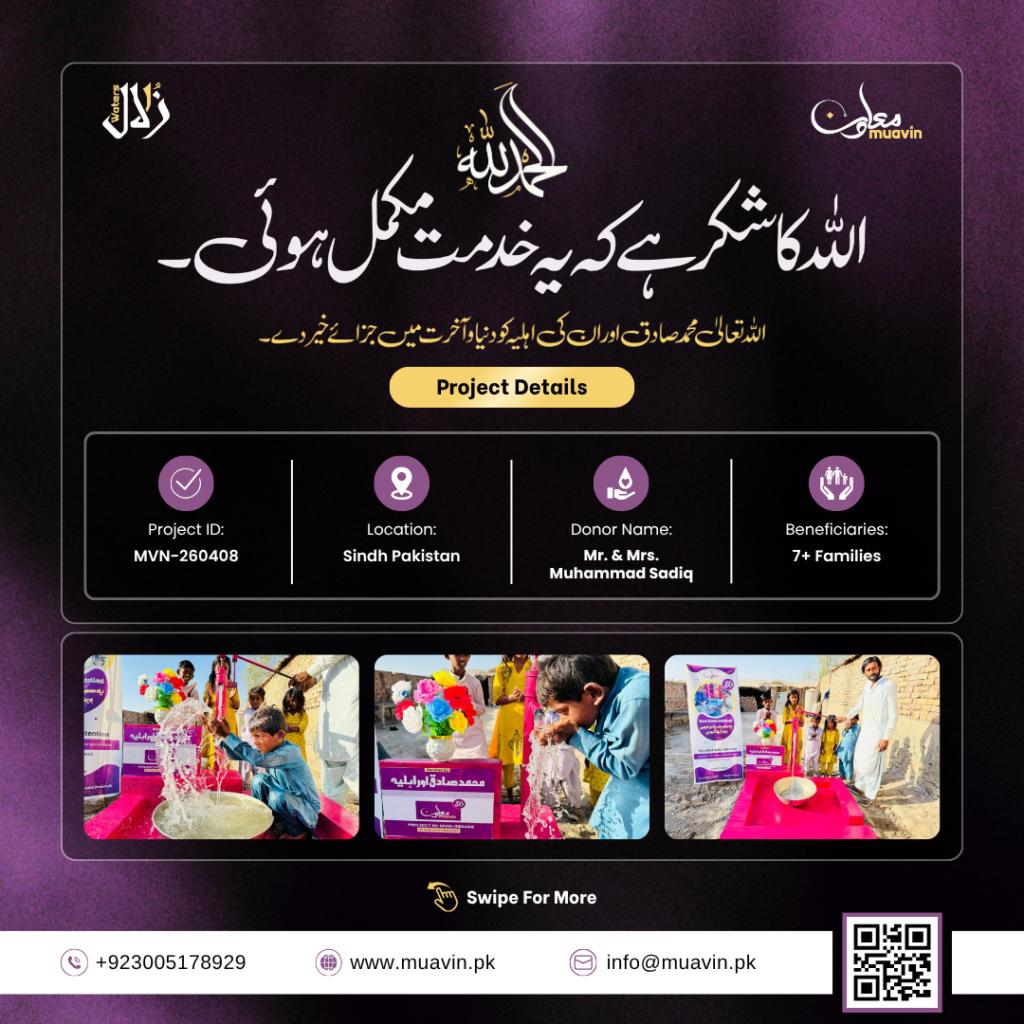
- image and video proof
- exact project locations
- and completion reporting.
Muavin’s transparency framework includes:
- tracking IDs
- project milestones
- installation verification
- donor updates
- and documented humanitarian reporting.
This helps create:
- donor confidence
- emotional peace of mind
- and visible humanitarian impact.
Why Donors Trust Muavin Welfare Foundation
For many people, water charity is deeply emotional. Donations are often made:
- In memory of parents
- on behalf of loved ones
- during Muharram
- Or as Sadaqah Jariyah is intended to benefit people for years
Because of this emotional significance, donors increasingly want transparency and proof that their charity truly reached families in need.
They want to know:
- where the project was installed
- who benefited from it
- whether the work was completed properly
- and how the donation created a real impact
This is where transparency becomes extremely important.
Most Charities Ask for Trust – Muavin Shows Proof
Many organizations simply ask donors to trust them. Muavin Welfare Foundation focuses on operational transparency and documented humanitarian impact through structured reporting systems and project verification processes.
Their system emphasizes:
- donor visibility
- tracking and verification
- project documentation
- and proof-based humanitarian reporting
This helps donors remain connected with the real-world impact of their charity.
A Structured Transparency System
One of the strongest differentiators of Muavin Welfare Foundation is its structured transparency framework for water projects.
- tracking IDs
- progress updates
- installation reports
- beneficiary information
- image and video proof
- exact locations
- and project completion verification.
This creates:
- trust
- accountability
- donor confidence
- and emotional peace of mind
especially for people supporting Sadaqah Jariyah projects in memory of loved ones.
Real-Time Project Tracking & Updates
Muavin’s transparency structure focuses on keeping donors informed throughout the humanitarian process. Their reporting system may include:
- project milestones
- field activity documentation
- installation updates
- photos and videos
- beneficiary details
- and verification reporting.
For many donors, this transforms charity from uncertainty into a visible humanitarian impact.
Water Projects With Long-Term Community Impact
Muavin Welfare Foundation supports long-term water initiatives for underserved communities in Pakistan.
Their humanitarian water initiatives include:
- Zulaal Water Projects
- Donate Family Hand Pump
- Donate Community Hand Pump
- Medium Solar Project
- Heavy Duty Solar Project
These initiatives focus on:
- sustainable clean water access
- underserved rural communities
- long-term humanitarian relief
- and ongoing community benefit.
Family Water Support Options
Many donors choose family-level water projects because they directly support vulnerable households struggling with unsafe or distant water access.
Common family support options include:
| Water Support Type | Purpose |
| Water Hand Pump Share | Shared participation in a family water project |
| Half Family Hand Pump Sponsorship | Partial family water support |
| Complete Family Water Pump | Full household water access solution |
These projects may help reduce:
- dependence on unsafe water
- long travel distances
- and daily hardship for families.
Community Water Solutions
Larger community-level projects help provide broader access to clean water for:
- villages
- schools
- mosques
- and underserved public-use areas
Community support solutions include:
| Community Water Solution | Purpose |
| Community Water Pump Share | Shared participation in a larger project |
| Half Community Sponsorship | Partial village-level support |
| Complete Community Water Pump | Full community water access solution |
These projects help create broader and longer-term humanitarian impact.
Sustainable Water Infrastructure
Some communities require more advanced systems because of:
- electricity limitations
- difficult environmental conditions
- and infrastructure challenges
Sustainable solutions may include:
- hybrid hand pump systems
- solar-powered water projects
- and larger clean water infrastructure solutions
These systems help improve:
- reliability
- sustainability
- and long-term community water access.
Solar Wazu Khana Projects
Access to clean water is also important for mosques and community ablution facilities. Some initiatives, therefore, support solar-powered wazu khana systems that help maintain reliable ablution infrastructure for communities.
Examples include:
- 3 Tap Solar Wazu Khana
- 8 Tap Solar Wazu Khana
- 12 Tap Solar Wazu Khana
These projects help support:
- clean water access
- hygiene
- mosque infrastructure
- and sustainable community facilities.
Why Transparency Matters Emotionally
For many Muslims, water charity is more than infrastructure. It is connected with:
- compassion
- helping the thirsty
- Remembrance of Karbala
- Sadaqah Jariyah
- and serving humanity through practical action
Because of this emotional connection, donors increasingly value:
- accountability
- proof systems
- visible humanitarian impact
- and transparent charity processes.
Muavin’s structured transparency framework helps provide donor confidence, emotional satisfaction, and trust in humanitarian outcomes.
Water Charity as a Reflection of Compassion
The story of Hazrat Abbas (RA) continues inspiring Muslims around the world to:
- help thirsty families
- support vulnerable communities
- provide clean drinking water
- and transform remembrance into humanitarian service
For many Muslims today, supporting water charity represents:
- mercy
- dignity
- compassion
- helping humanity
- and honoring the humanitarian lessons associated with Karbala.
Final Reflection
Hazrat Abbas (RA) transformed water from a necessity into a symbol of:
- loyalty
- sacrifice
- compassion
- helping the thirsty
- service to humanity
- and mercy during hardship
Centuries later, the memory of thirst in Karbala still inspires people to help communities struggling with unsafe drinking water and water scarcity today. For many Muslims, giving water remains one of the most meaningful acts of:
- Sadaqah Jariyah
- humanitarian service
- and compassion in action.
Frequently Asked Questions About Hazrat Abbas (RA), Karbala & Water
Who was Hazrat Abbas (RA)?
Hazrat Abbas ibn Ali (RA) was the son of Hazrat Ali (RA) and the brother of Imam Hussain (RA).
He is widely remembered in Islamic history for:
- courage
- loyalty
- sacrifice
- and unwavering support during the events of Karbala.
Historical traditions associated with Karbala repeatedly portray Hazrat Abbas (RA) as a symbol of bravery, loyalty, and service to others amid immense hardship.
Why is Hazrat Abbas (RA) associated with water?
Hazrat Abbas (RA) is deeply associated with water because historical remembrance of Karbala describes his attempt to bring water from the Euphrates River for the thirsty camp of Imam Hussain (RA).
This moment became one of the most emotional memories connected with Karbala because it reflected:
- selflessness
- compassion
- loyalty
- and concern for thirsty children and families.
Because of this sacrifice, Hazrat Abbas (RA) later became strongly connected with:
- helping the thirsty
- water distribution
- and humanitarian compassion.
What happened near the Euphrates River in Karbala?
Historical accounts of Karbala repeatedly emphasize that access to water near the Euphrates River was restricted in the days leading to Ashura.
This created severe hardship for:
- children
- families
- companions
- and vulnerable members of the camp.
The suffering caused by thirst later became one of the strongest humanitarian and emotional symbols associated with Muharram.
Why do Muslims distribute water during Muharram?
Many Muslims distribute water during Muharram as an act of remembrance, compassion, and service to humanity, inspired by the lessons of Karbala.
Common Muharram traditions include:
- sabeel stalls
- cold drinking water distribution
- milk and sherbet distribution
- sponsoring hand pumps
- and supporting water charity projects
For many people, these acts symbolize:
- helping the thirsty
- compassion in action
- and honoring the humanitarian values associated with Karbala.
Why is water symbolic during Muharram?
Water became symbolic during Muharram because Karbala created a lasting emotional connection between:
- thirst
- sacrifice
- compassion
- and helping humanity
The suffering caused by restricted access to water near the Euphrates River became one of the most enduringly remembered aspects of Ashura. Because of this, helping thirsty communities later became deeply associated with Muharram remembrance traditions.
What is Sadaqah Jariyah water charity?
Sadaqah Jariyah refers to an ongoing charity that continues benefiting people over time. Water projects are commonly viewed as Sadaqah Jariyah because communities may continue benefiting from them daily through:
- drinking water
- cooking
- washing
- wudu
- and household use
Examples include:
- hand pumps
- wells
- filtration systems
- and solar-powered water projects.
Because these projects may continue helping people for years, many Muslims support them:
- during Muharram
- in memory of loved ones
- and on behalf of the parents.
Why is helping the thirsty important in Islam?
Helping the thirsty is closely associated with:
- mercy
- compassion
- service to humanity
- and caring for vulnerable communities
Islamic teachings strongly encourage helping people in hardship and providing water to those in need. The remembrance of Karbala further strengthened this emotional connection for many Muslims, as thirst became one of the most painful aspects of Ashura.
How do hand pumps help poor communities?
Hand pumps help communities gain more reliable access to safer drinking water close to their homes.
This may help reduce:
- long travel distances for water
- dependence on unsafe water sources
- hygiene-related hardship
- and the physical burden on women and children
Reliable access to water may also improve health, sanitation, dignity, and overall quality of life for vulnerable families.
Why do many people donate to water projects in their parents’ names?
Many Muslims donate to water projects:
- on behalf of parents
- in memory of loved ones
- or as an ongoing charity for family members
Because water charity is commonly associated with Sadaqah Jariyah. Since water projects may continue benefiting people for years, many families consider them a meaningful form of:
- ongoing reward
- compassion
- and lasting humanitarian impact.
Why do donors prefer transparent water charities?
Modern donors increasingly value:
- accountability
- project verification
- visible humanitarian impact
- and proof of completion
This is especially important for:
- Sadaqah Jariyah projects
- Muharram charity
- and donations made in memory of loved ones.
Transparent organizations help donors see:
- project progress
- beneficiary information
- exact locations
- photos and videos
- and completion reports.
How does Muavin Welfare Foundation provide transparency?
Muavin Welfare Foundation emphasizes transparency through:
- donor tracking systems
- project updates
- beneficiary verification
- image and video proof
- completion reporting
- and documented humanitarian processes.
Their water initiatives include:
Their transparency-focused structure helps donors remain connected with the humanitarian impact of their charity.